
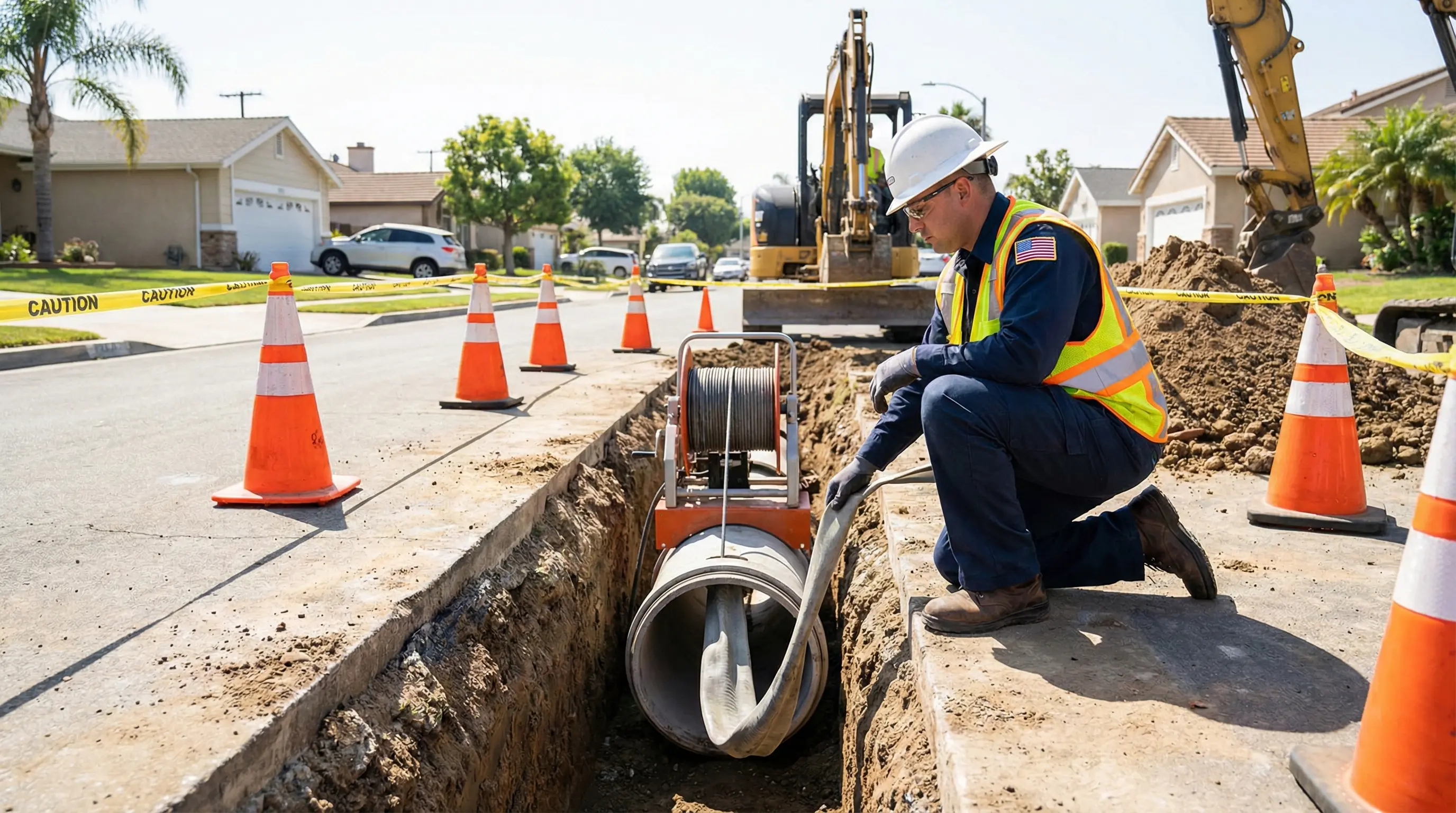
Sewer Repair & Replacement
in West Seattle
Expert sewer repair in West Seattle from a licensed Registered Side Sewer Contractor. We specialize in trenchless sewer repair, CIPP pipe lining, pipe bursting, sewer camera inspection, tree root removal, and clay pipe replacement for homes throughout Admiral, Alki, Alaska Junction, Fauntleroy, Delridge, and High Point.
Get A Sewer Estimate
Why West Seattle Homes Need Sewer Repair
If your West Seattle home was built before 1980, there is a strong chance you have vitrified clay or concrete sewer pipes running from your foundation to the city main. These materials were the standard for decades, and while they were durable for their era, most have now exceeded their intended 50- to 60-year lifespan. Neighborhoods like Fauntleroy, Admiral, and Alki are home to some of the oldest housing stock in the area, with many original sewer lines still in service from the 1920s through the 1950s.
The problem with clay and concrete pipes is their joints. Every 2 to 3 feet, a joint connects one pipe section to the next. Over decades, the soil shifts, the ground settles, and small gaps open at these joints. West Seattle's mature trees, particularly the large maples, willows, and poplars found throughout Alaska Junction and Delridge, send roots seeking moisture into those gaps. Once inside, the roots expand, crack the pipe, and eventually cause a complete collapse that no amount of drain snaking can fix.
Add in West Seattle's hillside terrain, clay-heavy soil that expands and contracts with the seasons, and the region's high annual rainfall, and you have a recipe for accelerated sewer line failure. Whether you are dealing with a sudden sewage backup or have been calling a plumber every year to clear the same recurring clog, the underlying issue is almost always a compromised sewer line that needs professional repair or replacement.
Registered Side Sewer Contractor (RSSC)
Work on sewer lines in the public right-of-way (under the sidewalk or street) requires a specific license from the City of Seattle. Not every plumber holds this credential. Sasquatch Plumbing is a fully licensed, bonded, and insured RSSC. We handle all permitting through the Seattle Department of Construction and Inspections (SDCI) and coordinate utility locates so you never have to deal with city paperwork yourself.
Sewer Camera Inspection: The First Step
Before we recommend any sewer repair method, we perform a high-definition sewer camera inspection. We insert a specialized waterproof camera through your cleanout and navigate the entire length of your sewer line, recording video in real time so you can see exactly what we see.
The camera inspection reveals tree root intrusion, cracks, joint separations, bellied sections, collapsed areas, and the overall condition of your pipe material. It also tells us the depth and distance to each problem, which is critical for determining whether trenchless sewer repair is feasible or whether traditional excavation is the better path forward.
Camera inspections cost $200 to $350 and are credited toward any repair or replacement work. We provide you with the video recording and a detailed written report. If you are buying a West Seattle home built before 1980, we strongly recommend a sewer camera inspection before closing. Discovering a failed sewer line after purchase can cost $10,000 or more.
Camera Inspection Reveals
- Tree root intrusion severity
- Pipe material and age
- Cracks, breaks, and separations
- Bellied or shifted sections
- Collapsed or deformed areas
- Grease or scale buildup
Sewer Repair Methods We Offer in West Seattle
Every sewer problem is different. We offer three proven repair methods and will always recommend the approach that genuinely fits your situation and budget, not the most expensive option.
1. CIPP Pipe Lining
Cured-In-Place Pipe (CIPP) lining is a trenchless sewer repair method that installs a brand new pipe inside your existing damaged one. We insert an epoxy-saturated felt liner through your cleanout, inflate it against the interior walls of the old pipe, and cure it with heat or UV light. The result is a seamless, jointless plastic pipe that bonds to the old pipe's interior, blocking roots permanently and sealing every crack.
CIPP lining works best when the host pipe still has structural integrity. It is ideal for clay pipes with root intrusion, joint separations, or hairline cracks. The liner reduces the interior diameter by about 1/4 inch, which has no practical impact on flow for residential sewer lines.
- No digging up your yard
- 50-year warranty on materials
- 100% root-proof (no joints)
- Completed in 1-2 days
Typical cost: $6,000 - $12,000
2. Pipe Bursting
Pipe bursting is a trenchless sewer replacement method that completely destroys your old pipe and replaces it with new HDPE (high-density polyethylene) in a single pull. We dig two small access pits, one at the house and one at the connection point. A cone-shaped steel bursting head is pulled through the old pipe, shattering it outward into the surrounding soil while simultaneously dragging the new seamless HDPE pipe into place behind it.
Pipe bursting is ideal when the old pipe is too deteriorated for lining, when sections have collapsed, or when you want a completely new pipe with full diameter. HDPE is one of the most durable pipe materials available, with an expected lifespan of 100 years or more. It also flexes slightly with ground movement rather than cracking, which is an important advantage in earthquake-prone Seattle.
- Only 2 small access pits needed
- Can upsize pipe diameter
- Works on collapsed pipes
- Indestructible HDPE material
Typical cost: $7,000 - $15,000
3. Traditional Excavation
Traditional excavation is still the right answer in certain situations. If your sewer line has a severe belly (a low spot where the pipe dips and creates a standing pool of waste), the grade must be corrected by digging up the pipe, re-grading the soil bed, and installing new PVC or ABS piping at the proper slope. Trenchless methods cannot correct grade issues.
Excavation is also the most budget-friendly option for short section repairs and gives us complete visual access to the pipe and surrounding soil conditions. For West Seattle hillside properties in Fauntleroy or Seaview, excavation sometimes provides safer and more predictable results when dealing with unstable soil.
- Corrects slope and grade issues
- Lowest cost for short sections
- Full visual inspection of soil
- Disrupts landscaping
Typical cost: $8,000 - $12,000
Sewer Repair Method Comparison
| Factor | CIPP Lining | Pipe Bursting | Excavation |
|---|---|---|---|
| Yard Disruption | Minimal | Minimal | Significant |
| Timeline | 1-2 days | 1-2 days | 3-7 days |
| Works on Collapsed Pipe | No | Yes | Yes |
| Corrects Grade/Slope | No | No | Yes |
| Warranty | 50 years | 25-50 years | 10 years |
| Cost Range | $6K - $12K | $7K - $15K | $8K - $12K |
Tree Root Removal & Prevention
Tree roots cause over 75% of sewer line problems in West Seattle. The mature maples, willows, oaks, and poplars that give neighborhoods like Fauntleroy and Admiral their character are also the biggest threat to underground pipes. Roots naturally seek the moisture and nutrients inside sewer lines, entering through joints and cracks as thin as a hair and growing into thick mats that block flow entirely.
If you are calling a plumber every 6 to 12 months to clear roots from the same line, you do not have a clog problem. You have a failing sewer line. Each root cleaning costs $300 to $600 and provides only temporary relief because the roots grow back through the same entry points. Over five years, repeated cleanings can cost more than a permanent repair.
Temporary Solutions
- Mechanical root cutting: $300-$600, lasts 6-18 months
- Hydro jetting: $400-$800, lasts 12-24 months
Permanent Solutions
- CIPP pipe lining: $6,000-$12,000, permanent
- Pipe bursting replacement: $7,000-$15,000, permanent
Clay Pipe Replacement in West Seattle
Vitrified clay was the standard sewer pipe material from the early 1900s through the 1960s. If your West Seattle home was built before 1970 and you have never replaced your sewer line, you almost certainly have clay pipe that is approaching or has already passed its intended lifespan of 50 to 60 years.
Clay pipe does not corrode like metal, but it fails in other ways. The rigid segments crack under ground movement, especially on the hillside properties common in High Point and Seaview. The mortar joints between segments deteriorate over time, creating gaps where roots enter and soil washes in. Eventually, weakened sections collapse entirely, causing total blockage.
We have replaced clay sewer pipes in hundreds of West Seattle homes, from 1930s Fauntleroy bungalows to 1950s Admiral ranches. Both CIPP pipe lining and pipe bursting work exceptionally well for clay pipe replacement, and we will recommend the method that best suits your pipe's condition after camera inspection.
Also Found in West Seattle: Orangeburg Pipe
Some homes built in the 1940s through the 1970s have Orangeburg pipe, a fiber conduit made from wood pulp and pitch. This material is fundamentally unsuitable for sewer lines. It softens, deforms into an oval shape, delaminates, and eventually collapses. If camera inspection reveals Orangeburg, we recommend immediate replacement before catastrophic failure.
Sewer Repair Pricing in West Seattle
We believe in transparent pricing. Here are typical ranges for sewer repair and replacement in West Seattle. Your actual cost depends on line length, depth, access conditions, and the method chosen.
Sewer Camera Inspection
HD video with written report
Spot Repair (Excavation)
Localized section, 5-10 feet
CIPP Pipe Lining (Full Line)
Trenchless, 40-80 feet typical
Pipe Bursting (Full Line)
Trenchless, new HDPE pipe
Full Excavation Replacement
Traditional dig, new PVC pipe
All estimates include permits, inspections, and basic site restoration. Camera inspection fee is credited toward repair work. Financing options available.
Sewer Repair FAQ for West Seattle Homeowners
How much does sewer repair cost in West Seattle?
Small spot repairs using excavation typically range from $3,000 to $6,000. A full trenchless replacement of the entire line from the house to the street runs $6,000 to $15,000, depending on the method, depth, length, and whether street restoration is required. Traditional full-line excavation with new PVC costs $8,000 to $15,000 including restoration. The Seattle average for a complete sewer line replacement is roughly $10,000 to $12,000. We provide detailed written estimates with no hidden fees before any work begins.
Will my homeowner's insurance cover sewer line repair?
Standard homeowner's insurance usually does not cover sewer line wear-and-tear, including tree root damage, which insurers consider a maintenance issue. However, if you have a specific "Service Line Endorsement" or "Side Sewer Coverage" added to your policy, it may cover $10,000 to $15,000 of the repair cost. We recommend checking your policy before you need it. Seattle Public Utilities also offers low-interest side sewer loans that can be repaid through your utility bill.
Does homeowners insurance cover tree roots in sewer lines?
Almost never under a standard policy. Tree root intrusion is classified as gradual damage from lack of maintenance, which is excluded from default homeowners coverage. The exception is if you have purchased a Service Line Endorsement (sometimes called Side Sewer Coverage) — that rider, typically $40 to $60 per year, can cover $10,000 to $15,000 of root-related sewer repair. If your insurer offers it and your home has mature trees, it is one of the highest-value endorsements you can add.
What are the disadvantages of trenchless pipe lining?
Trenchless CIPP pipe lining (cured-in-place pipe) has three real limitations. First, it slightly reduces the interior pipe diameter — usually by 5–10% — which is acceptable for residential lines but can matter on already-undersized or commercial pipes. Second, it cannot fix a fully collapsed pipe; the host pipe must still hold its shape during the curing process. Third, it costs 30–50% more upfront than basic excavation for short repairs (under 20 feet), although it is dramatically cheaper than excavation when full-line replacement, deep digs, or restoration of driveways and landscaping are involved. We always perform a camera inspection first and recommend the method that delivers the best long-term outcome for your specific pipe.
How long does sewer line replacement take?
Trenchless repairs using CIPP lining or pipe bursting are typically completed in 1 to 2 days. Traditional excavation takes 3 to 7 days depending on line length, depth, and whether concrete or driveway restoration is required. Permit processing through SDCI adds 2 to 4 weeks before work begins, but we submit permits while you are reviewing your estimate so work can start quickly once you approve.
What is a Registered Side Sewer Contractor and why does it matter?
A Registered Side Sewer Contractor (RSSC) holds a specific license from the City of Seattle that authorizes work on sewer lines within the public right-of-way, meaning the section of pipe that runs under the sidewalk or street to connect to the city main. Not every licensed plumber holds this credential. If your sewer line needs repair or replacement beyond your property line, only an RSSC can legally perform the work. Sasquatch Plumbing holds this license and handles all city permitting and coordination.
Can tree roots damage my sewer line after it has been repaired?
If the repair uses CIPP pipe lining, the answer is effectively no. The cured epoxy liner creates a completely seamless, jointless interior with no entry points for roots. Pipe bursting with HDPE produces the same result since HDPE joints are fused, not mortared. Both methods permanently solve chronic root problems. Traditional PVC replacement is also highly root-resistant when properly installed with watertight joints, though it does have joints that could theoretically be breached over many decades.
How do I know if I need a spot repair or a full sewer line replacement?
Camera inspection answers this question definitively. If damage is isolated to a single section and the rest of the pipe is in good condition, a spot repair makes sense. But if your 60-year-old clay pipe has one failed section, the rest of the line is the same age and likely has the same vulnerabilities. We provide honest assessment of whether spot repair will last 10 or more years, or whether you are better served by replacing the entire line now rather than paying for multiple repairs over the coming years.
Schedule Your Sewer Camera Inspection
Serving all West Seattle neighborhoods including Admiral, Alki, Alaska Junction, Fauntleroy, Delridge, High Point, Seaview, Gatewood, and Arbor Heights. 24/7 emergency service available.
Call (206) 888-4641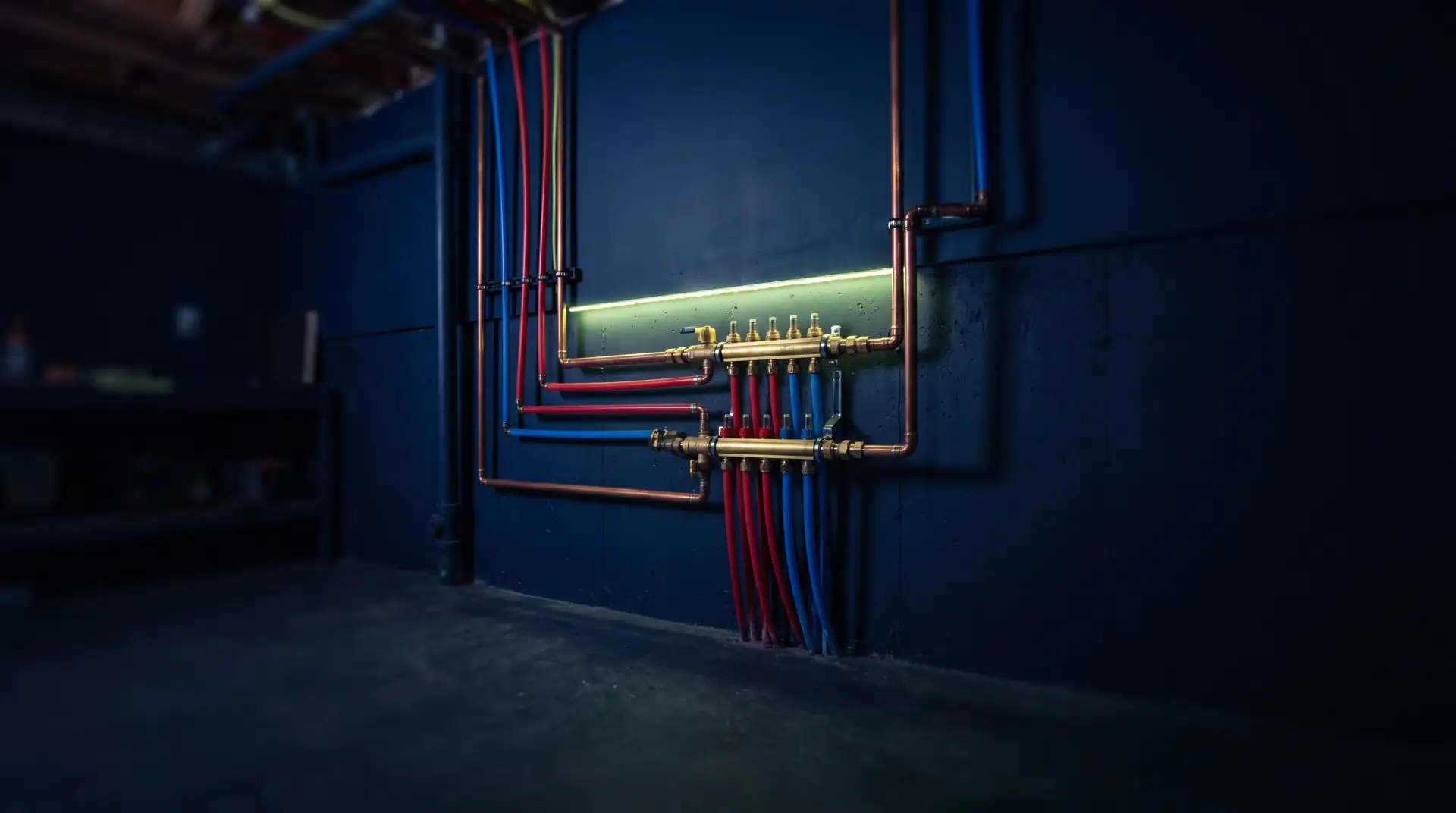
Lifetime Workmanship Warranty on Whole-Home Repipes
We install every repipe with the expectation that it will last for decades. That's why every qualifying whole-home repipe comes backed by our lifetime workmanship warranty, giving you confidence that your investment is protected.