Sewer camera inspections are a reliable way to detect hidden plumbing issues without disrupting your property. They reveal problems like tree root intrusions, cracks, corrosion, and misaligned pipes. Addressing these issues early can save you from costly repairs and health risks caused by leaks or sewage backups.
Key takeaways:
- Tree roots can invade pipes through small cracks, causing blockages and structural damage.
- Cracked or collapsed pipes lead to leaks, sinkholes, and environmental hazards.
- Misaligned or sagging pipes create low spots that trap debris, slowing drainage.
- Corrosion and clogs reduce pipe lifespan and can lead to complete failures.
Regular inspections (every 1–2 years) are especially important for older homes or properties with large trees. Solutions range from hydro jetting and trenchless pipe lining to full pipe replacements, depending on the severity of the damage. If you're buying a home, consider a sewer scope to avoid unexpected repair costs. Proper maintenance and timely inspections can keep your plumbing in good condition for years to come.
Common Sewer Line Problems Detected by Camera Inspections
Sewer Camera Scan Reveals Hidden Plumbing Issues
sbb-itb-6ceaf48
Tree Root Intrusion in Sewer Lines
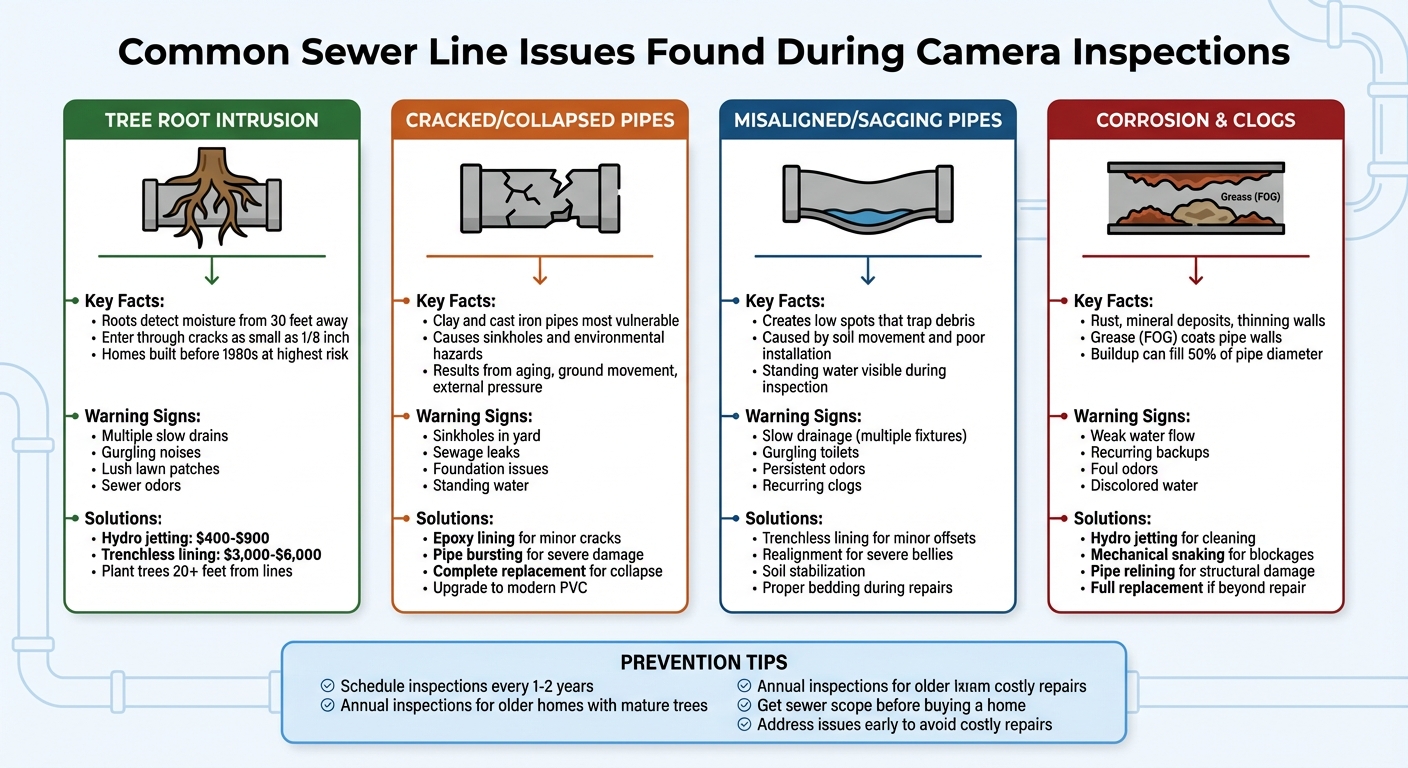
Tree roots can be a nightmare for your sewer system. They're naturally drawn to the moisture, nutrients, and oxygen inside sewer pipes. Believe it or not, roots can detect even the smallest amount of moisture vapor escaping from tiny cracks or loose joints - sometimes from as far as 30 feet away. Once they find an opening (even as small as 1/8 inch), they force their way in. Common entry points include cracks in aging pipes, loose joints, and the porous surfaces of older clay or concrete pipes. Homes built before the 1980s are especially at risk since they often use clay or cast-iron pipes, which are much weaker than modern PVC.
Once inside, roots grow and spread, creating a tangled web that traps debris. This buildup slows drainage and can eventually cause full blockages. As roots thicken, they put more pressure on the pipe walls, making cracks widen until the pipe breaks or collapses. Leaking wastewater from these damaged pipes fertilizes the surrounding soil, encouraging even more root growth and speeding up the damage. A sewer camera inspection is the best way to catch these issues early, before they escalate into major problems.
Warning Signs of Root Intrusion
Spotting the signs of root intrusion early can save you a lot of money and headaches. If multiple drains in your home - like sinks, tubs, and toilets - start draining slowly at the same time, it’s likely a main sewer line issue rather than a simple clog. Gurgling noises from toilets or drains can also signal that a root mass is blocking normal flow and trapping air.
| Warning Sign | What It Means |
|---|---|
| Slow Drains | Multiple fixtures draining slowly at the same time. |
| Gurgling Noises | Bubbling sounds caused by trapped air in the pipes. |
| Frequent Clogs | Recurring blockages that return soon after being cleared. |
| Sewer Odors | Foul smells near drains or in your yard from cracked pipes. |
| Lush Lawn Patches | Unusually green, soft grass or soggy areas over affected spots. |
Persistent sewer odors around floor drains or in your yard often mean roots have cracked a pipe, allowing gases to escape. Similarly, patches of lush, fast-growing grass or soggy, sunken areas in your lawn can indicate a leaking sewer pipe that's fertilizing the soil. These clues can help you catch root intrusions before they cause serious damage.
How to Remove and Prevent Root Intrusion
Hydro jetting is one of the most effective ways to get rid of root intrusions. This process uses high-pressure water to blast away root masses and debris from pipe walls, with costs typically ranging between $400 and $900. Unlike snaking, which only clears a small path through the blockage, hydro jetting removes enough material to slow down regrowth.
For more severe damage, trenchless pipe lining is a great solution. This method creates a new, seamless pipe inside the old one that roots can’t penetrate, costing between $3,000 and $6,000. For example, a homeowner with a main line that was 70% blocked used hydro jetting followed by trenchless lining to fix the issue in just one day, avoiding the $10,000+ cost of a full pipe replacement.
Preventing root intrusion starts with smart planning. When planting new trees, keep them at least 20 feet away from sewer lines. You can also install metal or plastic root barriers to direct root growth away from underground pipes. Regular sewer camera inspections - every two years or annually for older homes with mature trees - can catch problems early. By staying proactive, you can keep root intrusions in check and protect your sewer system from further issues.
Cracked, Broken, and Collapsed Pipes
Sewer cameras are incredibly effective at identifying cracked, broken, or collapsed pipes that can put your entire system at risk. When pipes fail - whether through cracks, breaks, or full collapses - wastewater can seep into the surrounding soil. This leakage not only harms the environment but can also lead to sinkholes. The precision of sewer cameras allows for pinpointing the exact location and severity of the damage. These detailed visuals not only highlight existing issues but also help determine the best approach for repairs.
What Causes Pipe Damage
Aging and material breakdown are major factors behind damaged pipes. Older sewer lines, particularly those made from clay or cast iron, tend to become brittle with time, forming hairline cracks as they age. Metal pipes are especially vulnerable to corrosion caused by hydrogen sulfide gas or acidic soils. Camera inspections can reveal telltale signs like rust, mineral deposits, or thinning walls. As Wallner Plumbing notes:
"Properly installed and cared for sewer lines can last for decades"
Even so, no system is immune to the effects of time.
Ground movement and soil shifting also play a role. Natural events like earthquakes, landslides, erosion, and soil settlement can strain pipes, causing them to crack or buckle. Even minor soil shifts can misalign pipes, detaching joints and creating weak spots. Homes in areas prone to unstable soil or freeze-thaw cycles are particularly susceptible to these problems.
External and internal pressure contributes to pipe damage as well. Heavy traffic from trucks or construction machinery can crush undersized pipes. Internally, blockages caused by grease, oils, or debris can create clogs, leading to water pressure that ruptures pipe walls. Poor installation practices - such as improper drain angles, weak couplings, or insufficient gravel support - can further weaken pipe structures, increasing the likelihood of failure.
Here’s a breakdown of common damage causes that sewer cameras can uncover:
| Cause of Damage | What Cameras Reveal | Impact on Your System |
|---|---|---|
| Pipe Belly (Sagging) | Standing water and debris buildup | Frequent clogs and reduced flow |
| Root Intrusion | Roots entering joints, worsening structural issues | Complete blockages and pipe breaks |
| Corrosion | Rust, mineral deposits, or thinning pipe walls | Leaks and eventual pipe failure |
| Misalignment | Shifted or "offset" pipe joints | Leaks and entry points for debris and roots |
Repair Methods for Damaged Pipes
Once the damage is identified, the right repair method depends on its severity. For less extensive issues, epoxy lining (also known as sewer lining) is a common solution. This technique involves inserting a resin-coated liner into the pipe, which hardens into a seamless, durable surface. A newer option, trenchless UV lining, uses ultraviolet light to cure the resin quickly, cutting down on repair time.
For severe damage, pipe bursting is an effective solution. This method involves breaking apart the old pipe while simultaneously pulling a new one into place. If the damage is limited to a small section, point repair can address just that area, saving both time and money.
In cases of total pipe collapse, sewer cameras may not be able to navigate the blockage. As C. Lee Services explains:
"A failed or incomplete sewer camera inspection due to extensively damaged pipes can help in discovering the need for immediate new sewer line installation"
When this happens, complete pipe replacement becomes necessary. Upgrading from older materials like clay or cast iron to modern PVC during replacement helps prevent future problems like corrosion and root intrusion.
Misaligned and Sagging Pipes
Misaligned pipes, along with sagging sections - often called "bellies" - are serious problems that sewer camera inspections can uncover. These issues create low spots in the pipe where water and debris collect, increasing the risk of clogs and backups.
One major cause of misaligned or sagging pipes is soil movement. Shifting ground, compacting clay, and fluctuating groundwater levels can push pipes out of alignment, deepening existing dips. This makes regular camera inspections crucial for spotting early signs of trouble. As Mr. Rooter Plumbing explains:
"Any condition which causes a disruption to the smooth, sloped line of a sewer can cause major damage." - Mr. Rooter Plumbing
Poor installation practices are another factor. Pipes that aren't properly supported during installation - due to inadequate bedding or loosely compacted soil - are more likely to shift over time. Shallow trenches and weak backfill materials fail to hold pipes in place, especially when the ground moves. Aging pipes, particularly older clay or cast iron ones, may even sag under their own weight at weakened joints.
External pressures play a role as well. Heavy vehicles driving over shallow sewer lines can compress or shift pipes, and large tree roots growing underneath can physically lift them, distorting their slope and creating new low spots.
Finding Sagging Pipes with Camera Inspections
Sewer cameras are excellent tools for identifying bellies and misaligned joints that can’t be seen from above ground. A sagging section, or belly, shows up as standing water that remains even after fixtures stop running. During an inspection, the camera lens may wobble in stagnant water, creating a hazy or distorted video feed.
"A 'belly' is a dip in the pipe where water sits even after fixtures stop running. You rarely see a belly from the surface, but you feel the effects." - Acme Plumbing Co.
Offsets, on the other hand, appear when two pipe sections no longer align properly. The camera often reveals a visible "lip" or step at the joint, and technicians can observe how water flows through the area. A proper slope allows water to flow smoothly, while sagging or offset sections cause pooling and slow drainage. Accumulations of grease, paper, or other debris at these problem areas confirm the presence of misalignment. Even shallow standing water - just 1/8 to 1/4 inch - can signal a sag or flat spot that may need monitoring or repair.
Homeowners should watch for warning signs like gurgling toilets after a shower, slow drainage from multiple fixtures on the same floor, unusually lush patches of grass, or persistent sewer odors near floor drains. NW Sewer & Drain cautions:
"A belly in your sewer line is one of those plumbing issues people love to underestimate - right up until it becomes a full-blown crisis." - NW Sewer & Drain
Fixing Misaligned Pipes
Once a belly or misalignment is identified, addressing the issue quickly can prevent further damage. The repair method depends on the severity of the problem. For minor offsets or small cracks, trenchless lining can smooth out the interior of the pipe, restoring proper flow without the need for extensive digging.
For more severe bellies, realignment or replacement may be necessary to restore the correct slope. Spot repairs can address isolated problems, while trenchless pipe bursting is an option for replacing larger sections. In some cases, stabilizing the surrounding soil is required to prevent future shifting.
Hydro-jetting can clear debris from a sagging pipe, but it won’t fix the structural problem itself. Severe bellies often require excavation to correct the grade. Proper bedding and soil compaction during repairs are essential to ensure the new pipes don’t settle into the same dips. Sewer Solutions NW explains:
"Ideally, pipes are supposed to be installed at an ever-so-slight decline, which allows gravity to do all the work." - Sewer Solutions NW
Scheduling sewer camera inspections every one to two years is a smart way to catch misalignments early, especially in areas with older pipes or significant tree growth. For homebuyers, requesting a sewer scope before closing can reveal hidden problems that might lead to costly repairs later. Regular inspections are the best defense against major backups and expensive sewer failures.
Pipe Corrosion and Clogs
Sewer cameras do more than uncover structural issues - they also reveal internal problems like corrosion and clogs that can disrupt your plumbing system. Let’s break it down:
Corrosion is a gradual process that eats away at the interior of pipes. This can happen due to water, chemicals, or even electrical currents. Cast iron pipes are particularly vulnerable, often showing rust flakes and pitting, while concrete pipes wear down as their cement and aggregate are washed away. Certain factors can speed up corrosion, like harsh chemical drain cleaners, acidic water with a low pH, or electrochemical reactions caused by dissimilar metals in contact with moisture. Even improperly grounded electrical appliances connected to copper pipes can contribute.
Clogs, on the other hand, form when grease, debris, or foreign objects build up inside the pipes. Fats, oils, and grease (FOG) coat the pipe walls, restricting flow. Add to this hair, soap scum, mineral deposits, soil, and other materials, and you’ve got a recipe for complete blockages. In severe cases, the buildup can be so significant that a sewer camera might sit up to 50% higher in the pipe because of the layers of material stuck to the walls.
Recognizing Corrosion and Clogs
Sewer cameras provide a clear view of what’s going on inside your pipes. Corrosion often shows up as uneven, pitted surfaces. In cast iron pipes, you might notice rust, flaking, or thinning walls that could eventually crack or collapse. Galvanized pipes tend to collect mineral deposits or rust over time, which reduces water flow. Concrete pipes often display a distinct “water-flow line,” where the bottom looks rougher due to erosion compared to the smoother top.
Clogs have their own telltale signs. Grease buildup appears as thick, caked-on material narrowing the pipe’s interior, while debris and foreign objects create visible blockages. Stagnant water in low points of the pipe is another clear indicator of a clog. Homeowners should also be on the lookout for warning signs like slow-draining sinks, weak water flow, recurring sewage backups, foul odors from drains, and unexpected pools of water or sewage in the yard.
Cleaning and Treatment Options
Once a sewer camera inspection identifies the issue, the next step is treatment. Here are some common options:
- Hydro jetting: This method uses high-pressure water to clear out grease, sediment, and debris, effectively cleaning the entire pipe interior.
- Mechanical snaking: A drain snake or cable machine is used to break up stubborn clogs or cut through tree roots.
- Chemical treatments: These are often used for organic blockages or to eliminate roots.
If corrosion has compromised the pipe’s structural integrity, more extensive repairs may be needed. Pipe relining offers a trenchless solution by inserting a durable liner into the existing pipe, sealing cracks and preventing further damage. For pipes that are beyond repair, pipe bursting is an option - it involves pulling a new pipe through the old one, breaking the damaged pipe apart in the process. In extreme cases, fully replacing the pipe with modern PVC may be the most reliable long-term fix.
Before choosing a cleaning or repair method, always schedule a sewer camera inspection. This ensures you address the root of the problem without causing further damage. With the right treatment, your plumbing system can function smoothly for years to come.
How Sasquatch Plumbing Services Seattle Can Help

After identifying common sewer problems, the next step is ensuring reliable inspections to guide effective repairs.
Professional Sewer Camera Inspections
Sasquatch Plumbing employs high-resolution, waterproof cameras to inspect your sewer lines from the inside. These cameras provide a live video feed displayed on a ground-level screen, helping technicians locate issues like tree root intrusions, cracked pipes, or corrosion.
This method is non-invasive, saving both time and money. Inspections typically take 1–2 hours, with clear and upfront pricing. As Tony Luckoski, Owner and Master Plumber at Advanced Sewer & Drain Cleaning, explains:
"A sewer camera inspection can be one of the easiest and quickest ways to diagnose an issue within your sewer and plumbing system... to prevent preliminary digging or disruption"
For homeowners in West Seattle, this means less disruption to your landscaping and daily routine.
These inspections also help you steer clear of expensive surprises later. Spotting small cracks or early root intrusions can prevent them from escalating into major failures that could damage your foundation or lead to costly repairs. If you’re buying a home in West Seattle, scheduling an inspection beforehand can uncover hidden pipe damage and save you from unexpected repair bills.
Other Plumbing Services Available
Once problems are identified, Sasquatch Plumbing acts quickly with targeted solutions. For example, hydro jetting uses high-pressure water to clear grease and debris, while repiping services (starting at $4,500) replace old or damaged pipes with durable materials like PEX or copper. These services include permits, inspections, and a 5-year labor warranty.
Additional offerings include drain cleaning, water heater repair and installation, water line repairs, and plumbing for kitchen and bathroom remodels. With same-day emergency services available across West Seattle, you won’t have to wait when a sewage backup or burst pipe threatens your home. Thanks to their advanced diagnostic tools, transparent pricing, and satisfaction guarantee, Sasquatch Plumbing ensures your system gets the care it needs - without hidden fees or delays.
Conclusion
Sewer camera inspections can uncover a range of issues - like tree root invasions, cracks, misaligned pipes, and corrosion - that often lead to clogs, leaks, or widespread system damage.
Spotting these problems early makes a big difference. As Geno Caccia from Caccia Home Services explains:
"A sewer camera inspection may help you save a lot of money that would otherwise be spent on repairing and fixing sewage problems again and over".
Experts recommend scheduling inspections every 18–24 months. Additionally, a pre-purchase sewer scope can help identify hidden damage before finalizing a property sale.
Sasquatch Plumbing Services Seattle takes these inspections a step further with high-resolution cameras and skilled analysis to pinpoint issues. Their solutions - ranging from hydro jetting to repiping - are offered with transparent pricing and a satisfaction guarantee. Plus, with same-day emergency services available throughout West Seattle, they ensure small sewer problems don’t turn into expensive repairs.
FAQs
How much does a sewer camera inspection cost?
The cost of a sewer camera inspection generally falls between $100 and $800. Most homeowners spend somewhere in the range of $250 to $500, though projections suggest the average cost could reach $999 by 2025. Pricing depends on factors such as the scope of the inspection and the specific location.
Can a sewer camera inspection miss a problem?
Yes, a sewer camera inspection might overlook certain problems, like leaks. These cameras are built to provide a visual inspection of the pipe's interior but aren't equipped to directly detect or locate leaks. To identify such issues accurately, additional diagnostic tools or methods are often necessary.
Will hydro jetting damage old sewer pipes?
Hydro jetting has the potential to harm old sewer pipes if they are already in a fragile or deteriorated state. However, when a professional conducts a sewer camera inspection beforehand to assess the pipe's condition, the process is typically safe, even for older systems. This careful evaluation helps ensure the cleaning approach is adjusted to reduce risks and protect the plumbing's overall structure.