
Dealing with sewer clogs? Hydro jetting is a powerful solution that uses high-pressure water (3,500–4,000 PSI) to clear blockages and clean the inside of pipes. Unlike snaking, which only creates a small opening, hydro jetting removes grease, tree roots, mineral buildup, and debris, restoring full pipe capacity. It’s chemical-free, eco-friendly, and works on various pipe materials like PVC, steel, and cast iron.
Key Benefits:
- Thorough cleaning: Removes years of buildup, including grease and mineral deposits.
- Prevents future clogs: Leaves pipes smooth, reducing debris accumulation.
- Safe for pipes: Avoids harsh chemicals that can cause damage.
- Fast and effective: Resolves stubborn or emergency clogs quickly.
Hydro jetting is ideal for older homes, tough clogs, or emergency backups. It’s a cost-effective option ($350–$600) that extends the time between cleanings and helps avoid costly pipe replacements. If you’re dealing with persistent plumbing issues, hydro jetting might be the solution you need.
Hydro-Jetting a Clogged Sewer Line
sbb-itb-6ceaf48
What Is Hydro Jetting?
Hydro jetting is a method that uses high-pressure water - ranging from 1,500 to 4,000 PSI - to clear clogs and thoroughly clean the walls of sewer pipes. Unlike snaking, which only creates a small passage through a blockage, hydro jetting scrubs the entire interior surface of the pipe. This process removes grease, mineral buildup, tree roots, and other debris that can accumulate over time.
This technique works on various pipe materials, such as PVC, steel, clay, cast iron, cement, and resin-based pipes. By cleaning the full diameter of the pipe, hydro jetting restores its original capacity and flow without relying on chemicals. Next, let’s break down how high-pressure water and specialized nozzles team up to tackle clogs.
How High-Pressure Water Clears Clogs
The power of hydro jetting lies in its multi-directional cleaning. Specialized nozzles release water jets forward to break apart blockages and backward to propel the hose and flush out debris. This high-speed water stream can cut through tough materials like hardened grease, mineral buildup, tree roots, and even ice. Unlike mechanical snakes that often leave residue behind, hydro jetting provides a deep clean that helps reduce the chance of future clogs. For industrial-level obstructions, some systems can ramp up the pressure to an impressive 8,500 PSI.
Equipment Used for Hydro Jetting
Hydro jetting relies on rugged, high-pressure equipment to get the job done. At the heart of the process is a jetter machine, which uses a pump to pressurize water from a storage tank. This pressurized water travels through a reinforced hose designed to handle extreme pressures and navigate tight pipe bends.
Plumbers use a variety of nozzles tailored to different challenges: chisel nozzles for cutting through tough blockages like tree roots or ice, rotating nozzles for a 360-degree clean of pipe walls, and fan nozzles for clearing general debris. A waterproof sewer camera is also a key part of the process, allowing for pipe inspection both before and after jetting. This ensures the pipe’s condition is assessed and the cleaning is confirmed as successful. Together, these tools deliver a thorough and reliable clean.
How Hydro Jetting Works: Step-by-Step
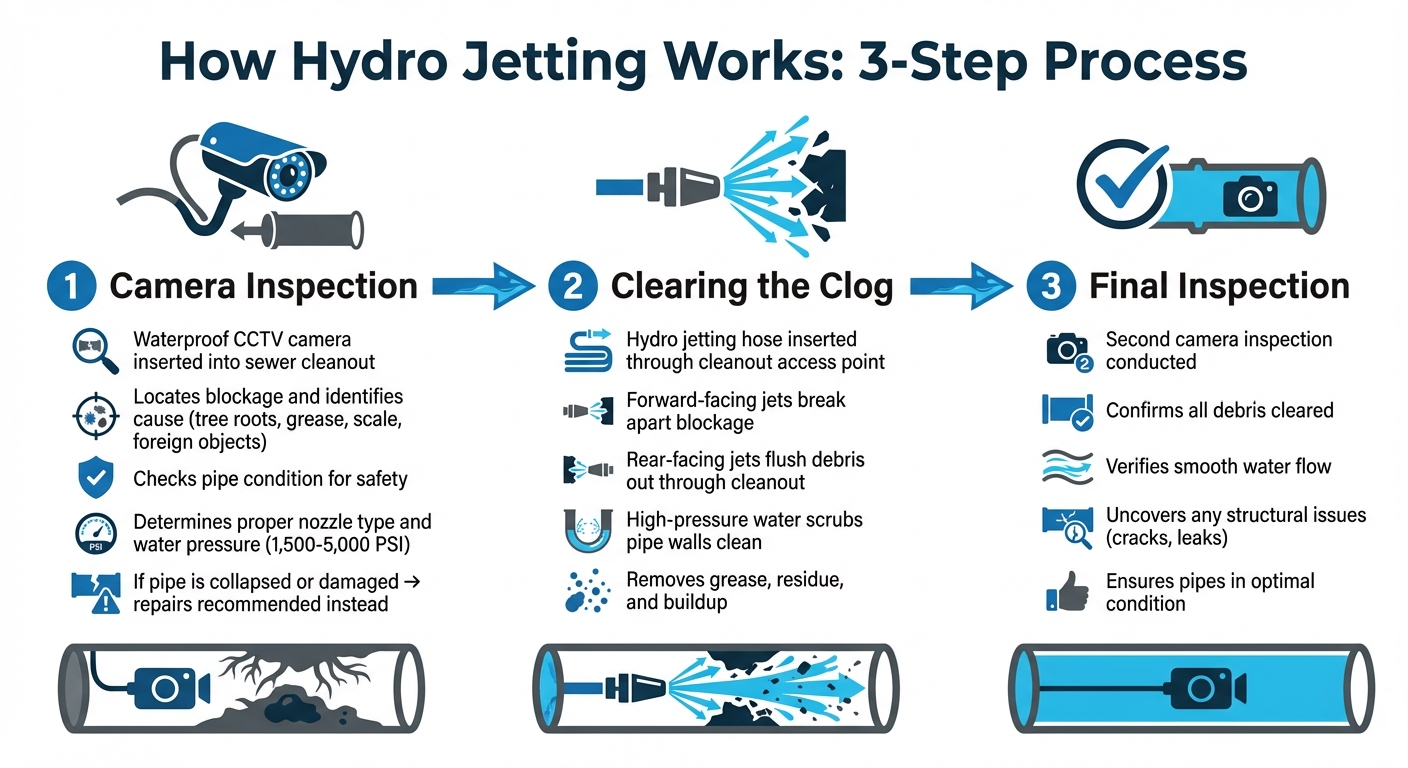
Hydro Jetting Process: 3-Step Sewer Line Cleaning Method
Hydro jetting is a precise process plumbers use to clear sewer clogs and restore proper pipe function. It involves three key steps, each designed to ensure thorough cleaning and maintain the health of the plumbing system.
Step 1: Camera Inspection
The process begins with a camera inspection. A waterproof CCTV camera is fed into the sewer cleanout to locate the blockage and identify its cause - whether it's tree roots, grease buildup, scale, or foreign objects. This inspection also checks the pipe's condition to ensure it's safe for hydro jetting. If the camera detects a collapsed or severely damaged pipe, the plumber will recommend repairs or replacement instead. Additionally, this step helps determine the right nozzle type and the proper water pressure, which can range from 1,500 to 5,000 PSI.
Step 2: Clearing the Clog
Once the pipe's integrity is confirmed, the plumber inserts the hydro jetting hose through the cleanout access point. The nozzle uses forward-facing jets to break apart the blockage, while rear-facing jets flush the debris out through the cleanout. The high-pressure water stream not only clears the clog but also scrubs the pipe walls clean of grease, residue, and other buildup.
Step 3: Final Inspection
After the cleaning is complete, the plumber conducts a second camera inspection. This step ensures that all debris has been cleared and confirms that water flows smoothly through the pipes. The inspection can also uncover any structural issues, such as cracks or leaks, that were hidden by the blockage or revealed during the cleaning process.
This systematic approach guarantees a thorough and efficient cleaning, leaving the pipes in optimal condition.
Benefits of Hydro Jetting
Complete Pipe Cleaning
Hydro jetting goes beyond clearing a small pathway through a clog - it thoroughly cleans the entire pipe. It removes grease, soap buildup, and mineral deposits, restoring pipes to nearly their original capacity. Unlike mechanical snakes, which are much thinner than the pipe and can only clear a narrow path, hydro jetting eliminates years of accumulated debris.
The high-pressure water effectively breaks down hardened grease, mineral scale, ice, and silt - materials that snaking often leaves behind. For tree roots, snaking tends to cut through them, allowing rapid regrowth, while hydro jetting removes the entire root system. It also flushes out organic sludge and bacteria, which are common sources of unpleasant odors. Plus, the effects of hydro jetting typically last three to four times longer than those achieved by snaking.
Chemical-Free and Environmentally Friendly
Hydro jetting relies solely on high-pressure water, avoiding the need for caustic chemicals that can damage pipes and harm the environment. Unlike chemical drain cleaners, which can corrode plumbing over time, hydro jetting is gentle on most pipe materials, helping to extend the lifespan of your sewer system.
By skipping harsh chemicals, hydro jetting ensures no harmful substances enter municipal wastewater systems or local groundwater. This is especially important considering that fats, oils, and grease account for about 50% of sewer overflows in the United States.
Prevents Future Clogs
Hydro jetting doesn’t just clear existing blockages; it also helps prevent future clogs. By removing soap scum, hair, mineral buildup, and biofilm, it creates a smooth interior surface in the pipe. This reduces the likelihood of new debris sticking to the walls and extends the time between maintenance needs. These long-lasting results make hydro jetting an excellent choice for tackling severe or recurring clogs.
When to Use Hydro Jetting
Tough Clogs That Won't Clear
If plunging or snaking hasn’t worked, hydro jetting could be the solution you need. This method is incredibly effective at tackling stubborn blockages that traditional tools just can’t handle. For instance, tree roots that invade sewer lines through small cracks and heavy grease buildup in kitchen drains often require high-pressure water - ranging from 3,500 to 4,000 PSI - to be fully cleared [3,27]. Unlike snaking, which might only poke a hole through the clog and leave it partially intact, hydro jetting completely eliminates the obstruction. It also breaks down hardened "fatbergs", mineral scale, and calcified deposits [3,8]. When minor fixes fail, hydro jetting provides a thorough cleaning that prepares older systems for better functionality.
Older Homes with Buildup
Homes built before the 1980s, especially in areas like West Seattle, often have sewer pipes filled with decades of debris, soap scum, and mineral buildup. Hydro jetting is the only method that can fully clean these pipes, restoring them to near-original flow capacity [3,11]. The region's wet climate and abundant vegetation increase the risk of tree root intrusion, making hydro jetting even more valuable for properties with mature trees near their sewer lines. If these issues worsen and lead to backups, a quick and thorough solution becomes essential.
Emergency Sewer Backups
Dealing with a full-house backup or sewage coming up through your drains? Hydro jetting offers a fast and effective fix. Once the technician arrives, the process usually takes only 60 to 90 minutes, making it a reliable option for emergencies [11,27]. It clears the line completely, reducing the risk of immediate re-clogging.
Sasquatch Plumbing Services Seattle provides same-day emergency hydro jetting for urgent sewer line blockages throughout West Seattle. Before starting, their technicians perform a camera inspection to confirm that your pipes can handle the high-pressure water - an important step for older or fragile pipes that may have cracks or corrosion [27,28]. If you’re noticing gurgling toilets, unpleasant sewer odors in your yard, or water backing up into multiple fixtures, contact Sasquatch Plumbing Services Seattle immediately at https://sasquatchplumbingseattle.com. They’ll deliver a fast and effective solution with upfront pricing to resolve your sewer emergency.
Conclusion
Hydro jetting is one of the most thorough ways to clear sewer line clogs and keep pipes clean. Unlike snaking, which only creates a narrow path through a blockage, hydro jetting cleans the entire interior of the pipe. It removes debris, grease, and mineral buildup, restoring flow and helping to prevent future clogs. Plus, it’s a chemical-free option, making it safer for both your pipes and the environment.
With a cost range of $350–$600, hydro jetting can reduce the need for frequent drain cleanings - up to four times less often compared to snaking. This makes it a cost-effective choice over time.
For those dealing with stubborn clogs, frequent backups, or years of buildup in older pipes, hydro jetting offers a powerful, long-lasting solution. It’s particularly effective against tough issues like heavy grease, mineral deposits, and tree roots - problems that are all too common in areas with a wet climate.
If you’re ready to experience the benefits of clean, free-flowing sewer lines, professional hydro jetting is the way to go. Sasquatch Plumbing Services Seattle provides expert hydro jetting with upfront pricing and same-day emergency service throughout West Seattle. Their team also conducts a pre-service camera inspection to ensure your pipes are ready for treatment. Visit https://sasquatchplumbingseattle.com to schedule your service today and say goodbye to sewer clogs for good.
FAQs
What’s the difference between hydro jetting and snaking for clearing sewer clogs?
Hydro jetting and snaking are two popular techniques for tackling sewer clogs, but they each have unique strengths and are best suited for different scenarios.
Snaking involves using a long, flexible metal cable equipped with an auger to either break apart or pull out blockages. It’s an affordable option that works well for minor clogs. However, it doesn’t fully clean the pipe walls, often leaving behind debris. This leftover buildup can lead to recurring issues, meaning snaking might need to be repeated for more severe blockages.
Hydro jetting takes a different approach by using high-pressure water - up to 4,000 psi - to clean pipes thoroughly. This method is highly effective at removing grease, mineral buildup, tree roots, and other stubborn debris. It leaves the pipe walls spotless and reduces the need for frequent maintenance. That said, the intense pressure might not be safe for older or more fragile pipes.
For homeowners in Seattle facing persistent or tough clogs, Sasquatch Plumbing Services Seattle recommends hydro jetting as a long-lasting, chemical-free, and hygienic solution to keep your sewer lines in excellent condition.
Is hydro jetting safe for older or fragile pipes?
Hydro jetting is a highly effective cleaning method, but it’s not always the best option for every plumbing system. Pipes that are older, fragile, or significantly corroded might not withstand the intense water pressure used during the process. In such cases, the high-pressure water can lead to cracks or even breakage. To avoid these risks, it’s essential to have a professional plumber assess the condition of your pipes beforehand. This step ensures the cleaning process is both safe and successful.
What are the warning signs that my sewer lines might need hydro jetting?
If you’re dealing with plumbing problems like slow-draining sinks, tubs, or showers, it might mean there’s a blockage deep in your sewer line. Other signs to watch for include:
- Strange noises like gurgling or bubbling from your pipes or toilet, which can indicate water struggling to move past an obstruction.
- Frequent backups or standing water, especially in lower-level fixtures like basement drains.
- Lingering sewer odors in your home, often caused by decomposing debris stuck in the pipes.
- Repeated clogs in multiple drains, which could point to grease, sludge, or even tree roots causing buildup.
If you notice any of these issues, it might be time to consider hydro jetting. Reach out to Sasquatch Plumbing Services Seattle for a professional inspection. Their skilled plumbers use high-pressure water streams - up to 8,500 PSI - to clear stubborn clogs and thoroughly clean your sewer lines. This eco-friendly method restores proper flow and keeps your plumbing in top shape.