
If your home has cast iron pipes, especially those installed before the 1970s, they may be nearing the end of their lifespan. These pipes typically last 50–100 years but can deteriorate faster due to corrosion, moisture, or root intrusion. Ignoring failing pipes can lead to water damage, foundation issues, mold growth, and costly repairs. Here’s how to spot the warning signs early and decide whether to repair or replace them:
- Visible Damage: Cracks, rust, or flaking on exposed pipes.
- Leaks: Water stains, warped floors, or unexplained puddles.
- Drain Issues: Slow drains, gurgling sounds, or frequent clogs.
- Water Quality: Brown water or metallic smells.
- Sewage Odors: Persistent smells inside or outside your home.
Repair vs. Replacement: Repairs may work for minor issues but are often temporary. If your pipes are over 50 years old or have recurring problems, full replacement with modern materials like PVC or PEX is a better long-term solution. Replacement costs range from $4,500 to $15,000, depending on your home’s size and the materials used. Acting now can prevent structural damage and save money in the long run.
Cast Iron Drain Pipe Replacement | Galvanized Drain Pipe Repair | Orangeburg Sewer Pipe Problems
sbb-itb-6ceaf48
Warning Signs Your Cast Iron Pipes Are Failing
Spotting these signs early can save you from costly repairs and extensive damage. When cast iron pipes begin to fail, they often show clear symptoms that shouldn't be ignored. Here are the most common warning signs to watch for.
Cracks, Holes, and Surface Rust
Take a close look at any exposed cast iron pipes for rust, flaking metal, or dimpling. These visible issues suggest the pipe's structure is already deteriorating, and the internal condition may be much worse. Rust and surface damage are often just the tip of the iceberg when it comes to corrosion inside the pipe.
"Brown or yellow water indicates that rust is present inside your pipes. While this does not usually imply a complete system failure, it does signal that the pipes are deteriorating and possibly discharging toxins into your water supply." - Roto-Rooter
If you notice these signs, it's a good idea to inspect the entire system. Other indicators, like water damage or unexpected moisture, are just as concerning.
Water Leaks and Moisture Damage
Leaks are a major red flag. Look for unexplained puddles, water stains on walls, warped floors, or damp areas near your foundation. Even small leaks can lead to significant problems, especially in humid areas like West Seattle, where mold thrives in damp conditions. If you're seeing these issues, it's likely that your cast iron pipes are leaking and need immediate attention.
Beyond leaks, problems with drainage can also point to pipe failure.
Slow Drains, Gurgling Sounds, and Repeated Clogs
If several drains in your home are slow or you hear gurgling sounds after flushing, it’s more than just a minor clog. Rust and mineral buildup inside the pipes can narrow the interior, restricting water flow and trapping debris. This rough, corroded surface makes it easy for hair, grease, and other particles to get stuck, leading to frequent blockages. Gurgling sounds often mean air is trapped in the system due to these restrictions or a major blockage in your main sewer line.
Changes in water quality can also signal trouble.
Brown Water or Metallic Smells
Brown or yellow water is a clear sign of internal rust. As cast iron pipes corrode, they release rust particles into the water supply. A metallic smell or taste is another clue that the pipes are breaking down. In severe cases, you might even see brown water backing up into your tub or shower after flushing the toilet, which could mean the pipe has completely collapsed.
Perhaps the most alarming sign is the presence of sewage odors.
Sewage Odors Inside or Outside Your Home
If you notice a persistent sewage smell, either indoors or outdoors, your pipes may have cracks or holes. These gaps allow sewer gases to escape into your home or yard. Outside, you might see unusually lush, green patches of grass caused by leaking sewage acting as fertilizer. These signs point to severe pipe deterioration that needs immediate attention.
| Sign | What It Indicates |
|---|---|
| Brown/Yellow Water | Rust particles entering the water supply |
| Gurgling Drains | Air trapped by blockages or restricted flow |
| Lush Green Lawn Patches | Sewage leaks fertilizing the grass |
| Persistent Sewage Odor | Cracks or holes releasing sewer gas |
| Slow Drains (Multiple) | Narrowed pipe diameter due to corrosion |
| Surface Dimpling/Flaking | Advanced external corrosion |
What Happens If You Ignore Damaged Cast Iron Pipes
Ignoring damaged cast iron pipes can lead to escalating costs and widespread issues. When these pipes fail, the damage often extends beyond just plumbing, affecting your home's foundation, safety, and overall structure.
Foundation and Structural Damage
Leaking cast iron pipes can wreak havoc on your home's foundation. Water from underground leaks saturates the soil, which can lead to cracks in your foundation and walls. Over time, persistent leaks may even cause sinkholes in your yard. The weight of cast iron pipes can worsen the problem, as they sink into the softened soil, causing further misalignment and cracking in the plumbing system.
"If your mainline has a leak that you haven't detected, it can cause cracks in the foundation or along the walls. These need to be repaired ASAP." – Accurate Leak
Inside your home, leaks can damage interior finishes, leading to costly repairs. Fixing foundation damage, leveling floors, or rebuilding walls can quickly add up to tens of thousands of dollars - far exceeding the cost of replacing the pipes. This highlights why addressing pipe issues promptly is so important.
Health Risks and Safety Concerns
Damaged pipes also pose serious health risks. Even a small hidden leak can create conditions for mold growth, as mold thrives in humidity levels as low as 55%. Shockingly, 21% of asthma cases in the U.S. are linked to mold and dampness caused by undetected leaks. Beyond mold, cracks in pipes can release sewer gases like methane, hydrogen sulfide, and carbon dioxide into your home. These gases not only smell unpleasant but can also cause respiratory issues. Additionally, the moisture and sewage from damaged pipes attract pests like rodents and insects, which can enter your home through the cracks.
Higher Repair Bills Later
Delaying repairs often leads to higher costs. Temporary fixes only address symptoms, not the underlying problem, meaning new cracks and leaks are likely to appear nearby. This cycle of patchwork repairs drives up expenses, especially since emergency services often come with premium rates. On top of that, you may face additional costs for mold removal, pest control, and structural repairs - expenses that could have been avoided with timely action. To make matters worse, many homeowner insurance policies won’t cover damage caused by long-term neglect of cast iron pipes.
Here’s a breakdown of the long-term effects of delaying repairs:
| Type of Damage | Physical Sign | Long-term Consequence |
|---|---|---|
| Foundation Damage | Cracks in walls or slab | Compromised structural stability; costly leveling |
| Soil Erosion | Pavement sagging or sinkholes | Collapse of walkways, driveways, or yard structures |
| Internal Leaks | Visible interior water damage | Mold remediation and full room reconstruction |
| Sewage Backup | Puddles of waste in the yard | Soil contamination and health risks from pathogens |
Should You Repair or Replace Your Cast Iron Pipes?
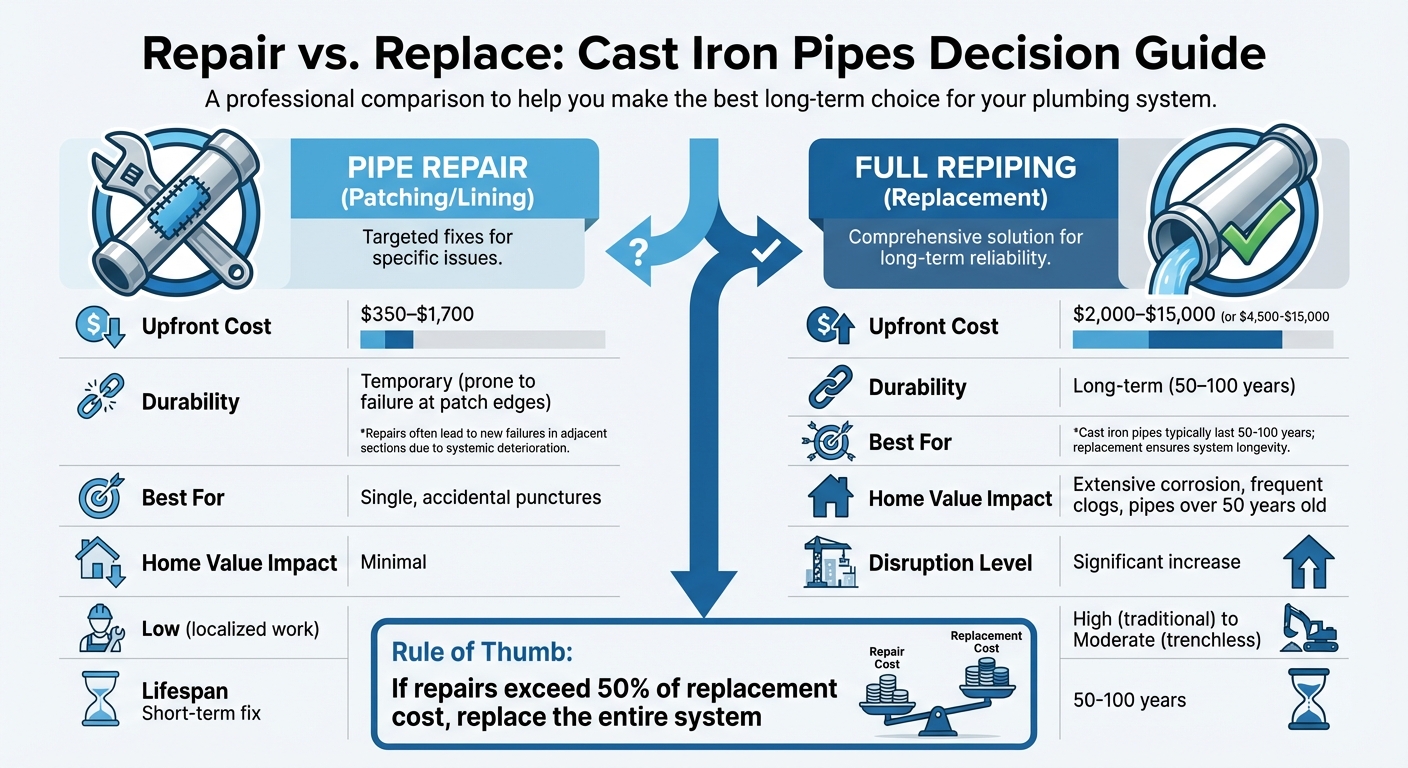
Cast Iron Pipe Repair vs Replacement Cost and Benefits Comparison
Once you've determined your cast iron pipes are failing, the next step is deciding whether to repair or replace them. The right call hinges on several factors: the age of your pipes, the extent of the damage, and how often issues arise. From there, you can weigh whether a targeted repair or a full replacement is the better fit.
When Repairs Make Sense (and When They Don't)
Repairs are a practical option for minor, isolated problems - like a single crack or a pinhole leak. Techniques such as epoxy lining or pipe clamps can address these specific issues quickly and at a lower upfront cost, typically ranging from $350 to $1,700 for main water line repairs.
However, repairs aren't always a lasting solution. If leaks or clogs keep cropping up, it’s a sign that the entire system is wearing down, not just one section. Patching one area won’t stop surrounding sections from failing.
"When you do repairs to your cast iron pipe, the pipe will eventually crumble, crack, break, or leak on each side of the repair. It's just the nature of cast iron." – Accurate Leak
If your pipes are more than 50 years old or you're dealing with frequent issues, repairs are often just a temporary fix. They won't address the systemic problems caused by aging cast iron.
Why Full Repiping Is Often the Better Choice
When individual fixes no longer keep up with the deterioration, replacing the entire system becomes the most effective solution. Full repiping eliminates the root cause of recurring problems, offering a fresh start with modern materials like PVC, PEX, or copper. These materials are resistant to corrosion and can last 50 to 100 years.
Although the upfront cost is higher - ranging from $2,000 to $15,000 - repiping provides better long-term value. It spares you from the cycle of repeated emergency repairs, which can add up quickly. Plus, replacing your pipes enhances your home’s water pressure, eliminates discolored water and metallic odors, and reduces health risks like hidden mold growth.
Repiping also adds to your home's resale value, making it a strong selling point for future buyers. Many homeowners now opt for trenchless methods, such as pipe bursting or cured-in-place pipe (CIPP) lining, which allow for pipe replacement without tearing up your yard or floors. By 2025, over half of U.S. municipalities are expected to prefer trenchless methods due to their efficiency and lower environmental impact.
"If repairing cast iron exceeds 50% of your replacement cost, your best bet is to replace them." – Angi
Repair vs. Repiping: Side-by-Side Comparison
| Feature | Pipe Repair (Patching/Lining) | Full Repiping (Replacement) |
|---|---|---|
| Upfront Cost | Lower ($350–$1,700) | Higher ($2,000–$15,000) |
| Durability | Temporary; prone to failure at patch edges | Long-term (50–100 years) |
| Best For | Single, accidental punctures | Extensive corrosion, frequent clogs, pipes >50 years |
| Home Value Impact | Minimal | Significant increase |
| Disruption | Low; often localized | High (traditional) to moderate (trenchless) |
Sasquatch Plumbing: Repiping Services for West Seattle Homes
When cast iron pipes in older West Seattle homes reach the end of their lifespan, finding a dependable repiping service becomes a top priority. Sasquatch Plumbing Services Seattle (sasquatchplumbingseattle.com) specializes in replacing these aging systems, offering complete solutions - from initial diagnostics to full replacements with long-lasting PVC or ABS materials. This approach provides a sturdy upgrade for homes with outdated plumbing.
Custom Repiping Plans for Older Homes
No two homes are alike, especially in West Seattle's older neighborhoods, where plumbing systems often vary significantly. Sasquatch Plumbing Services Seattle begins with detailed camera inspections, using advanced technology to examine the interior of pipes in real-time. This method uncovers hidden issues like root intrusion, cracks, and corrosion without the need for disruptive digging.
The team also considers local challenges, such as high soil moisture and the impact of mature trees, which often lead to root intrusion. For homeowners concerned about costs, they offer staged replacement options, allowing you to tackle the project in phases rather than all at once. Modern materials like PVC and ABS plastic are used for replacements, offering a lightweight, durable alternative that resists the sulfuric acid damage common in cast iron systems. After assessing your home's unique needs, they provide clear pricing to ensure transparency.
Transparent Pricing with No Hidden Fees
Sasquatch Plumbing Services Seattle emphasizes clarity when it comes to costs. They provide upfront pricing, so you’ll know exactly what to expect. Whole-home repiping services typically range from $4,500 to $15,000, depending on factors like the size of your home and the materials chosen. These costs include all necessary permits, inspections, and a 5-year labor warranty.
This transparency helps protect homeowners from unexpected expenses. For example, foundation repairs caused by leaking pipes can cost tens of thousands of dollars and are often excluded from homeowners' insurance. By addressing plumbing issues correctly the first time, you can avoid these costly surprises and keep your insurance premiums steady.
Same-Day and Emergency Service Available
Plumbing emergencies demand immediate attention, and Sasquatch Plumbing Services Seattle offers same-day emergency services across West Seattle. Whether it’s a sudden pipe failure or wastewater backing up into your home, their team responds quickly. Prompt action is crucial to prevent health hazards like toxic gas buildup and mold, which can cause respiratory issues and persistent headaches.
Their swift response also minimizes the risk of small leaks escalating into major flooding disasters. With licensed and insured plumbers using cutting-edge tools like hydro jetting and camera inspections, you’ll receive professional service exactly when you need it most.
Conclusion
Cast iron pipes don’t suddenly stop working - they wear down over time until they fail completely. Signs like frequent clogs, rust, discolored water, sewer odors, and slow drains indicate your plumbing system may be approaching the end of its 50- to 100-year lifespan. Ignoring these issues can lead to severe consequences, including foundation damage, exposure to harmful mold and sewer gases, and skyrocketing repair costs.
"Cast iron doesn't give up overnight - it fails slowly, quietly, and then all at once." - Erica Sullivan, Owner, Erica's Plumbing, Air Conditioning & Restoration
While patching sections of damaged pipe might seem like a cheaper fix, it’s usually just a short-term solution. Cast iron pipes tend to deteriorate along their entire length, meaning a repair in one area often leads to new failures nearby. Replacing the whole system with modern materials like PVC is a long-term solution, offering a durable, 50+ year lifespan and breaking the cycle of constant repairs.
For homeowners in West Seattle facing aging cast iron plumbing, Sasquatch Plumbing Services Seattle provides expert repiping solutions designed for older homes. They utilize advanced camera inspections, offer upfront pricing (typically between $4,500 and $15,000 for a full repipe), and even provide same-day emergency services. Acting quickly when you notice warning signs can save your home from structural damage, protect your family’s health, and avoid costly emergency repairs.
Addressing the problem now is an investment in your home’s future, ensuring stability and peace of mind while avoiding the headaches and expenses of temporary fixes.
FAQs
How can I tell if my home still has cast iron pipes?
You can spot cast iron pipes in your home by checking for issues such as slow drains, frequent clogs, leaks, rust or corrosion, foul odors, water stains, or visible water damage. These problems are particularly common in homes constructed before the 1980s.
When should I replace cast iron pipes instead of repairing them?
Cast iron pipes need replacing when they show serious problems like ongoing leaks, heavy rust or corrosion, repeated clogs, or structural issues like cracks. If repairs stop being effective or become too expensive, it's time to consider a full replacement.
What should I do first if I notice sewer odors or brown water?
If you detect sewer smells or notice brown water, it's time to call in a professional for an inspection. Using a camera inspection, experts can check if your cast iron pipes are deteriorating. Addressing the issue promptly can save you from more extensive damage and expensive repairs later on.