
In West Seattle, older homes with aging plumbing systems often face recurring issues due to materials like galvanized steel and clay pipes, combined with the area's heavy rainfall and shifting soil. Here are the five most common plumbing problems and how to address them:
- Drain Clogs: Caused by grease, hair, and tree roots. DIY fixes include plungers and baking soda/vinegar solutions, but severe clogs may require professional hydro jetting or pipe relining.
- Low Water Pressure: Often due to corroded pipes, leaks, or faulty pressure regulators. Cleaning aerators or checking for leaks can help, but repiping or professional repairs may be needed.
- Leaky Pipes and Faucets: Corrosion, loose fittings, or worn components are common culprits. DIY repairs include tightening connections and replacing washers, but hidden leaks require professional detection tools.
- Water Heater Problems: Issues like no hot water, sediment buildup, or leaks can arise. Regular tank flushing and thermostat checks help, but older units may need professional servicing or replacement.
- Sewer Line Backups: Tree roots, misaligned pipes, or "fatbergs" (grease and debris clogs) are frequent causes. Preventive maintenance, like avoiding "flushable" wipes, is key, but severe cases need camera inspections or trenchless repairs.
Takeaway: Regular maintenance, like flushing water heaters and clearing drains, can prevent costly repairs. However, recurring or severe problems often require professional help. Sasquatch Plumbing Services offers expert solutions tailored to West Seattle's unique plumbing challenges.
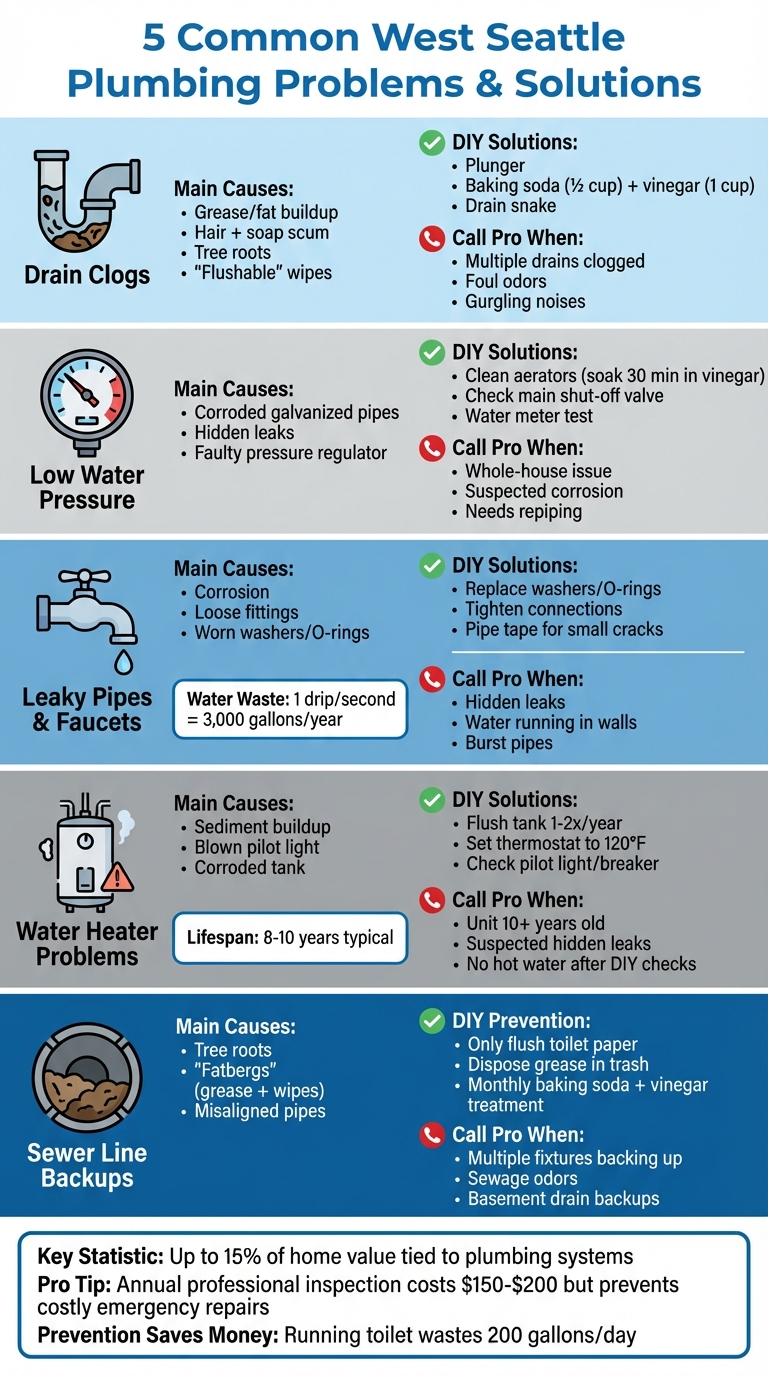
5 Common West Seattle Plumbing Problems: Causes, DIY Solutions, and When to Call a Professional
Most Common Plumbing Problems and How to Fix Them | DIY Plumbing
1. Drain Clogs
Drain clogs are a common issue for homes in West Seattle. These blockages often result from grease and fat buildup, hair combined with soap scum, food scraps like coffee grounds and fibrous vegetables, and so-called "flushable" wipes that aren't actually safe for flushing.
The problem tends to be worse in older homes with pipes made of clay, cast iron, or concrete. These materials can rust, crack, or accumulate mineral deposits, which narrow the pipe's diameter and make it easier for debris to get stuck. In Seattle's tree-lined neighborhoods, tree roots are another frequent culprit for pipe blockages.
DIY Solutions for Clogged Drains
If you're dealing with a clog, a plunger is a good place to start. Remove any standing water so you can create a tight seal over the drain, then use firm, vertical strokes to loosen the blockage. If that doesn’t work, try a natural cleaner: pour ½ cup of baking soda followed by 1 cup of white vinegar down the drain. Let it bubble for 5 to 10 minutes, then rinse with boiling water.
For hair clogs, manual removal often works well. Use a drain snake or a straightened wire hanger to pull out the blockage. Be sure to wear gloves and avoid scratching the inside of the pipe. Steer clear of harsh chemical drain cleaners, as they can harm older pipes over time.
"Some DIY fixes, like frequent use of off-the-shelf chemical drain cleaners, can actually damage your pipes, making them more prone to leaks or bursts."
- Bob Oates Sewer & Rooter
To prevent future clogs, consider using drain screens to catch hair and food particles. Also, avoid pouring liquid grease down the sink. Instead, let it cool and solidify in a container before throwing it away.
If these methods don't resolve the clog, it may be time to dig deeper - literally.
When to Call a Professional
If multiple drains in your home are clogged at the same time, it’s likely a main sewer line issue rather than just a localized problem. Other warning signs include persistent foul odors, gurgling noises, or repeated clogging despite your best DIY efforts.
Professional plumbers have tools like hydro jetting and camera inspections to clear tough blockages and assess pipe damage quickly. For root-related clogs, trenchless pipe relining is a less invasive way to restore your pipes without tearing up your yard.
If you're ready to tackle stubborn clogs, reach out to Sasquatch Plumbing Services Seattle for same-day licensed drain cleaning services.
2. Low Water Pressure
Low water pressure can throw a wrench into your daily routine. In West Seattle, many older homes still rely on galvanized steel pipes, which are prone to corrosion. Over time, rust and mineral deposits build up inside these pipes, narrowing the pathways for water.
"The insides of pipes can corrode over time, particularly in older systems made of galvanized steel. This corrosion leads to a buildup of rust and minerals, which constrict the water flow like cholesterol in an artery."
Hidden leaks in the main water line are another common culprit, as they can quietly drain pressure. Similarly, a faulty pressure regulator might need adjustment or even replacement, especially since most systems are designed to operate within the 40 to 60 psi range. If your neighbors are also experiencing pressure issues, the problem might stem from the municipal water supply rather than your home’s plumbing.
DIY Troubleshooting for Low Water Pressure
Start by identifying whether the pressure issue affects the entire house or just one fixture. If it’s limited to a single faucet or showerhead, unscrew the aerator and soak it in a vinegar-water solution for about 30 minutes to dissolve any mineral buildup. Also, check that your main shut-off valve is fully open. For lever-style valves, the handle should align with the pipe; for wheel-style valves, turn it completely counterclockwise.
To detect hidden leaks, try a water meter test. Shut off all fixtures and watch the meter - any movement suggests a leak. You can also inspect your yard for soggy patches or unusually green grass, which might indicate a buried pipe leak.
If the low pressure only affects hot water, your water heater could be the source of the problem. Flushing the system may help. Run cold water from a bathtub faucet for about 20 minutes to clear out any sediment that might be clogging the system.
If these steps don’t resolve the issue, it’s time to call in a professional.
Professional Water Line Repairs
Corroded pipes often require specialized tools to diagnose and fix the problem. Plumbers use high-definition cameras to inspect the inside of pipes, revealing blockages, corrosion, or cracks that restrict water flow.
"Old iron pipes are especially susceptible to corrosion and can inhibit the flow of water. These pipes corrode from the inside out, so it would be impossible for you to identify this as the problem without a camera inspection."
In cases where corrosion is widespread, repiping may be the best long-term solution. Sasquatch Plumbing Services Seattle offers full repiping services, including permits, inspections, and a 5-year labor warranty, ensuring peace of mind.
If the issue lies with a malfunctioning pressure regulator, a plumber can replace it to restore proper flow. For problems with the main water line, trenchless repair methods like pipe lining or pipe bursting allow for effective repairs without the need for extensive digging. Sasquatch Plumbing Services Seattle provides professional inspections and repairs to tackle the root cause of your water pressure woes.
3. Leaky Pipes and Faucets
Leaky pipes and faucets are a frequent plumbing issue in West Seattle, and the area's specific conditions can make them even more common. Many older homes in the region have plumbing made from materials like lead, galvanized steel, or outdated copper, all of which are prone to corrosion over time. Adding to the problem, the heavy rainfall in the area can shift the ground, putting extra stress on pipes and causing damage.
West Seattle's high humidity speeds up corrosion and can discolor your water, while its mineral-rich water takes a toll on faucet components like washers and O-rings. Leaks hidden behind walls or under floors often make themselves known through signs like mildew smells, damp patches on walls or ceilings, or an unexplained spike in your water bill.
"Seattle's mineral-rich water can wear down washers, O-rings, and valve seats more quickly, turning what starts as a tiny drip into a nagging leak."
- Fox Plumbing, Heating, & Cooling
Even a seemingly minor drip can waste significant water. A faucet dripping once per second can add up to 3,000 gallons wasted annually. A running toilet is even more wasteful, potentially losing 200 gallons of water every single day. Ignoring these issues can lead to expensive structural damage and higher utility bills. If you spot these signs, it's worth investigating right away - whether through DIY fixes or calling in the pros.
DIY Fixes for Leaks
If your faucet is dripping, start by turning off the water supply. Disassemble the fixture and replace worn parts like washers, O-rings, or valve seats with universal replacements.
For moisture under a sink, grab a flashlight and check pipe fittings. Tighten any loose connections using an adjustable wrench. Small cracks in pipes can be temporarily managed by wrapping them with commercial pipe tape or applying a bonding agent.
To locate hidden leaks, try a water meter test: turn off all water-using appliances and faucets, then check your water meter. If it moves, you likely have a hidden leak.
When these DIY efforts don’t solve the problem, it’s time to call in a professional.
Professional Leak Detection and Repairs
In older West Seattle homes, hidden leaks inside walls or under floors can cause serious damage if left unaddressed. Professional plumbers use advanced tools like electronic leak detection and sewer camera inspections to find the source of the problem without tearing apart your home unnecessarily. These tools can locate leaks deep within walls or underground service lines, saving you from unnecessary excavation and additional repairs.
If you hear water running behind a wall when no faucets are on, or if you notice stains, peeling paint, or warped flooring, it’s a clear sign to call a professional. Burst pipes or major main line breaks require immediate attention to prevent extensive water damage. Sasquatch Plumbing Services Seattle offers same-day emergency services with licensed plumbers who provide upfront pricing and use cutting-edge diagnostic tools to quickly locate and fix leaks.
sbb-itb-6ceaf48
4. Water Heater Problems
Water heaters tend to act up more often during cold weather, and homes in West Seattle are no exception. Common issues include no hot water, sediment buildup, leaks, and unusual tank noises.
If you suddenly lose hot water, the problem might be as simple as a blown pilot light on gas models or a tripped breaker on electric ones. Another frequent troublemaker is sediment buildup caused by Seattle's water supply. When minerals like limestone, chalk, and gypsum collect at the bottom of the tank, you might hear popping, banging, or hissing sounds as the heating element tries to work through the layer of sediment. This buildup not only creates noise but also reduces efficiency and shortens the water heater's typical 8- to 10-year life span.
Leaks are another headache, often caused by failing pressure relief valves, corroded tanks, or loose inlet and outlet connections. A sudden spike in your water bill could signal a leak, so it's worth investigating right away. During particularly cold weather, frozen water lines can also prevent your heater from working altogether. To avoid this, keep your home at least 55°F and insulate any exposed pipes. While professional help is sometimes necessary, there are some simple DIY tasks you can do to keep your water heater running smoothly.
DIY Maintenance for Water Heaters
Flushing your tank once or twice a year is a great way to remove sediment that can strain the system and lower heating efficiency. Start by turning off the unit (whether gas or electric) and letting the water cool for about 20 to 30 minutes. Then, carefully open the drain valve to flush out the sediment. This task takes less than an hour and can save you from costly repairs later.
Adjusting your thermostat to 120°F is another easy step to improve safety and efficiency. Temperatures above 125°F not only waste energy but also increase the risk of scalding. If your gas water heater isn’t producing hot water, check the pilot light - it might have gone out due to a faulty thermocouple or control valve. For electric models, take a look at your home’s electrical panel to see if a circuit breaker has tripped before calling for repairs.
When these basic fixes don’t solve the problem, it’s time to bring in a professional.
Professional Water Heater Services
If your tank hasn’t been flushed in years, you suspect sediment buildup is hiding a leak, or your unit is over 10 to 15 years old, calling a professional is your best bet. A professional flush, which usually costs around $200, includes a thorough inspection for issues like rusted anode rods or small leaks. If your water heater is beyond repair, replacing it will typically set you back about $1,250.
Sasquatch Plumbing Services Seattle handles all types of water heaters - tank, tankless, gas, electric, and hybrid. Their licensed plumbers offer same-day emergency services with upfront pricing, so you’ll know the cost before any work begins. Whether you need a quick repair or a full replacement, they use advanced diagnostic tools to get your hot water running again as fast as possible.
5. Sewer Line Backups
Sewer backups are one of the most urgent plumbing emergencies for West Seattle homeowners. Unlike a simple clogged drain that affects just one fixture, a sewer backup starts in your main sewer line and impacts multiple fixtures simultaneously. It usually shows up in the lowest drains of your home, like basement showers or floor drains. For instance, if you flush the toilet and water backs up into your bathtub or you notice strong sewage odors throughout your house, it’s a clear sign of a mainline issue that needs immediate attention. Quick action and professional help are crucial in these situations.
West Seattle’s charming tree-lined streets come with hidden challenges underground. Large trees like maples and willows often send their roots into older clay or cast iron pipes, exploiting even the tiniest cracks. Once inside, these roots spread out and trap debris, eventually causing blockages. Ground settling can also misalign pipes, creating dips or "sags" where debris builds up. Over time, soil erosion around pipe joints can lead to collapses or even sinkholes.
"Seattle's tree-lined neighborhoods are picturesque but problematic below ground. Seeking moisture, roots penetrate even hairline pipe fractures." - Ben Foster, Owner, Ben's Plumbing
Another common culprit? "Fatbergs." These are stubborn clogs made from grease, wet wipes, feminine hygiene products, and paper towels - materials that don’t break down like toilet paper. During the 2019 winter storms, heavy Pacific Northwest rains overwhelmed sewer systems, resulting in over 200 reported sewer backups in King County alone. Warning signs like multiple drains backing up, gurgling toilets, or discolored patches on your lawn often indicate a developing sewer line issue.
Prevention Tips for Homeowners
To keep your sewer line in good condition, here are some practical steps you can take:
- Only flush human waste and toilet paper. Even items labeled "flushable", like wipes, don’t degrade properly and can cause blockages.
- Dispose of fats, oils, and grease in the trash instead of pouring them down the drain, where they can solidify and clog pipes.
- Schedule a professional camera inspection every three to five years to catch root intrusions or pipe misalignments early.
- If you have large trees near your home, map out your sewer line’s location and consider installing root barriers. Remember, a tree’s roots can extend up to twice its height.
- Perform monthly maintenance by filling all water-holding fixtures (like sinks, tubs, and washing machines) to capacity and draining them simultaneously while flushing toilets. This strong flow helps clear the main line.
- Use a mix of 1/2 cup baking soda and 1/2 cup white vinegar monthly. Let it sit for 15-30 minutes, then flush with boiling water to clean out grease and soap scum.
Professional Sewer Line Repair
If prevention measures fail, it’s critical to act fast. Stop using water immediately and avoid chemical cleaners, as they can harm older pipes and won’t effectively clear mainline blockages. A professional plumber will typically start with a sewer camera inspection to locate the problem without unnecessary digging.
Modern repair methods have made fixing sewer lines much less disruptive. For example, hydro jetting uses high-pressure water (up to 4,000 psi) to clear stubborn clogs and tree roots. If structural damage is found, trenchless repair methods like pipe lining or pipe bursting can fix the issue without tearing up your yard or driveway. Pipe lining involves inserting an epoxy-coated liner into the damaged pipe, creating a durable "pipe within a pipe" that can last up to 50 years.
Sasquatch Plumbing Services Seattle specializes in comprehensive sewer line solutions, including camera inspections, hydro jetting, and trenchless repairs. Their licensed plumbers offer same-day emergency services and provide upfront pricing before any work begins. Using advanced tools and techniques, they aim to restore your sewer system efficiently while minimizing disruption to your property.
Prevention and Maintenance Tips
Taking steps to prevent plumbing problems before they arise can save you time, money, and a whole lot of stress. Keeping your plumbing in good shape protects one of your home's most important systems. A mix of simple DIY upkeep and professional inspections can help ensure everything runs smoothly.
For starters, try this monthly routine: pour ½ cup of baking soda followed by ½ cup of vinegar down each drain. Let it sit for 15–30 minutes, then flush with hot water. This easy method helps prevent buildup. Another quick tip? Install mesh screens on all your drains to catch hair and food particles. And don’t forget about your water heater - flush it once a year to clear out sediment, and keep the thermostat set to 120°F. This temperature strikes the right balance between safety, energy efficiency, and system longevity.
"A well-maintained plumbing system is efficient, providing clean, freshwater. Clean water is essential to your health and well-being, so it pays to keep up with the maintenance." - Puget Sound Plumbing and Heating
Seasonal maintenance is just as important. In the fall, disconnect outdoor hoses and insulate pipes in unheated spaces like crawlspaces or garages. When temperatures drop, open under-sink cabinets to allow warm air to circulate and let faucets drip slightly to prevent freezing. For added peace of mind, replace rubber appliance hoses with steel-braided ones to reduce the risk of bursts. Also, check under sinks weekly for signs of moisture, mold, or musty odors. These small, consistent efforts can help you avoid bigger problems.
Knowing when to handle plumbing tasks yourself and when to call in a professional is key.
DIY vs. Professional Maintenance Comparison
| Maintenance Type | Frequency | Cost | Benefits |
|---|---|---|---|
| DIY Tasks | Daily to Monthly | Minimal (supplies only) | Catches surface leaks early, prevents clogs, and extends the life of fixtures |
| Professional Inspection | Annually | $150–$200+ per hour | Accesses hidden pipes, services water heaters and sump pumps, ensures code compliance |
| Sewer Camera Inspection | Every 3–5 years | $39–$600+ | Detects root intrusion, pipe cracks, or misalignments before major backups |
Professional inspections are essential for identifying hidden problems that DIY efforts might miss. Companies like Sasquatch Plumbing Services in Seattle offer thorough annual inspections with upfront pricing. They use advanced tools like camera inspections and hydro jetting to keep plumbing systems in top shape. Licensed plumbers can spot and address issues in places that are out of reach for most homeowners, ensuring small problems don’t turn into costly repairs.
Conclusion
Homes in West Seattle often encounter five common plumbing problems: drain clogs, low water pressure, leaky faucets and pipes, water heater troubles, and sewer line backups. While minor issues like cleaning aerators or swapping out a flapper valve can be resolved with simple fixes, recurring or severe problems call for professional intervention to avoid costly damage. These challenges highlight the importance of staying ahead with regular maintenance.
"Proactive maintenance is cheaper than emergency repairs." - The Drain Authority
Did you know that up to 15% of your home's value is tied to its plumbing systems? Routine care, such as flushing your water heater annually or keeping drains clear, helps prevent expensive repairs down the line. For example, a running toilet can waste as much as 200 gallons of water per day, turning a small oversight into a hefty utility bill.
Sometimes, no amount of DIY effort will fix the problem. Signs like multiple clogged drains, consistently low water pressure throughout your home, or an aging water heater (over 10 years old) are clear indicators that it’s time to call in a professional. Sasquatch Plumbing Services Seattle offers timely, expert repairs with transparent pricing. Their licensed plumbers ensure all work complies with local building codes and provide warranties to safeguard your investment.
Given the specific plumbing challenges that West Seattle homes face, regular maintenance is not just recommended - it’s essential. By combining simple monthly tasks with annual professional inspections, you can keep your plumbing system running smoothly for years to come.
FAQs
What are the warning signs that I should call a plumber for a clogged drain?
If your drains are sluggish, prone to frequent clogs, or giving off persistent foul smells, it might be time to bring in a professional plumber. Other red flags to watch for include gurgling or bubbling sounds coming from your pipes, water backing up into sinks or tubs, or stubborn clogs that don’t budge despite your cleaning efforts.
Letting these problems linger can escalate into serious plumbing headaches. Tackling them early with the help of a plumber ensures a quick diagnosis and a lasting fix, sparing you unnecessary stress and effort.
How can I stop tree roots from damaging my sewer lines?
Tree roots are naturally attracted to the moisture and nutrients seeping from cracks or joints in sewer lines. To minimize the risk of damage, plant trees, shrubs, or large plants at least 10 feet away from underground sewer lines. This distance makes it less likely for roots to reach and invade the pipes. If trees are already planted near the sewer line, you might want to install a root barrier made from concrete, metal, or specialized fabric to block root growth.
For older pipes, addressing cracks or replacing sections with more modern materials like PVC or epoxy-sealed fittings can make a big difference. These materials are much better at resisting root intrusion than outdated clay or cast-iron pipes. Regular sewer inspections using a camera can help spot early signs of root growth. If detected, tools like hydro-jetting or mechanical root cutters can be used to clear the issue before it escalates into a full blockage.
You should also avoid overwatering the area near sewer lines and keep mulch or organic debris away, as excess moisture can encourage roots to spread. If you notice symptoms like slow drains, strange gurgling noises, or wet patches in your yard, it’s wise to call a professional plumber right away to avoid costly repairs later.
When is it better to replace my water heater instead of repairing it?
If your water heater is reaching the end of its lifespan - generally 8–12 years for standard tank models or up to 20 years for tankless systems - it might be more economical to replace it rather than continuing with repairs. Frequent malfunctions or the need for constant fixes often point to replacement as the better option.
Here are some common warning signs that your water heater may be failing:
- Rusty, discolored, or foul-smelling water: This could mean the tank is corroding from the inside.
- Leaks or water pooling at the base: A clear indication that the tank may be compromised.
- Strange noises like rumbling or popping: Often caused by sediment buildup that regular maintenance can no longer fix.
- Rising energy bills with no increase in hot water use: This suggests the unit is losing efficiency.
If these problems arise - especially in an older unit - upgrading to a new water heater can boost energy efficiency, ensure a steady supply of hot water, and help you avoid unexpected breakdowns.