
In Seattle, plumbing permits are mandatory for most significant projects, including moving fixtures, altering water or drain lines, and remodeling kitchens or bathrooms. Failing to get the proper permits can result in fines of up to $500 per day, stop work orders, and even problems when selling your home. Minor repairs under $6,000 in a six-month period may be exempt, but all work must still comply with Seattle's plumbing code. Licensed plumbers can simplify the process by handling permits, inspections, and ensuring compliance, protecting your investment and home value.
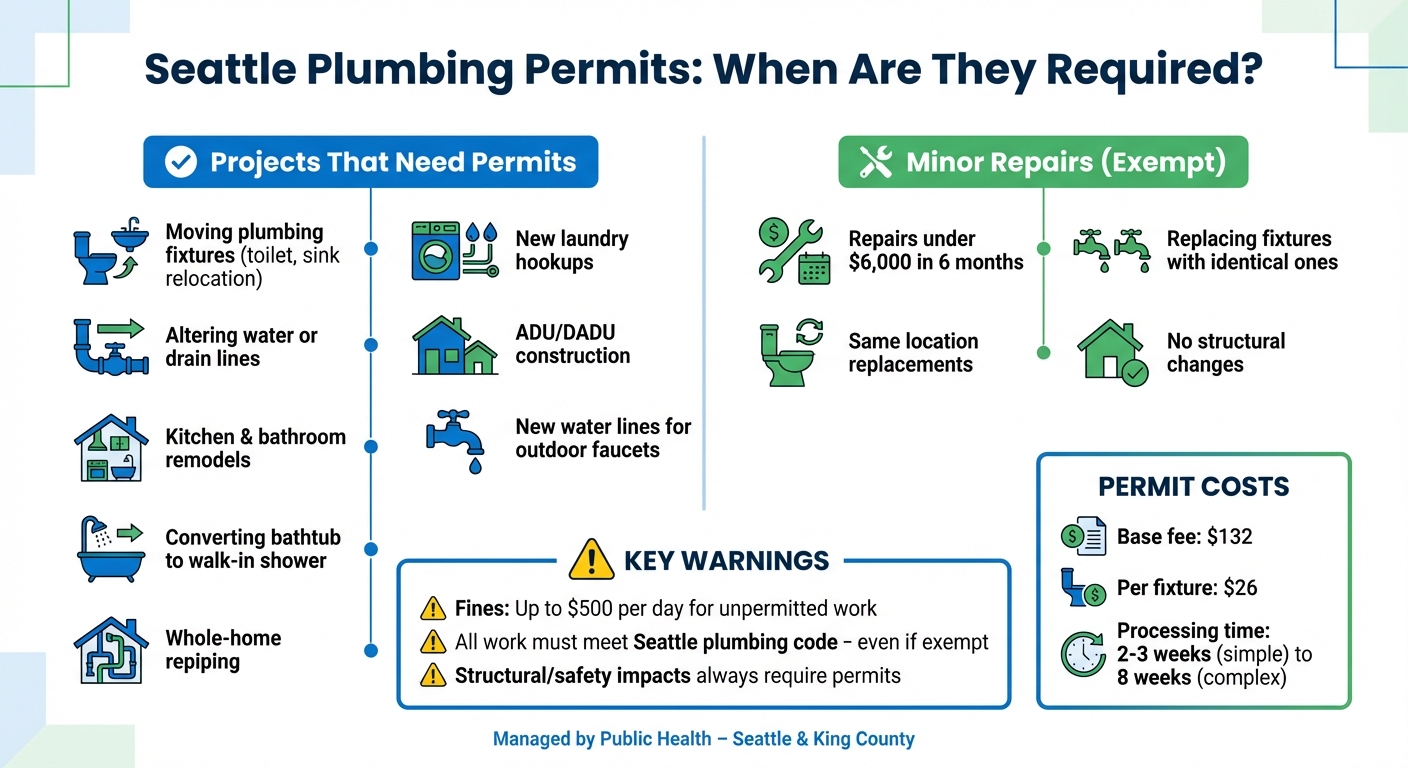
Seattle Plumbing Permits: When Required vs Exempt Projects
When You Need a Plumbing Permit in Seattle
Major Plumbing Projects That Require Permits
In Seattle, plumbing permits are issued separately from construction permits, meaning even if you have a building permit, you'll still need a specific permit for plumbing work.
If your project involves moving plumbing fixtures or altering water or drain lines, a permit is mandatory. Some examples include relocating a toilet or kitchen sink, installing new water lines for an outdoor faucet, or converting a basement into a living space.
Additionally, creating or remodeling an Attached Accessory Dwelling Unit (AADU) or Detached Accessory Dwelling Unit (DADU) requires a plumbing permit. These projects may also incur extra sewer treatment capacity charges. All new plumbing systems must comply with current code standards and undergo review and inspection by Public Health - Seattle & King County.
These guidelines highlight when significant plumbing changes demand permits, helping to clarify when they might not be necessary.
Common Residential Projects That Need Permits
Residential projects like kitchen and bathroom remodels are among the most frequent scenarios requiring plumbing permits in Seattle. For example, converting a bathtub into a walk-in shower requires a permit because Seattle's 2025 plumbing code specifies that shower drains must now have a minimum diameter of 2 inches.
Whole-home repiping is another project that always requires a permit. Whether you're replacing old galvanized pipes with copper or PEX or addressing corrosion across your home's plumbing, a permit is essential. Even smaller projects like adding new laundry hookups or making minor changes during a remodel typically require permits in residential settings.
While some minor tasks may be exempt, any work that impacts structural or fire-resistance elements will still require proper permits.
sbb-itb-6ceaf48
Plumbing Work That Doesn't Require a Permit
Minor Repairs That Are Exempt
In Seattle, certain plumbing repairs or alterations are exempt from permits if the total cost - covering both labor and materials - does not exceed $6,000 within a six-month period, even for DIY projects.
"You don't need a permit for minor repairs or alterations that cost $6,000 or less in any 6-month period." - Seattle Department of Construction and Inspections (SDCI)
This exemption applies to straightforward replacements, such as swapping out fixtures or parts with identical ones in the same location. However, if your work changes the plumbing system's design or layout, a permit will still be required.
It's important to note that any project impacting the structural integrity or safety of the building - like cutting into load-bearing supports, altering the building envelope, or affecting fire resistance, ventilation, or egress - requires a permit, regardless of cost. Failing to obtain one in these cases can lead to fines of up to $500 per day.
Even for exempt projects, all work must still adhere to Seattle's plumbing code standards.
Why Code Compliance Still Matters
Even if your project qualifies for a permit exemption, it must comply with current plumbing codes and development standards in Seattle.
"Even if you don't need a permit, your project must meet all code requirements and development standards." - Seattle Department of Construction and Inspections (SDCI)
This means that any repairs you make must follow the original design and location of the plumbing system to avoid creating safety hazards or violating regulations. Essentially, exempt work is held to the same standards as new plumbing installations.
To help ensure compliance, the SDCI offers a helpful resource: 20 minutes of free coaching from permit specialists. This service can guide you through code requirements before you start, potentially saving you from costly mistakes down the road.
How to Get a Seattle Plumbing Permit
The Permit Application Process
In Seattle, plumbing permits are managed by Public Health – Seattle & King County through their online portal. Applications must be submitted via the Public Health Permit Center rather than the city's general permit system.
When you first access the portal, you'll need to register for a new account - even if you had one in the old Environmental Health portal. Be sure to use the same email address as before to sync your permit history. Once registered, select the specific permit type for your project and list all the fixtures involved in the work. This process helps keep your project on track and compliant with local regulations.
If you're a licensed plumber, don’t forget to upload your professional certificate in the "Personal Info" > "My Certificates" section of the portal. Missing or improperly uploaded certificates are a common cause of delays. After your permit is approved, print both the permit and the approved plans from the "Attachments" tab and keep them on-site. Having the correct documentation from the start avoids potential compliance issues later.
Permit Timelines and Costs
Once your application is submitted, processing times vary based on the complexity of the project. Simple applications are typically reviewed within 2–3 weeks, more complex projects take around 8 weeks, and administrative updates are completed in 7–10 business days.
Permit fees follow the Environmental Health Services fee schedule. As of the 2025/2026 cycle, the base fee is $132, with an additional $26 per fixture. For repiping projects, fees are calculated by multiplying the hourly operating rate of $264 by the expected number of inspections. You can track your application status in real time through the "My Work" or "Dashboard" tabs in the portal.
"The Plumbing and Gas Piping program operating budget is funded by a full cost recovery mandate, meaning the cost of services need to be covered by the revenue generated by permit and inspection fees."
- Dave Price, Assistant Chief Plumbing Inspector, Public Health – Seattle & King County
Staying on top of permit requirements and timelines ensures your project moves forward smoothly.
Why Hire Licensed Plumbers for Permit Work
Full-Service Projects with Permits Handled
Licensed plumbers take care of the entire permitting process, from filing the application to passing the final inspection. They ensure that every step aligns with Seattle's standards, including submitting detailed plans by the mandatory 7:00 a.m. deadline and coordinating with local agencies to meet all code requirements.
This process involves many technical details that homeowners might miss. For example, licensed plumbers review your property's zoning history, create precise scaled drawings, and handle revisions when reviewers request changes. Whether it's repiping, water line repairs, or plumbing for a remodel, they ensure the work complies with the Seattle Residential Code and Seattle Building Code.
Sasquatch Plumbing Services Seattle specializes in managing this process for West Seattle homeowners. Their repiping services, which cost between $4,500 and $15,000 depending on the home's size and materials, include all necessary permits and inspections in the quoted price. For kitchen and bathroom remodels, they handle everything from pipe relocation to appliance hookups, securing all required permits before starting the work.
This level of oversight doesn’t just help avoid fines - it also ensures your project adds lasting value to your home.
Clear Pricing and Work Guarantees
Skipping permits can lead to hefty fines, sometimes as high as $500 per day. Beyond avoiding penalties, hiring licensed plumbers protects your investment. Properly permitted work ensures that your insurance will cover future repairs and helps maintain your property’s resale value. Licensed plumbers provide transparent pricing that typically includes most permit fees and any additional review charges.
They also guarantee code compliance by arranging and attending all required inspections, ensuring final approval to prevent future enforcement issues. Sasquatch Plumbing Services Seattle offers a 5-year labor warranty on repiping projects and a satisfaction guarantee on all their services, giving you peace of mind with every job.
Conclusion
Understanding Seattle's permit requirements is essential to protect your investment and avoid penalties, which can reach up to $500 per day. Larger projects like repiping, water line repairs, or bathroom remodels typically require permits. On the other hand, minor repairs costing $6,000 or less within a six-month period are usually exempt - though all work must still meet the Seattle Residential Code and Seattle Building Code standards. Following these guidelines is crucial for any project.
Hiring licensed plumbers simplifies the process. They handle permit applications, inspections, and coordination with Public Health, which not only ensures compliance but can also increase your home's resale value and maintain insurance coverage. Whether the project is big or small, adhering to Seattle’s building codes is non-negotiable, and licensed professionals make sure every repair or remodel meets the required standards to avoid enforcement issues.
For homeowners in West Seattle, Sasquatch Plumbing Services Seattle manages all aspects of permitted plumbing work - from filing applications to securing final approval. They offer transparent pricing and a satisfaction guarantee, giving you peace of mind and protecting your investment.
FAQs
How do I know if my project counts as “moving a fixture”?
When your project involves replacing or altering plumbing fixtures such as sinks or toilets in a way that changes the water supply or drainage system, it’s considered “moving a fixture.” This usually means you’ll need a permit since the work goes beyond basic replacements.
Does the $6,000 exemption include labor and materials together?
Yes, the $6,000 exemption for remodeling projects in Seattle is based on the total fair market value of both labor and materials combined. It does not separate or evaluate the costs of labor and materials individually.
What happens if I start plumbing work before the permit is issued?
Starting plumbing work without a permit can cause major headaches. You might face stop work orders, hefty fines, or other penalties. On top of that, you could be forced to undo or redo the work to meet Seattle's plumbing codes. To steer clear of these problems, make sure you have the permit in hand before starting any plumbing project. It’s a simple step that can save you a lot of trouble.