
Ignoring minor plumbing problems can cost you thousands. A dripping faucet might seem trivial, but it wastes up to 3,000 gallons of water annually, adding $200–$500 to your water bill. Worse, small leaks can cause mold, structural damage, and even attract pests. Repairs for these issues can range from $2,000 to $10,000 or more. Insurance companies often deny claims for damage caused by neglect, and visible water damage can reduce your home's resale value by 10–15%.
Key points to act on:
- Fix dripping faucets: Prevent cabinet damage and corrosion ($500–$1,500 repair costs if ignored).
- Clear slow drains early: Avoid pipe replacements or sewage backups ($500–$10,000 potential costs).
- Repair running toilets: Save thousands by preventing floor rot or water waste ($1,000–$5,000 repairs).
- Address hidden leaks: Mold remediation and structural fixes can cost up to $10,000+.
Quick action saves money. Schedule regular inspections, fix problems early, and avoid costly repairs.
Plumbing Problems That Cost Homeowners Thousands
sbb-itb-6ceaf48
Small Plumbing Problems That Cause Expensive Repairs
Minor plumbing issues often go unnoticed, quietly leading to costly repairs over time. A slow-draining sink or a toilet that won’t stop running might seem like minor inconveniences, but these problems can escalate, causing significant damage and hefty bills.
Dripping Faucets and Fixtures
Did you know a single faucet dripping one drop per second can waste 2,700–3,000 gallons of water every year? That’s not just bad for the environment - it’s also bad for your wallet. Besides higher water bills, the constant moisture can corrode fixtures and damage cabinets. Repairing water-damaged cabinetry alone can cost anywhere from $500 to $1,500.
As Schuler Service points out:
"A simple, inexpensive fix today could save you hundreds in the future by preventing water damage and the need for a complete faucet replacement." – Schuler Service
Addressing a dripping faucet early can save you from these mounting expenses.
Slow Drains
A slow drain might seem harmless, but it’s often a warning sign of a bigger problem. Over time, hair, grease, and soap scum build up inside pipes, creating blockages. These blockages increase pressure, which can lead to leaks or even burst pipes. If left unchecked, replacing damaged pipes can cost anywhere from $500 to $2,000 or more.
In severe cases, a complete blockage could force raw sewage to back up into your home. The cleanup for such a disaster? Anywhere between $2,000 and $10,000. Fixing a slow drain early is far easier - and cheaper - than dealing with the aftermath of a burst pipe or sewage backup.
Running Toilets
A toilet that won’t stop running isn’t just annoying - it’s expensive. Leaky toilets account for about 5% of residential water waste. The culprit is often a worn-out flapper or a faulty fill valve, but the damage doesn’t stop there. Excess water can seep around the toilet base, soaking into the subfloor and causing wood rot. Over time, this could lead to structural repairs costing $1,000 to $5,000.
Fixing a running toilet might seem like a minor task, but it can prevent much bigger problems down the line.
Low Water Pressure
If your shower feels weak or your faucet barely flows, it might be more than just a nuisance. Low water pressure often signals hidden leaks, corroded pipes, or even a failing pressure regulator. These problems don’t just affect your water flow - they can put stress on your entire plumbing system, including your water heater.
Replacing damaged pipes or a failing water heater can set you back $1,200 to $3,000 or more. Catching the issue early can save you from these steep repair costs.
Hidden Pipe Leaks
The scariest plumbing issues are often the ones you can’t see. A small, hidden leak can waste up to 129,600 gallons of water in a year. These leaks often occur behind walls, under floors, or even beneath concrete slabs, where they quietly wreak havoc. They can saturate insulation, rot wooden supports, and create the perfect environment for black mold.
By the time you notice musty smells or warped floors, the damage is usually extensive. Repairs for water damage can range from $3,000 to $10,000, with mold remediation adding another $1,000 to $6,000. If a slab leak affects your foundation, costs can exceed $10,000.
Cost Breakdown of Common Plumbing Issues
| Plumbing Issue | Potential Consequence | Estimated Neglect Cost |
|---|---|---|
| Leaky Faucet | Corrosion, cabinet damage, high bills | $500–$1,500 |
| Slow Drain | Major blockage, pipe replacement | $500–$2,000+ |
| Running Toilet | Structural floor rot, high water waste | $1,000–$5,000 |
| Small Pipe Leak | Mold growth, wall/ceiling repair | $1,000–$6,000 |
| Low Pressure | Water heater failure, pipe replacement | $1,200–$3,000+ |
Taking action on these small plumbing problems early can save you thousands of dollars in the long run. Ignoring them only allows the damage - and the costs - to grow.
The Financial Impact of Delayed Plumbing Repairs
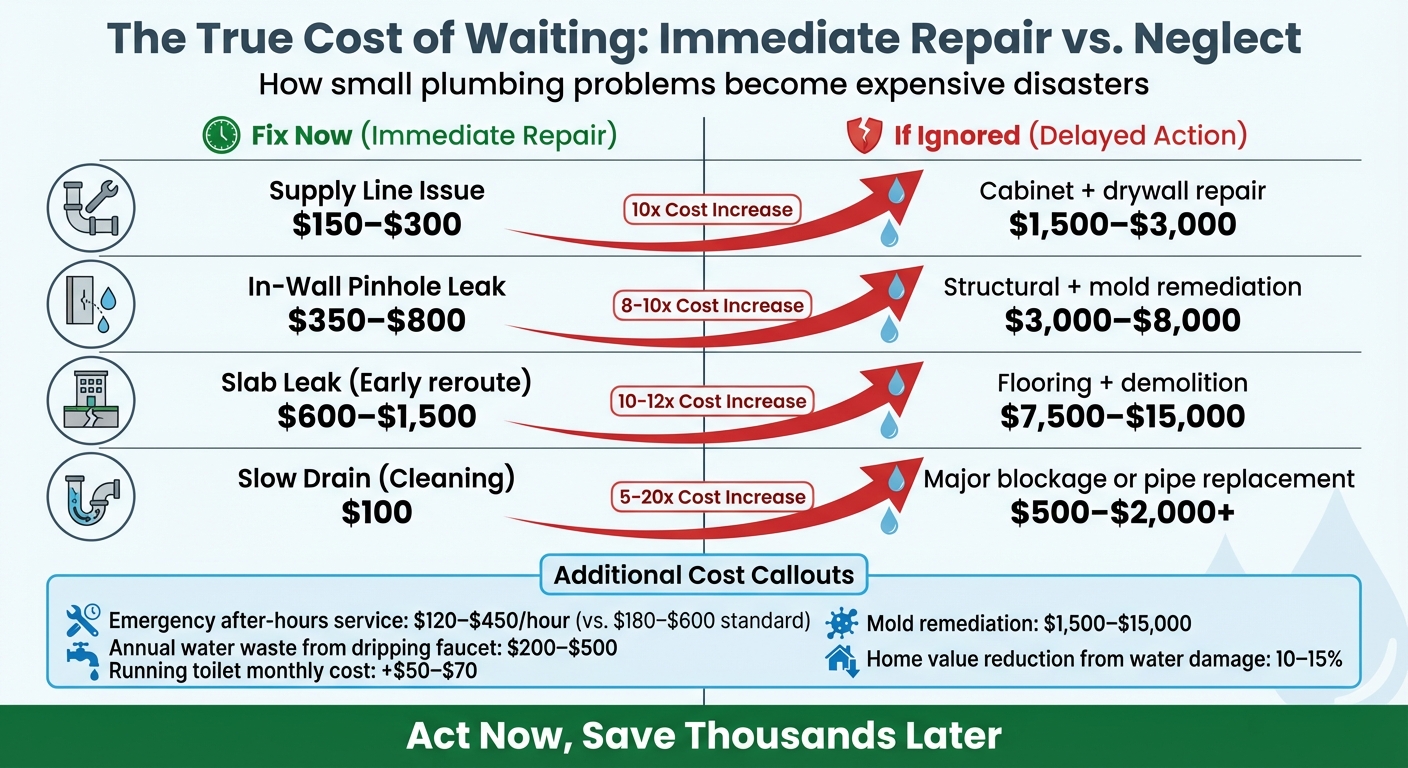
Cost Comparison: Immediate Plumbing Repairs vs Delayed Repairs
Putting off plumbing repairs can lead to skyrocketing expenses. From inflated water bills to emergency service fees and extensive property damage, the costs of waiting only grow over time. Let’s dive into how these expenses add up when plumbing issues are left unresolved.
Higher Water Bills
Even minor leaks can significantly increase your monthly water expenses. A dripping faucet, for instance, might seem harmless but can add about $20 per month - that’s $200 a year. A running toilet is even worse, wasting up to 6,000 gallons of water each month and tacking an extra $50 to $70 onto your water and sewer bills. Combine these, and you could be looking at an additional $200 to $500 annually. That’s money down the drain - literally - all for issues that could have been fixed quickly and affordably.
Emergency Repair Costs and After-Hours Fees
Delaying repairs often turns small problems into urgent emergencies, which come with premium price tags. Emergency plumbing services typically range from $120 to $450 per hour, plus trip fees of $100 to $300. Compare that to standard repairs, which cost $180 to $600 during regular business hours. As Metro Heating & Cooling puts it:
"A quick $200 fix today could turn into a $1,000 after-hours emergency if left unchecked" – Metro Heating & Cooling
The bottom line? Waiting to fix an issue can easily double or triple your costs when it escalates to an after-hours emergency.
Property Damage and Reduced Home Value
Ignoring plumbing problems can lead to severe property damage. Leaks that go unchecked can soak walls, warp floors, and create the perfect environment for mold. Mold remediation alone can run anywhere from $1,500 to $15,000 or more, depending on the extent of the spread. Repairs for structural floor damage can cost $1,000 to $5,000, while fixing foundation issues may exceed $10,000.
On top of repair expenses, visible water damage and mold can knock 10% or more off your home’s resale value. That’s tens of thousands of dollars in lost equity. And don’t count on your homeowner’s insurance to bail you out - most policies exclude damage caused by long-term neglect.
Immediate vs. Long-Term Costs: A Quick Comparison
Here’s how the costs of addressing plumbing issues upfront compare to the price of ignoring them:
| Action | Immediate Repair Cost | Cost if Ignored |
|---|---|---|
| Tighten/replace supply line | $150–$300 | $1,500–$3,000 (Cabinet + drywall repair) |
| Repair in-wall pinhole leak | $350–$800 | $3,000–$8,000 (Structural + mold remediation) |
| Early slab leak reroute | $600–$1,500 | $7,500–$15,000 (Flooring + demolition) |
| Slow drain cleaning | $100 | $500–$2,000+ (Major blockage or pipe replacement) |
As the table shows, the longer you wait, the more you pay. Addressing plumbing issues promptly isn’t just about avoiding inconvenience - it’s about saving money in the long run.
How to Avoid Expensive Plumbing Repairs
Taking care of your plumbing system now can save you from costly repairs later. By focusing on preventive maintenance, you can address small issues before they turn into major problems. Regular inspections, professional cleaning, and routine upkeep are key to keeping your plumbing in great shape.
Schedule Regular Plumbing Inspections
Annual plumbing inspections are a must for catching potential problems early. Most experts suggest having a licensed plumber check your system once a year. However, if your home is newer, you might stretch this to every two years. If you have mature trees nearby, consider scheduling inspections twice a year because tree roots can invade your sewer lines and cause serious blockages.
During an inspection, plumbers look for rust, corrosion, and hidden clogs. They also test water pressure (keeping it between 40 and 60 PSI), inspect toilet flappers and valves, and use cameras to detect issues inside your drains. Between professional visits, you can check under sinks, around toilets, and near appliances weekly for signs of water damage like moisture, stains, or mold. Don’t forget to test your main water shut-off valve every few months to ensure it works, and keep an eye on your water meter for unexplained movement, which could signal a hidden leak.
Regular inspections also help identify drain problems early, making professional cleaning even more effective.
Professional Drain Cleaning Services
DIY drain cleaners might seem convenient, but they often cause more harm than good. Many contain harsh chemicals that can corrode your pipes and only provide temporary fixes. Professional drain cleaning, on the other hand, removes buildup completely and helps prevent future clogs. For instance, clearing a simple clog might cost around $100, but ignoring it could lead to blockages requiring pipe replacements that cost anywhere from $500 to over $2,000.
For tougher clogs or root-related issues, hydro jetting is a great option. This method uses high-pressure water to clear debris without damaging your pipes. Regular professional cleanings can also catch early warning signs - like slow drains or gurgling sounds - before they turn into bigger issues.
At home, you can reduce clogs by using mesh strainers to catch hair and debris in sinks and tubs. Clean your drains weekly with a natural mix of vinegar and baking soda instead of chemical cleaners. And remember, only flush toilet paper and human waste - "flushable" wipes can lead to severe sewer blockages.
Beyond drain care, don’t overlook your water heater and older pipes.
Maintain Water Heaters and Aging Pipes
Water heaters need attention, too. Flushing the tank every six months removes sediment that can reduce efficiency, raise energy bills, and eventually cause the tank to fail. If you hear popping or rumbling noises from your water heater, it’s likely time for a flush.
For older homes, aging pipes deserve extra care. Replace rubber washing machine hoses every 3 to 5 years, or upgrade to braided stainless steel hoses, which are more durable and less likely to burst. Insulate pipes in unheated spaces like attics and basements before winter hits, and disconnect outdoor hoses to prevent freezing and bursting. These steps can help you avoid plumbing disasters caused by aging infrastructure.
| Maintenance Task | Frequency | Purpose |
|---|---|---|
| Visual Leak Check | Weekly | Spot early signs of leaks |
| Natural Drain Flush | Weekly | Prevent buildup and clogs |
| Water Pressure Test | Monthly/Seasonal | Avoid stress on pipes |
| Water Heater Flush | Every 6 Months | Improve efficiency and extend tank life |
| Professional Inspection | Every 1–2 Years | Catch hidden issues like corrosion or leaks |
| Main Valve Exercise | Quarterly | Ensure shut-off works in emergencies |
Sasquatch Plumbing Services Seattle
When plumbing issues arise, West Seattle homeowners need quick, reliable solutions. Sasquatch Plumbing Services is here to deliver just that - handling everything from routine maintenance to urgent repairs across all West Seattle neighborhoods.
Comprehensive Plumbing Solutions for West Seattle Homes
Sasquatch Plumbing is equipped to tackle a wide range of plumbing needs. Whether it’s drain cleaning, hydro jetting, or water heater repair and installation, they’ve got you covered. They also specialize in whole-home repiping, main water line repair, and plumbing services tailored for kitchen and bathroom remodels. Using advanced camera inspections, they can uncover hidden leaks, corrosion, or blockages before they cause serious damage. This proactive approach can save homeowners from turning a $200 maintenance job into a $1,000+ emergency repair.
Same-Day Service with Clear Pricing
Plumbing emergencies can’t wait, and Sasquatch Plumbing understands that. That’s why they offer same-day emergency service to address critical issues like burst pipes or running toilets before water damage spreads. Their transparent pricing ensures you’ll know exactly what the service will cost - no hidden fees or surprises. Plus, every repair comes with a satisfaction guarantee, so you can trust the job will be done right.
Skilled Technicians and Modern Tools
Sasquatch Plumbing’s licensed and insured plumbers bring expertise and cutting-edge equipment to every job. As Metro Heating points out:
"Professional plumbers provide more than just temporary fixes. They diagnose the root cause of the issue, implement reliable solutions, and help prevent costly problems down the line" – Metro Heating
With tools like hydro jetting systems and video pipe inspection cameras, they can accurately identify and resolve problems without unnecessary disruption to your property. This level of precision ensures repairs meet safety standards and protect your home’s long-term value. By addressing issues thoroughly, Sasquatch Plumbing helps prevent minor problems from spiraling into expensive repairs.
Conclusion
Small plumbing problems can quickly snowball into expensive repairs. What seems like a harmless dripping faucet or a slow drain might be masking serious pipe corrosion, which could lead to thousands of dollars in water damage, mold removal, or even structural repairs if left unaddressed. As Handyman Connection aptly puts it:
"Ignoring plumbing repairs is an easy trap to fall into... small issues can rapidly escalate into more significant problems if left unchecked, leading to costly consequences" – Handyman Connection
Spending $100 on a repair today could save you from a $10,000 disaster tomorrow. Factors like local climate and aging infrastructure only add to the urgency.
As outlined earlier, regular plumbing inspections and timely repairs are essential to avoiding hefty bills. Sasquatch Plumbing Services Seattle offers a full range of plumbing solutions to safeguard your home and your wallet. From routine maintenance to emergency fixes, their licensed plumbers use advanced tools - like camera inspections and hydro jetting - to detect and resolve hidden problems before they escalate. With same-day service, upfront pricing, and a satisfaction guarantee, you can count on them for reliable, hassle-free solutions.
Don’t wait for a small issue to turn into a major expense. Schedule your annual inspection today and protect your home while saving money in the long run. Visit https://sasquatchplumbingseattle.com to get started.
FAQs
How can I tell if I have a hidden leak?
Spotting a hidden leak often starts with noticing telltale signs. These might include unexpected spikes in your water bill, water stains on walls or ceilings, musty odors, or even the sound of dripping or running water when no fixtures are in use. Take a closer look in areas where leaks commonly occur - like under sinks, behind toilets, or in basements - for signs of moisture or mold. If you come across any of these red flags, bringing in a professional for an inspection can save you from expensive repairs down the line.
When is a slow drain an emergency?
A slow drain might not seem like a big deal at first, but it can quickly turn into a serious issue if it points to a sewer line problem. Ignoring it could result in sewage backups or even damage to your home's structure. Taking care of slow drains early can save you from expensive repairs and help keep your home safe from further harm.
What plumbing fixes can I safely DIY?
Many straightforward plumbing fixes are well within the reach of homeowners. Tasks like stopping a dripping faucet, swapping out an aerator, or clearing a clogged drain with a plunger or drain snake usually only call for basic tools and a little know-how. That said, more complicated problems - such as repairing sewer lines or replacing water lines - are best left to professionals. These jobs can be tricky and expensive to fix if done incorrectly. When you're unsure, it's wise to reach out to experts like Sasquatch Plumbing Services in West Seattle for dependable and safe assistance.