
If your older home has low water pressure, outdated plumbing is likely to blame. Homes built before the 1970s often rely on galvanized steel pipes that corrode over time, reducing water flow. Mineral buildup from hard water, undersized supply lines, hidden leaks, and failing pressure-reducing valves are also common culprits.
Key Causes of Low Water Pressure in Older Homes:
- Corroded galvanized pipes: Rust and mineral deposits clog pipes, shrinking water flow.
- Hard water deposits: Limescale buildup narrows pipes, especially in hot water lines.
- Small supply lines: Older homes often have undersized pipes that can't handle modern water demands.
- Hidden leaks: Leaks under concrete slabs or in walls silently drain water.
- Faulty pressure-reducing valves: Aging valves restrict water flow when they fail.
Solutions: Clean pipes, replace old plumbing with modern materials like PEX or copper, repair leaks, or install a pressure booster pump. Start by checking your shutoff valves and testing water pressure with a gauge to pinpoint the issue. For severe problems, professional help may be needed to restore proper pressure.
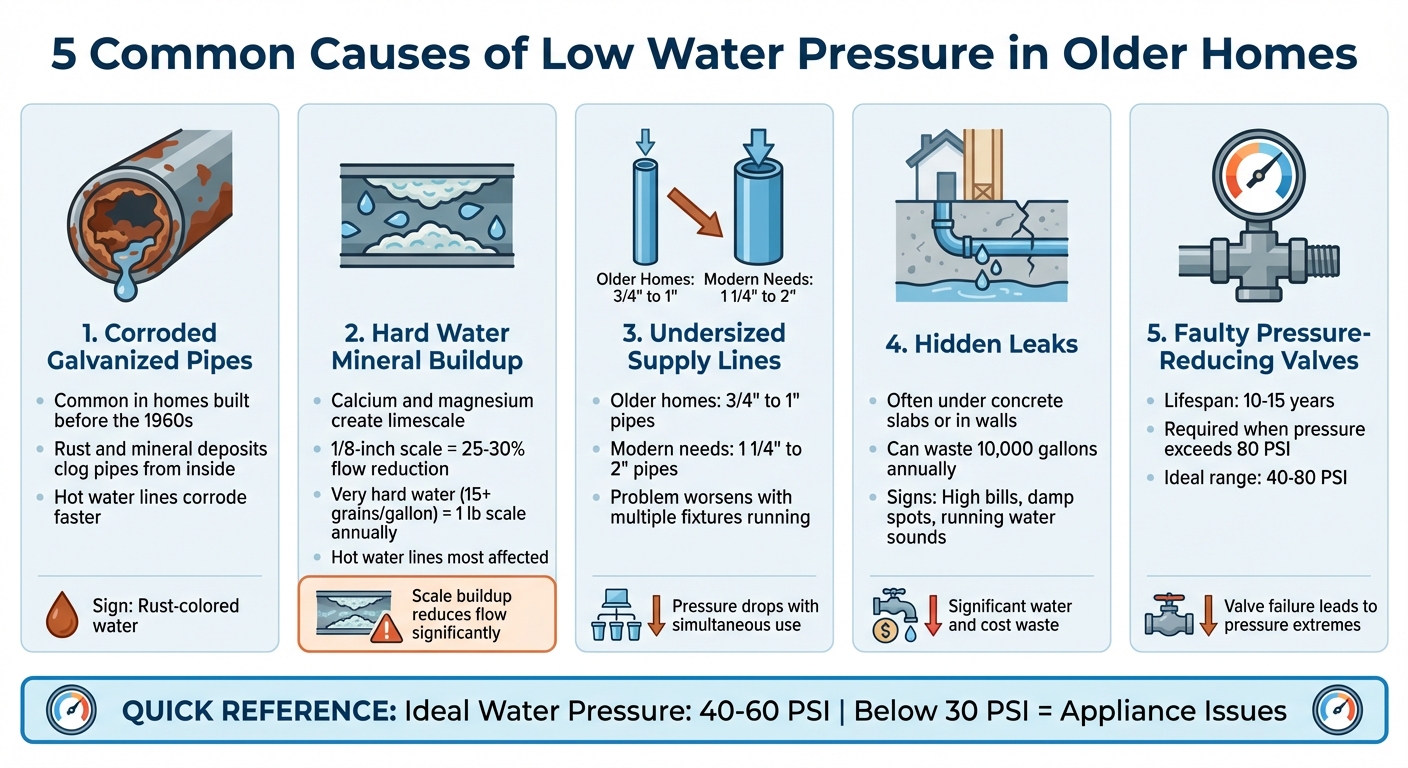
5 Common Causes of Low Water Pressure in Older Homes
Common Causes of Low Water Pressure in Older Homes
Corroded Galvanized Pipes
If your home was built before the 1960s, chances are it has galvanized steel pipes, which were once a go-to choice for plumbing. Over time, these pipes corrode from the inside out. When the zinc coating wears off, the exposed steel starts to rust, gradually clogging the pipe's interior and reducing water flow.
"As corrosion builds up, it continually decreases the inside diameter of the pipes. That means less water can flow through the pipes, significantly decreasing the water pressure." - David Ribbs, Owner, Ribbs Premier Services
Hot water lines tend to corrode faster due to higher temperatures speeding up oxidation. If you notice rust-colored water, it's a clear sign of internal corrosion. This rust traps minerals, further blocking the pipes. Unlike a clogged faucet aerator, this is a widespread issue affecting multiple fixtures, and the only long-term solution is replacing the pipes with modern materials like PEX or copper.
Mineral Buildup from Hard Water
Hard water, rich in minerals like calcium and magnesium, can leave behind limescale that clings to the inside of pipes. Over time, this buildup narrows the pipe's diameter, restricting water flow. In areas with very hard water (15+ grains per gallon), plumbing systems can accumulate nearly a pound of scale annually.
Even a thin layer of scale - just 1/8-inch thick - can shrink the opening of a pipe by 25% to 30%. Hot water lines are especially vulnerable since calcium carbonate forms more quickly at higher temperatures. If your hot water pressure is noticeably weaker than your cold water pressure, scale buildup could be the culprit. Scale deposits often collect at pipe joints, elbows, and small openings like faucet aerators. Unscrewing an aerator to check for white, crusty deposits can give you a clue about the state of your pipes.
Undersized Main Water Supply Lines
Older homes often have 3/4" or 1" main water supply lines, which were sufficient back when homes had fewer water-using fixtures. But modern households - with dishwashers, multiple bathrooms, and high-efficiency appliances - demand more water than these smaller pipes can deliver.
"The diameter of your home's main water supply line determines how many gallons of water your plumbing system can supply per minute." - David Ribbs, Owner, Ribbs Premier Services
To meet today’s needs, main supply lines typically need to be 1 1/4" to 2" in diameter. If your water pressure plummets when multiple fixtures are in use, this could point to dynamic pressure loss caused by undersized pipes. The problem is amplified if your home is far from the municipal water main, as longer distances require larger pipe diameters.
Hidden Leaks in Plumbing Systems
Leaks hidden beneath concrete slabs or underground can silently drain your water supply, leading to lower pressure throughout your home. These leaks often go unnoticed for long periods, wasting water and reducing the volume that reaches your fixtures.
Signs of hidden leaks include unexpectedly high water bills, damp floors or walls, the sound of running water when fixtures are off, or a spinning water meter even when nothing is in use. Older homes with galvanized or copper pipes are especially prone to pinhole leaks caused by corrosion, which can waste thousands of gallons of water monthly while gradually lowering your water pressure.
Faulty Pressure-Reducing Valves
Pressure-reducing valves (PRVs) are designed to regulate the water pressure entering your home, preventing damage from excessive force. These valves typically last 10 to 15 years. If they malfunction or are set incorrectly, they can overly restrict water flow, leaving your home with weak pressure.
According to the International Residential Code, water pressure above 80 PSI requires a pressure-reducing valve. A PRV stuck in a partially closed position or with worn-out components can choke off your water supply. To check, use a pressure gauge on an outdoor spigot - residential water pressure should ideally range between 40 and 80 PSI.
sbb-itb-6ceaf48
How to Diagnose Water Pressure Issues in Older Homes
Check Shutoff Valves and Fixtures
Start by inspecting your valves and fixtures. Ensure the main shutoff valve is fully open. For lever-type valves, the handle should be parallel to the pipe, and for wheel-type valves, turn them fully counterclockwise, then back off slightly (about a quarter turn). Don’t forget to check any secondary valves near your water meter or water heater - these might have been left partially closed after repairs .
Next, examine faucet aerators and showerheads for sediment or white, crusty deposits. If you find buildup, soak the parts overnight in a solution of white vinegar and water to break down calcium deposits. If the pressure issue is limited to hot water, check the supply valve on your water heater - it could be partially closed.
Once you've confirmed the condition of your valves and fixtures, move on to measuring the water pressure.
Test Static and Dynamic Water Pressure
Measuring your water pressure can help identify potential restrictions. Pick up a pressure gauge from a hardware store and attach it to an outdoor spigot or a laundry room connection. With all fixtures turned off, the static pressure should fall between 40 and 60 PSI. If it’s below 30 PSI, appliances may not work efficiently.
"Static pressure measures water pressure when all fixtures are off; dynamic pressure is measured when one or more fixtures are active." - Ribbs Premier Services
Next, turn on a faucet to observe dynamic pressure. A noticeable drop could indicate issues such as corroded pipes, mineral buildup, or an undersized main line. If static pressure is normal but dynamic pressure drops sharply, it’s often a sign of aging plumbing in older homes. However, if the low pressure is isolated to one fixture, the problem is likely a clogged aerator or a local blockage.
Finally, check for hidden leaks. Turn off all water-using appliances and monitor your water meter. If the meter moves after an hour or two of no water usage, you may have a leak diverting water away from your fixtures. Identifying the root cause is key to addressing your water pressure problems effectively.
Low Water Pressure? 6 Hidden Causes (and Quick Fixes)
Solutions for Restoring Water Pressure
Older homes often face unique challenges when it comes to maintaining consistent water pressure. Here are some practical solutions to address these issues.
Pipe Cleaning and Descaling
Mineral deposits can build up inside pipes, restricting water flow. A simple cleaning process might help restore performance without requiring major work. For a quick fix, soak aerators and showerheads in white vinegar for about 30 minutes to dissolve any scale. Afterward, run all fixtures at full blast for 20 minutes. If the pressure improves, the problem was likely due to temporary clogs caused by buildup.
For more stubborn deposits, professional hydro jetting is a more effective option. This method uses high-pressure water streams to clear out the interior of pipes, tackling buildup that vinegar alone can't handle.
If cleaning doesn’t solve the problem, you may need to explore more permanent fixes.
Whole-Home Repiping
In older homes with galvanized pipes, corrosion can severely impact water pressure. If the pipes are too damaged to repair, replacing them with modern materials like PEX or copper is a long-term solution. These materials are resistant to corrosion and can often be installed in continuous lengths, reducing flow restrictions caused by bends.
For residents in West Seattle, Sasquatch Plumbing Services Seattle offers full repiping services, including handling permits, inspections, and providing a 5-year labor warranty.
Leak Detection and Repair
Hidden leaks can also be a major culprit behind low water pressure. Slab leaks - those occurring under concrete foundations - are common in older homes and can divert significant amounts of water away from fixtures. Professional plumbers can use camera inspections to locate leaks without resorting to invasive methods.
Sasquatch Plumbing Services Seattle provides drain camera inspections starting at $99, allowing for targeted repairs instead of guesswork. A simple test: turn off all fixtures for an hour or two and check your water meter. If it continues to move, there’s likely a leak that needs professional attention.
Installing Pressure Booster Pumps
If your municipal water supply consistently delivers pressure below 40 PSI, installing a booster pump can make a noticeable difference. These pumps are designed to increase water pressure throughout your home but require a minimum inlet pressure of 20 PSI to work effectively. Most systems are set with a cut-in pressure of 30 PSI and a cut-out pressure of 50 PSI.
Adjusting or Replacing Pressure-Reducing Valves
A faulty pressure-reducing valve (PRV) can also keep your home’s water pressure lower than it should be. PRVs typically last 10 to 15 years, but over time, the internal diaphragm can wear out or become stuck. In some cases, simply adjusting the PRV setting or ensuring the shutoff valves on either side are fully open can solve the issue.
To check your PRV, attach a pressure gauge. If the readings are consistently below 40 PSI or fluctuate erratically, it’s time to replace the valve.
Conclusion
Main Points to Remember
Low water pressure in older homes can stem from several common issues like corroded galvanized pipes, mineral buildup, undersized supply lines, hidden leaks, or malfunctioning pressure-reducing valves. Older plumbing materials often fail to perform as well as modern ones. Ideally, your plumbing system should maintain steady water pressure, as anything below 40 PSI can lead to noticeable issues with fixtures.
Sometimes, simple fixes - like cleaning aerators or ensuring shutoff valves are fully open - can resolve the problem. However, more complex issues may require professional solutions. These include hydro jetting to clear mineral deposits, whole-home repiping with modern materials like PEX or copper, leak detection using advanced camera inspections, or installing a pressure booster pump if your municipal supply is consistently weak. Keep in mind, hidden leaks can waste nearly 10,000 gallons of water annually, so addressing pressure problems promptly can save both water and money.
Understanding these challenges is the first step toward finding a long-term solution.
How Sasquatch Plumbing Services Seattle Can Help

If you're experiencing persistent low water pressure in your West Seattle home, Sasquatch Plumbing Services Seattle offers a range of services to tackle the issue. They provide full repiping services starting at $4,500, which includes permits, inspections, and a 5-year labor warranty. To identify hidden leaks without unnecessary damage, they also offer drain camera inspections starting at $99.
Whether you need adjustments to a pressure-reducing valve, an upgrade to your main water line (e.g., from 3/4" to 1 1/4" or larger), or emergency leak repairs, their licensed plumbers have the tools and expertise to diagnose and resolve the problem efficiently. With same-day emergency service and clear, upfront pricing, you'll know exactly what to expect before any work begins. Visit sasquatchplumbingseattle.com to schedule a consultation. Sasquatch Plumbing Services Seattle specializes in aging plumbing systems and is ready to restore your home's water pressure effectively.
FAQs
How can I tell if my home has galvanized pipes?
If your house dates back to before the early 1960s, there's a good chance it has galvanized pipes. Common signs of these pipes include reduced water pressure, visible mineral deposits, or noticeable corrosion. Over time, these pipes corrode internally, which can restrict water flow and impact the quality of your water.
Why is my hot water pressure lower than my cold water pressure?
Lower hot water pressure is frequently due to mineral buildup or corrosion inside your water heater or pipes, which can block water flow. Another possible cause is problems with the hot water supply line or fixtures. This is especially common in older homes with aging or outdated plumbing systems.
When should I choose a booster pump instead of repiping?
If you're dealing with low water pressure due to external issues - like a weak municipal water supply or a malfunctioning pressure regulator - and your plumbing system is in good shape, a booster pump can be a great fix. However, if the problem lies with old, corroded, or damaged pipes that are restricting water flow, repiping is typically the smarter choice. A booster pump works best for pressure problems that aren't tied to aging or faulty pipes.