
If your home has older plumbing, ignoring leaks can lead to serious problems. Small leaks waste thousands of gallons of water annually, increase your bills, and create the perfect conditions for mold, which can grow in 24-48 hours and harm your health. Over time, untreated leaks can damage your home’s structure, warp floors, weaken foundations, and even cause electrical hazards. Repair costs can escalate from $150-$400 for early fixes to over $20,000 if left unattended. Many insurance policies won’t cover damage from neglect, and your home’s value could drop by up to 15%. Addressing leaks early saves money, protects your property, and prevents costly repairs.
Key risks of ignoring plumbing leaks:
- Water Waste: A dripping faucet can waste 3,000 gallons/year; a faulty toilet, over 30,000 gallons/year.
- Structural Damage: Water weakens wood, drywall, and foundations, leading to costly repairs.
- Mold Growth: Mold grows fast in damp areas, causing health issues and expensive remediation.
- Increased Costs: Small repairs ($150-$400) are far cheaper than restoration costs ($20,000+).
- Property Value Loss: Neglected leaks can reduce your home’s value by up to 15%.
Fixing leaks early prevents these issues and saves money in the long run.
How to Prevent Household Plumbing Leaks | This Old House

Why Older Plumbing Systems Develop Leaks
As plumbing systems age, they face wear and tear from material degradation, environmental factors, and continuous use. Understanding the common causes behind leaks in older pipes can help homeowners spot potential issues early, preventing small problems from escalating into costly repairs. Let’s explore the main reasons older plumbing systems are prone to failure.
Corrosion in Older Pipe Materials
Corrosion is a leading cause of pipe deterioration, especially in older systems. For example, galvanized steel pipes - often used in homes built between the 1930s and 1980s - are highly susceptible to rust. Over time, oxygen reacts with the metal, forming brittle rust that weakens the pipe walls. As rust and mineral deposits build up inside the pipes, water flow becomes restricted, and the walls thin, eventually leading to cracks. These pipes typically last between 20 and 50 years, so any galvanized plumbing installed before the mid-1970s is likely nearing the end of its lifespan.
Copper pipes, while more durable with lifespans exceeding 50 years, are not immune to failure. Copper relies on a protective oxide layer to resist corrosion, but acidic water can strip this layer away, leaving the metal exposed to rapid decay. Similarly, cast iron pipes, often used for drainage, face challenges from prolonged exposure to moisture, waste, and soil pressure. These pipes usually begin to crack after 40 to 60 years of use.
Foundation Settling and Pipe Stress
As homes age, the soil beneath them naturally shifts and compacts, causing the foundation to settle. This movement places significant stress on rigid plumbing lines, leading to cracks, bends, or joint separations. One common result of this stress is the formation of "pipe bellies" - sagging sections of pipe where water collects. These low points not only accelerate corrosion but also disrupt water flow.
Leaking pipes can worsen the problem by eroding the surrounding soil, which increases hydrostatic pressure and puts additional strain on the foundation. This creates a cycle where leaks contribute to settling, and settling exacerbates leaks.
Temperature Changes and Seasonal Wear
Fluctuations in temperature can also wreak havoc on older pipes. Metal pipes expand and contract as temperatures rise and fall, gradually weakening joints and increasing the likelihood of leaks. Homes built before the 1960s and 1970s are especially vulnerable if their water lines were installed in exterior walls. These pipes are at risk of freezing during cold weather. When water freezes at 32°F or below, it expands with immense force, often leading to cracks or bursts. Each year, an estimated 250,000 homes in the United States experience damage from frozen or burst pipes.
What Happens When You Ignore Plumbing Leaks
When plumbing leaks go unchecked, the problems they cause can multiply quickly, impacting your home’s structure, your finances, and even your health. According to the Environmental Protection Agency, the average home loses about 10,000 gallons of water each year due to leaks. These seemingly small issues can lead to skyrocketing repair costs and serious safety concerns.
Structural Damage to Your Home
Water has a way of finding its way into places it shouldn’t, and when it does, it can wreak havoc on your home’s structure. It seeps into wall studs, floor joists, and rafters, causing wood to rot and weakening the very framework of your house. Drywall exposed to constant moisture can swell, crumble, and even collapse. Hardwood floors and laminate surfaces can warp, while carpets deteriorate over time.
Leaks near your home’s foundation or under concrete slabs are especially dangerous, as they can erode soil and weaken the concrete, leading to cracks and settling that threaten the stability of your home. If water pools above ceilings, it can cause drywall to sag and eventually give way. Worse still, when water comes into contact with electrical wiring, it can corrode connections and create short circuits, increasing the risk of fires and electrical shocks.
Mold Growth and Health Problems
One of the fastest consequences of water exposure is mold growth. Mold spores can begin to grow on damp surfaces within 24 to 48 hours. Russell Vent, Vice President at Paul Davis Restoration, explains:
"A leaky pipe under a sink that drips consistently for two weeks is almost a guarantee for mold growth".
In places like Seattle, where the climate is humid, slow leaks hidden inside walls often go unnoticed until signs like soft drywall or musty odors appear. Mold thrives in these conditions, potentially causing sneezing, itchy eyes, skin irritation, and even respiratory problems - especially for children, seniors, and individuals with asthma.
Beyond mold, stagnant water can become a breeding ground for bacteria and viruses, while sewage leaks introduce harmful pathogens into your home. Persistent moisture also attracts pests like cockroaches and rodents, which can carry diseases into your living space.
Increased Water Bills and Repair Costs
Even small leaks can make a big dent in your wallet. Many municipalities use tiered pricing for water, meaning a minor leak could increase your monthly bill by as much as 10%. Fixing a leak early is often manageable, costing between $150 and $400. However, if left unattended, the damage can spiral into expenses exceeding $20,000. This includes costs like drywall repair ($300–$800), flooring replacement ($2,000–$6,000), foundation repair ($4,000–$10,000), and mold remediation, which can surpass $10,000 if it spreads to your HVAC system.
It’s also important to note that most insurance policies don’t cover gradual damage caused by neglected leaks, leaving you to foot the bill. Over time, the cumulative damage can reduce your property’s value by as much as 15%. Addressing leaks promptly isn’t just about preventing damage - it’s about saving money and protecting your investment in the long run.
sbb-itb-6ceaf48
Cost Comparison: Ignoring Leaks vs. Early Repairs
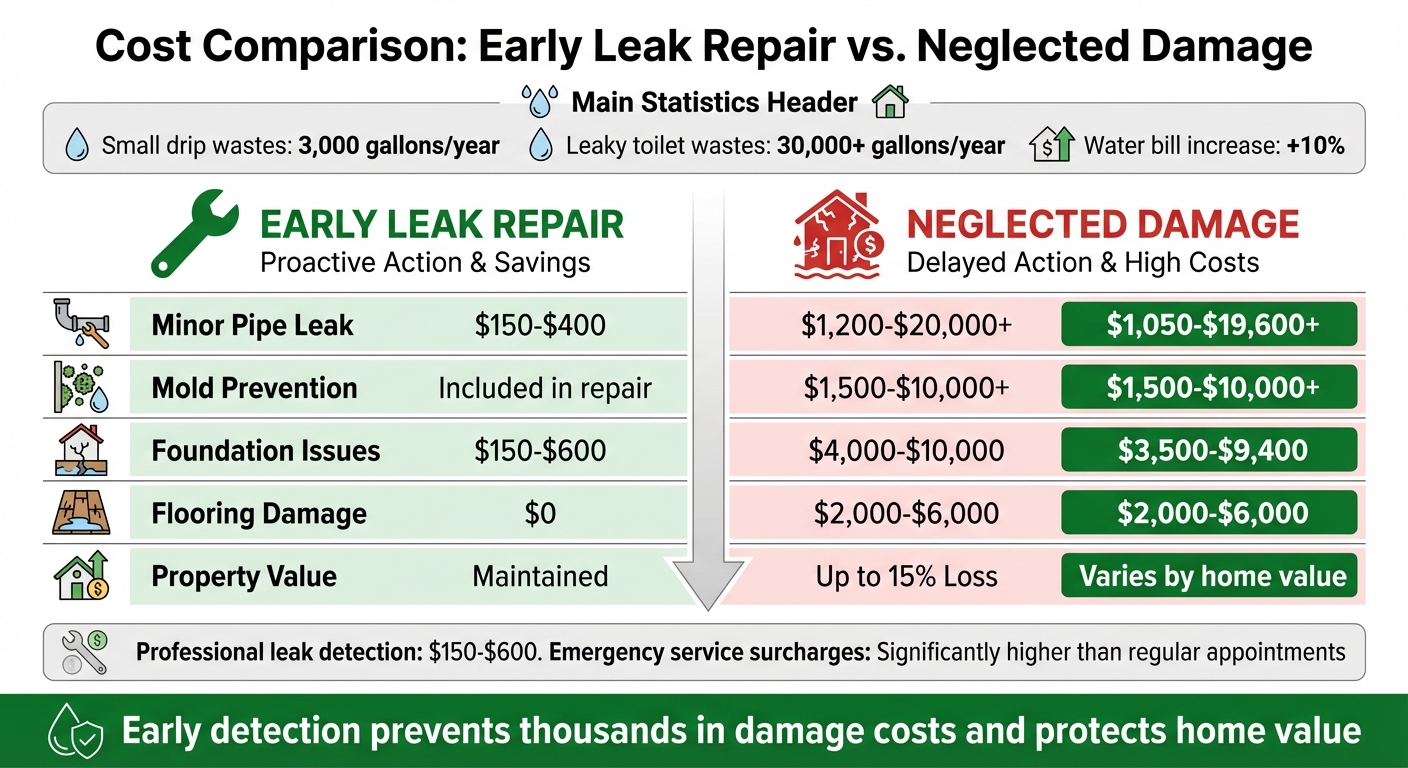
Cost Comparison: Early Plumbing Leak Repairs vs Neglected Damage
The True Cost of Ignored Leaks
Did you know that even a small drip can waste 3,000 gallons of water annually? And a leaky toilet? That can skyrocket to over 30,000 gallons per year, adding about 10% to your monthly water bill. But the financial impact doesn’t stop there.
When leaks are ignored, the costs pile up quickly. Water damage restoration for a single room can range from $1,200 to $4,500, with severe cases climbing beyond $20,000. Mold issues? Tackling those can cost between $1,500 and $6,000, and if the infestation is extensive, you might be looking at bills over $10,000. Foundation repairs are another big-ticket item, averaging between $4,000 and $10,000, while replacing damaged flooring can add $2,000 to $6,000 to your expenses. On top of that, emergency plumbing services - especially during nights, weekends, or holidays - often come with hefty surcharges compared to regular repair appointments. Spotting and fixing leaks early can help you avoid these spiraling costs.
How Much You Save with Early Detection
Fixing a leak early is surprisingly affordable, typically costing between $150 and $400. Compare that to the thousands - or even tens of thousands - you could spend if the problem is left unchecked. Ignoring leaks can also reduce your property’s value by up to 15%, a loss that far outweighs the cost of a timely repair.
Professional leak detection services, which cost around $150 to $600, can prevent major damage before it starts. Scheduling maintenance during regular hours avoids those dreaded emergency premiums, and addressing issues early increases the likelihood that your insurance will cover the repairs. Beyond the financial savings, quick action protects your home’s value and prevents visible damage that could lead to a significant drop in property worth. The table below highlights the stark difference between early repairs and the costs of neglect.
Cost Comparison Table
| Issue Type | Early Repair Cost | Neglected Damage Cost | Potential Savings |
|---|---|---|---|
| Minor Pipe Leak | $150 – $400 | $1,200 – $20,000+ | $1,050 – $19,600+ |
| Mold Prevention | Included in repair | $1,500 – $10,000+ | $1,500 – $10,000+ |
| Foundation Issues | $150 – $600 | $4,000 – $10,000 | $3,500 – $9,400 |
| Flooring Damage | $0 | $2,000 – $6,000 | $2,000 – $6,000 |
| Property Value | Maintained | Up to 15% Loss | Varies by home value |
Taking action early doesn’t just save money - it safeguards your home’s structure and value. It’s a smart move that pays off in both the short term and the long run. By addressing leaks promptly, you avoid unnecessary stress and ensure your property remains in top condition.
How Sasquatch Plumbing Services Seattle Fixes Aging Plumbing Leaks

Dealing with aging plumbing in West Seattle calls for a team that truly understands the challenges of older systems. Sasquatch Plumbing Services Seattle brings expertise and cutting-edge tools to detect and repair leaks in homes with decades-old pipes. Their advanced, non-invasive methods ensure your home is protected while addressing plumbing issues effectively.
Leak Detection Services
Finding leaks in older plumbing systems isn't just about spotting water stains or puddles. Sasquatch Plumbing Services uses a combination of advanced techniques to locate hidden problems with precision. For instance, video pipe inspections involve small waterproof cameras that provide live footage of potential issues like corrosion, cracks, or blockages. Acoustic leak detection uses specialized microphones to pick up the sound of water escaping from pipes, while thermal imaging identifies cooler areas that might indicate moisture trapped behind walls or floors. If further confirmation is needed, pressure testing can detect drops in pressure, signaling a hidden leak. These tools work together to identify problems without unnecessary disruptions to your home.
Repiping and Water Line Repair
Once leaks are located, the next step often involves addressing the underlying cause - aging pipes. In many cases, older galvanized steel or iron pipes may be too damaged to repair. When this happens, whole-home repiping becomes the best option. This process replaces outdated materials with durable, corrosion-resistant options like PEX or copper, ensuring a plumbing system that stands the test of time. Sasquatch Plumbing Services Seattle takes care of everything, from securing permits to handling inspections, and backs their work with a 5-year labor warranty. Whether it’s fixing a single water line or upgrading the entire system, their goal is to provide a long-lasting solution that prevents future leaks and water damage.
Same-Day Emergency Services with Upfront Pricing
For urgent situations like burst pipes or severe leaks, Sasquatch Plumbing offers same-day emergency services to minimize damage before it worsens. They also prioritize transparency with clear, upfront pricing provided before any work begins. This approach not only eliminates hidden fees but also ensures you receive only the necessary repairs. Their focus on efficiency and honesty helps restore your home's safety as quickly as possible.
Conclusion
Overlooking leaks in aging plumbing systems can damage your home’s structure, jeopardize your family’s health, and drain your finances. Water can erode soil beneath your home, weaken foundations, and lead to cracks, slab failures, or even sinkholes. Persistent moisture creates a perfect environment for mold, which can cause respiratory issues like asthma. And the financial impact? A small $200 pipe repair can quickly spiral into a $5,000 to $10,000 restoration nightmare if ignored. On a national level, small leaks waste an astounding 1 trillion gallons of water every year. Even a single faucet dripping once per minute wastes around 34 gallons annually.
Homes in West Seattle with aging plumbing face even more serious risks due to outdated materials. Galvanized steel and polybutylene pipes, commonly used in older properties, are prone to sudden failures. Many insurance companies are now refusing to cover homes with these materials. Corroded pipes can also release rust, sediment, and harmful contaminants like lead into your water supply, posing health risks to your family [51,52]. These issues make professional plumbing services essential to maintaining a safe and functional home.
Addressing these problems promptly is key to avoiding costly repairs and long-term damage. Sasquatch Plumbing Services Seattle offers advanced, non-invasive leak detection technology to find hidden issues without tearing apart your home. Their repiping services use durable materials like PEX or copper, ensuring long-lasting solutions and peace of mind with a 5-year labor warranty. With same-day emergency services and transparent pricing, they make it simple to tackle plumbing problems before they escalate into disasters.
Visit Sasquatch Plumbing Services Seattle to schedule an inspection and protect your West Seattle home from the risks of aging plumbing systems.
FAQs
What are the common signs of leaks in older plumbing systems?
Leaks in older plumbing systems can often make their presence known in a few telltale ways. You might notice a musty odor lingering around, unexplained spikes in your water bill, or visible signs of water damage like stains, peeling paint, or warped floors. Sometimes, you’ll hear a constant dripping sound, or you might come across mold growth in damp areas. Over time, rust or corrosion on fixtures can also be a sign that moisture has been an issue for a while.
If any of these red flags pop up in your West Seattle home, reach out to Sasquatch Plumbing Services Seattle. With their same-day emergency service and straightforward pricing, they can quickly tackle leaks and help you avoid expensive repairs and mold problems.
What are the long-term risks of ignoring a small plumbing leak in my home?
Even the smallest plumbing leak can snowball into major problems if ignored. Over time, water can slowly infiltrate walls, floors, and even the foundation of your home. This can lead to wood rot, warping, and cracks, all of which weaken essential structural elements like joists and support beams. Left unchecked, these issues could jeopardize the overall stability of your home.
On top of that, constant moisture creates an ideal breeding ground for mold, which not only accelerates material damage but also introduces potential health hazards for your family. Tackling leaks promptly can help you avoid expensive repairs and keep your home safe and secure.
How can I prevent leaks in older plumbing systems before they cause serious damage?
Preventing leaks in older plumbing systems is crucial to sidestep expensive repairs and potential home damage. A good starting point is to inspect exposed pipes regularly for rust, corrosion, or moisture. Check often in spots like under sinks, around appliances, and in the basement. Catching issues early can save you from bigger headaches later.
Another smart move is to keep an eye on your water bill. A sudden spike without an obvious reason might mean you have a hidden leak. For extra security, you could install smart leak-detection devices. These devices can alert you to moisture or even shut off your water automatically if a leak occurs. And don’t forget to schedule annual maintenance with a licensed plumber. This ensures any hidden problems are caught and your pipes stay in good shape.
If you’re a homeowner in West Seattle, Sasquatch Plumbing Services Seattle offers expert inspections, smart detection system installations, and repiping services. With upfront pricing and same-day emergency service, they make sure your plumbing is well taken care of.