
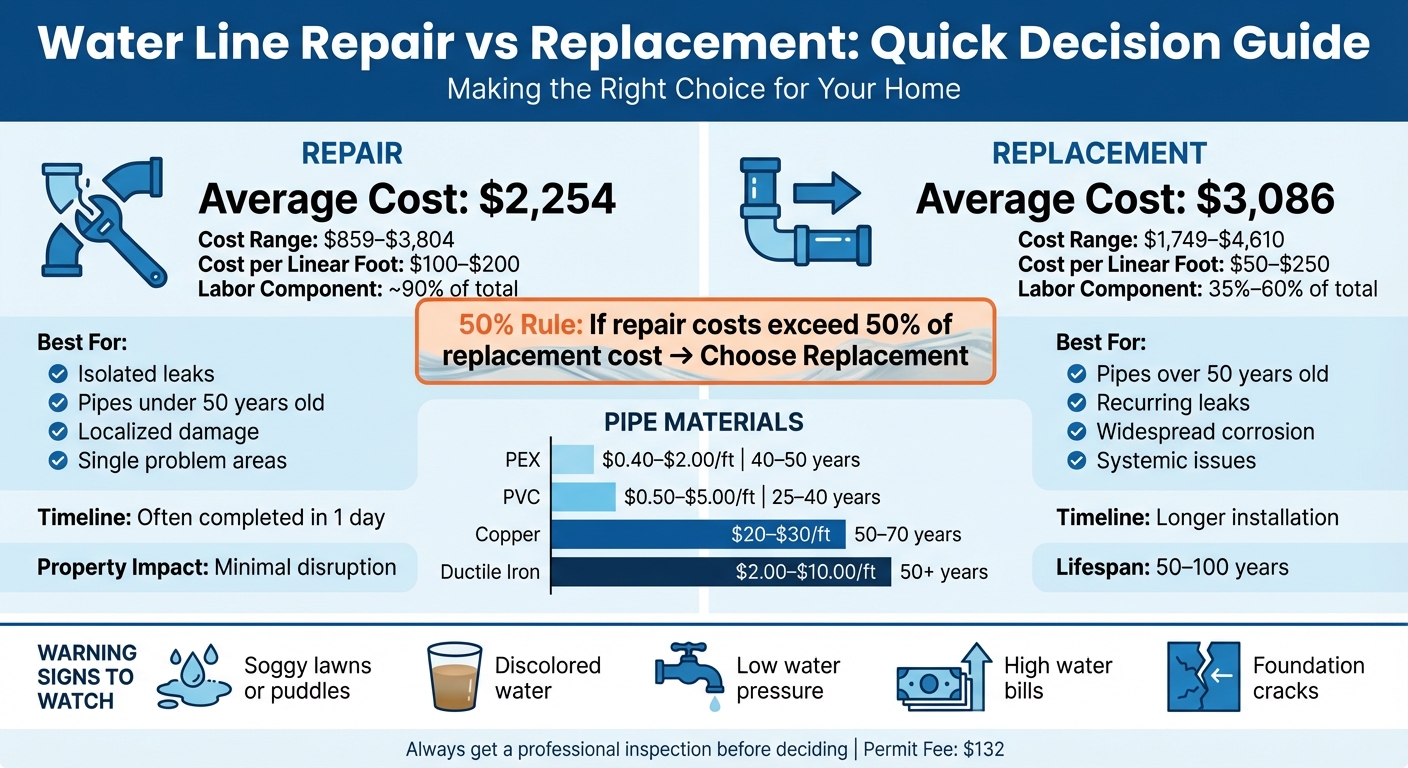
When your main water line has issues, you’re left with two choices: repair or replace. Repairs are cheaper upfront, averaging $2,254, but might only fix short-term problems. Replacements cost more, around $3,086, but are a long-term solution, especially for older pipes or recurring issues.
Here’s a quick breakdown to help you decide:
- Repair: Best for isolated leaks or damage in pipes under 50 years old. Costs range from $859 to $3,804, with faster completion and less property disruption.
- Replacement: Ideal for aging pipes, recurring leaks, or systemic issues. Costs range from $1,749 to $4,610, but ensures reliability for decades.
Key factors to consider:
- Pipe age: Pipes over 50 years old are better replaced.
- Damage extent: Localized issues can often be repaired.
- Cost comparison: If repairs exceed 50% of replacement costs, go for replacement.
Pro tip: Always get a professional inspection to determine the best course of action.
Water Line Repair vs Replacement Cost Comparison Guide
Should you REPAIR or REPLACE Your Leaking Water Service Line?
sbb-itb-6ceaf48
Cost Comparison: Repair vs Replacement
When it comes to your main water line, the costs for repairing versus replacing can vary significantly. On average, repairs run about $2,254, while a full replacement typically costs $3,086. While replacement may seem pricier upfront, it could be the better long-term choice if your pipe is old or repairs are becoming frequent. The table below outlines the detailed cost ranges for each option.
What Affects the Cost
Several factors influence the final price tag:
Labor is one of the biggest cost drivers, making up nearly 90% of repair expenses in Seattle. Plumbers charge anywhere from $40 to $120 per hour for traditional trenching methods. If you opt for trenchless techniques, the hourly rate increases to $50 to $190. The type of damage also plays a major role - fixing seismic cracks will set you back $850–$1,500, while extensive corrosion often makes replacing the pipe a more economical choice.
Accessibility is another key factor. If your water line is located beneath a driveway, deck, or sidewalk, you could face significantly higher costs for demolition and restoration. Depth also matters. In Seattle, the frost line is 18 inches, requiring at least that much excavation, but deeper pipes demand more time and heavier equipment. Material costs add up too: PVC runs $0.50–$5, ductile iron is $2–$10, and copper costs $20–$30 per linear foot.
Don’t forget post-construction cleanup, which typically adds around $300 to the total.
Price Breakdown by Category
Here’s a closer look at how these costs break down:
| Category | Repair | Replacement |
|---|---|---|
| Average Total Cost | $2,254 | $3,086 |
| Typical Range | $859–$3,804 | $1,749–$4,610 |
| Cost per Linear Foot | $100–$200 | $50–$250 |
| Labor Component | ~90% of total | 35%–60% of total |
| Primary Cost Driver | Damage type and location | Installation method (trenched vs. trenchless) |
| Permit Fee | $132 | $132 |
In the next section, we’ll dive into specific scenarios to help you decide whether repair or replacement is the right choice for your situation.
When to Repair Your Water Line
Repairing a water line is a smart option when the damage is limited to a specific area, and the rest of the pipe remains in good condition. This approach works well for isolated issues rather than widespread problems.
Typical Repair Situations
Here are some common examples where repairs make sense both in terms of time and cost:
- Replacing a faulty shut-off valve typically costs between $250 and $600.
- Fixing small leaks beneath a lawn usually runs $150 to $300.
- If seismic activity or shifting soil causes a crack in an otherwise solid pipe, repairs can cost $850 to $1,500 and take about 4 to 8 hours.
- Replacing a damaged section of pipe costs around $100 to $200 per linear foot.
Repair is often the best choice if your pipe is under 50 years old, and the damage results from accidental causes such as digging or ground shifts. In general, if the repair costs are less than 50% of what a full replacement would cost, repairing is the way to go.
Repair Pros and Cons
| Feature | Pros | Cons |
|---|---|---|
| Cost | Lower upfront expense ($354–$1,696) | May lead to recurring issues if the pipe is aging. |
| Speed | Repairs are often completed in a single day. | Only fixes the immediate issue, leaving underlying deterioration unaddressed. |
| Property Impact | Minimal digging, reducing landscape damage. | Doesn't provide long-term reliability for older systems. |
| Water Access | Quick turnaround, meaning less time without water. | Might only be a short-term fix if other sections of the pipe fail soon after. |
To make an informed decision, consider asking your plumber for a video inspection to confirm the damage is isolated. This inspection usually costs around $165 and can help you avoid unnecessary repairs if a full replacement is the better option.
For homeowners in West Seattle, Sasquatch Plumbing Services Seattle provides fast, professional assessments and repair services to ensure your water line is back in working order without unnecessary delays.
Up next, we’ll take a closer look at situations where a full water line replacement might be the better choice.
When to Replace Your Water Line
Sometimes, repairing a water line just isn't enough. When pipes are old or problems keep popping up, replacing the entire line is often the smarter choice.
Signs You Need Replacement
One of the biggest indicators is pipe age. Depending on the material, most water lines last anywhere from 20 to 100 years. If your pipes are nearing the end of their lifespan, constant repairs can become a waste of time and money. Materials like lead and galvanized steel are especially problematic, as they pose health risks and are prone to corrosion - these should be replaced as soon as possible.
Another red flag is recurring leaks or repair costs that start creeping toward 50% of what a full replacement would cost. Persistent issues like these often point to systemic failure, making repairs a temporary fix at best. Similarly, if you're dealing with discolored water, it's likely due to internal corrosion that can't be fixed with just one repair. A steady drop in water pressure throughout your home is another clear sign that the main supply line is failing.
Keep an eye out for foundation cracks, settling, or pavement heaving, as these could mean leaks are causing structural damage to your home. A simple way to check for leaks is with a meter test: turn off all water fixtures, and if your meter still moves after 30–60 minutes, you've likely got a leak.
Benefits of Full Replacement
Replacing your water line offers peace of mind and long-term reliability. A new line can last anywhere from 50 to 100 years. You'll likely notice immediate improvements in water pressure and water quality, and you'll no longer have to worry about unexpected pipe failures that could lead to flooding or leave you without water.
Financially, replacement can save money in the long run. A small leak - just one gallon per minute - can waste around 4,320 gallons in only three days. Left unchecked, these hidden leaks can drive up your water bill significantly. While a full replacement typically costs between $2,000 and $5,000, it's a one-time investment that also protects your home's foundation from water damage.
For homeowners in West Seattle dealing with aging pipes or frequent issues, Sasquatch Plumbing Services Seattle offers professional water line replacement. With upfront pricing and a satisfaction guarantee, they ensure your water supply stays secure for decades. Up next, explore the best pipe material options to make sure your new line stands the test of time.
Pipe Material Options
When considering the costs and repair scenarios for water line projects, the material you choose plays a major role in shaping both the immediate and long-term outcomes. Factors like budget, soil composition, and climate all influence which material is best suited for your needs. Each option affects upfront expenses and long-term reliability, tying directly into your decision to repair or replace your water line.
PEX (crosslinked polyethylene) is a popular choice for its flexibility, affordability, and durability. It typically costs between $0.40 and $2.00 per linear foot and has an estimated lifespan of 40–50 years. Its flexibility also reduces the need for additional fittings during installation, which can help lower labor costs.
Copper is known for its exceptional durability and longevity. Priced between $20 and $30 per linear foot, copper pipes can last 50–70 years. Copper is highly resistant to corrosion and is often chosen for premium installations where long-term reliability is a priority.
PVC is a budget-friendly option with strong corrosion resistance, costing between $0.50 and $5.00 per linear foot. However, its lifespan is shorter - around 25–40 years - due to factors like soil conditions and seismic activity. While PVC works well in areas with acidic soil or soft water, its rigidity makes it more prone to cracking during ground shifts or temperature changes. In regions with frequent seismic activity, ductile iron is often preferred for its enhanced resilience.
Material Comparison Table
| Material | Cost (per lin. ft.) | Expected Lifespan | Best Uses |
|---|---|---|---|
| PEX | $0.40 – $2.00 | 40–50 Years | Modern replacements; freeze-resistant |
| PVC | $0.50 – $5.00 | 25–40 Years | New construction; acidic soil areas |
| Copper | $20 – $30 | 50–70 Years | Premium installations; high durability needs |
| Galvanized Steel | N/A (Repairs only) | ~40 Years | Matching existing lines in older homes |
| Ductile Iron | $2.00 – $10.00 | 50+ Years | Areas prone to seismic activity |
Galvanized steel is largely obsolete for new installations but is still encountered in older homes built before the 1970s. These pipes have a functional lifespan of around 40 years but are prone to internal rust and mineral buildup, which can restrict water flow. If your home has galvanized steel or lead pipes, experts usually recommend a full replacement instead of repairs due to concerns about health risks and corrosion.
Warning Signs of Water Line Problems
Spotting water line issues early can save you from hefty repair bills and potential property damage. Small problems tend to snowball if ignored, so being aware of the warning signs is key. Here’s what to keep an eye on to address concerns before they escalate.
What to Look For
Soggy lawns or unexpected puddles: If parts of your lawn are unusually wet or have lush, green patches despite dry weather, a water line leak might be to blame.
Discolored water: Brown, red, or yellow water coming from your taps could point to rust, corrosion, or debris inside your pipes. If this discoloration appears across multiple fixtures, the main water line could be the culprit.
Low water pressure: A noticeable drop in water pressure at several fixtures may signal a leak or break in your main water line. If your neighbors still have normal pressure while yours has dropped, it’s time to call in a professional.
Unexplained spikes in your water bill: A sudden increase in your water bill could indicate a hidden leak. Even a small leak - like one gallon per minute - can waste over 4,000 gallons in just three days.
Unusual sounds and structural changes: Sounds like gurgling, trickling, or banging (commonly known as water hammer) coming from walls or floors often signal pressurized leaks. Additionally, cracks in your foundation, pavement heaving, or settling near your water line could mean long-term leakage is eroding the soil.
Persistent wet spots near foundations, sidewalks, or driveways should be checked immediately. Prolonged leaks can cause serious structural damage.
Visible corrosion: If you have exposed pipes, look for rust or other signs of deterioration. Homes with older galvanized steel pipes are especially prone to this kind of wear.
Testing for hidden leaks: To find out if there’s a hidden leak, turn off all water inside and outside your home. Record your water meter reading, wait 30–60 minutes without using any water, and check the meter again. If the reading changes, you likely have a leak.
If you notice any of these signs, don’t wait to take action. For those in West Seattle, Sasquatch Plumbing Services Seattle offers dependable water line inspections and repairs to protect your home. Regularly checking for these issues and addressing them promptly can save you from bigger headaches down the road.
Making Your Decision
If your water line is over 50 years old, has been repaired before, or shows widespread corrosion, replacement is likely your best option. However, if the issue is isolated - like a single leak - a targeted repair might be sufficient.
A good rule of thumb is the 50% rule: if the cost of repairs exceeds half the price of a full replacement, go with the replacement. In Seattle, where average repair costs are about $2,254 and replacements run around $3,086, this approach can save you from repeated excavation and service calls.
Avoid attempting do-it-yourself repairs on your main water line. The Alliance for Water Efficiency strongly advises against it:
The water utility should be contacted before any attempt to repair the water supply pipe... This repair should never be attempted by a homeowner.
DIY repairs can lead to costly damages and hefty fines, sometimes totaling tens of thousands of dollars.
Start with a professional inspection. Specialists use tools like video inspections and other diagnostics to determine whether the problem is isolated or part of a larger issue. This also ensures the work complies with Seattle's permit requirements and building codes.
When you're ready to proceed, West Seattle homeowners can count on Sasquatch Plumbing Services Seattle for expert inspections, repairs, and replacements. They offer upfront pricing, same-day emergency service, and in-depth knowledge of Seattle’s unique challenges, like soft water conditions, seismic activity, and permitting requirements. With their help, your project will be done right the first time.
FAQs
How do I decide between repairing or replacing my main water line?
When deciding whether to repair or replace your main water line, it's essential to weigh factors like the age of the pipe, the material it's made of, and the extent of the damage. For example, a small leak or crack in an otherwise solid pipe can often be repaired at a lower cost. But if the pipe is old, made from a weaker material, or shows widespread damage, replacing it might save you more trouble down the road.
Other important considerations include the length of the pipe affected, the type of material, and how accessible the pipe is. If the repair involves digging through challenging terrain or using trenchless technology, costs can rise. On average, repairs in Seattle range from $859 to $3,804, while replacements typically cost between $1,749 and $4,610. A good rule of thumb: if repair costs climb to 70-80% of what it would cost to replace the line, it’s often worth investing in a new one. A replacement can also improve water pressure and minimize future problems.
For homeowners in West Seattle, Sasquatch Plumbing Services Seattle is a trusted option. They provide upfront pricing, same-day service, and expert advice to help you choose the best solution for your home and budget.
How do labor costs affect the total price of repairing or replacing a main water line?
Labor expenses are a major factor when it comes to the overall cost of repairing or replacing a main water line. For replacements, labor typically makes up 35% to 60% of the total cost. If you're dealing with underground repairs, you can expect hourly rates to fall between $75 and $150. Depending on how complex and time-consuming the job is, this could add anywhere from a few hundred dollars to well over a thousand to the final bill.
Because main water line projects often require specialized skills and equipment, labor costs tend to take up a significant share of the budget. Being aware of these expenses can help homeowners better prepare financially for repair or replacement projects.
When should I replace my main water line instead of repairing it?
If you’ve been dealing with frequent leaks, ongoing clogs, or low water pressure that just won’t improve with repairs, it might be time to consider replacing your main water line. Other red flags to watch for include old or corroded pipes, an unexpected jump in your water bill, or tree roots causing damage to the line. You might also notice unexplained water stains on walls or ceilings or even an uptick in pest activity around your plumbing - both could point to a bigger problem.
Addressing these issues quickly is crucial. Delaying action could lead to more extensive damage to your home and result in higher repair costs down the road.