
Repiping your home means replacing old, failing pipes with modern, reliable materials like PEX or copper. If your home has outdated galvanized steel, polybutylene, or even lead pipes, it’s time to consider a full repipe. Here’s what you need to know:
- Why Repiping Matters: Old pipes can corrode, restrict water flow, and cause leaks or health risks. Homes built before 1970 are especially at risk.
- Signs You Need Repiping: Discolored water, low water pressure, frequent leaks, or noisy plumbing are common indicators.
- Materials to Consider:
- Copper: Lasts 50–100 years, durable, but expensive and prone to corrosion in acidic water.
- PEX: Flexible, freeze-resistant, and affordable, with a lifespan of 30–50 years.
- CPVC: Budget-friendly but brittle over time, lasting 10–50 years.
- Timeline and Costs: Most repiping projects take 2–7 days and cost $4,500–$15,000, depending on your home’s size and materials used.
- Benefits: Improved water pressure, cleaner water, reduced leaks, and increased home value.
If you’re in West Seattle, where many homes have aging plumbing, repiping is especially important. Licensed plumbers handle permits, installation, and drywall restoration, ensuring your home is up to code and functioning smoothly.
When to Consider Repiping Your Home
Pipe Materials and How Long They Last
The lifespan of your home's pipes depends on the material used. Copper pipes, often regarded as the standard of quality, can last between 50 and 100 years when installed correctly. PEX pipes (cross-linked polyethylene), a more modern option, have an expected lifespan of 30 to 50 years. On the other hand, galvanized steel pipes, commonly found in homes built before the 1970s, typically need replacement after about 50 years. These pipes corrode internally over time, restricting water flow and releasing rust sediment.
One material that stands out as particularly problematic is polybutylene, often called "Poly‑B." Widely installed between the 1970s and 1990s, these pipes react poorly to chlorine in municipal water, making them prone to sudden failures and joint leaks. If your home has polybutylene pipes, replacing them should be a top priority, regardless of their current condition. Homes built in the 1920s or earlier may still have lead pipes, which pose serious health risks and require immediate replacement. Understanding these lifespans can help you spot early warning signs and act before major issues arise.
Warning Signs That You Need Repiping
Even if your pipes haven't exceeded their lifespan, there are clear signs that they may need replacing. One major indicator is discolored water - yellow, brown, or red-tinted water often signals internal corrosion or rust entering your water supply. If the discoloration only occurs with hot water, the issue might be related to your water heater.
Low or inconsistent water pressure is another red flag. For instance, if you notice a significant drop in pressure when a toilet is flushed during a shower, it could mean mineral buildup or rust is narrowing your pipes. Frequent leaks, like damp spots on walls or ceilings, are often caused by pinhole leaks and internal corrosion. Similarly, visible corrosion on exposed pipes - whether rust on galvanized steel or green/blue oxidation on copper - indicates advanced wear.
Noisy plumbing, such as banging or rattling sounds (commonly called "water hammer"), can also signal unstable or failing pipes. Finally, an unexplained spike in your water bill might point to a hidden leak behind walls or under your foundation.
Local Codes and Safety Requirements
In Washington State, as in many other areas, repiping your home requires work permits to ensure the project meets safety and quality standards. Licensed professionals handle the installation to comply with these regulations, and permit fees typically range from $200 to $1,500, depending on your municipality.
"All plumbing work... must follow strict state and local building codes. This isn't optional – it's the law, and it's designed to protect you."
- McWilliams Heating, Cooling & Plumbing
Safety codes also mandate the immediate removal of lead pipes, which are often found in homes built before the 1920s. Additionally, outdated materials like polybutylene or corroded galvanized steel may necessitate a full repipe to meet modern reliability and safety standards. If you're already planning a kitchen or bathroom renovation, consider tackling a repipe at the same time. With walls already open, you could save significantly on labor costs.
sbb-itb-6ceaf48
How to Replumb a Whole House with PEX Pipe Through the Attic || DIY Repipe Project to Replace Copper
Choosing the Right Materials for Repiping
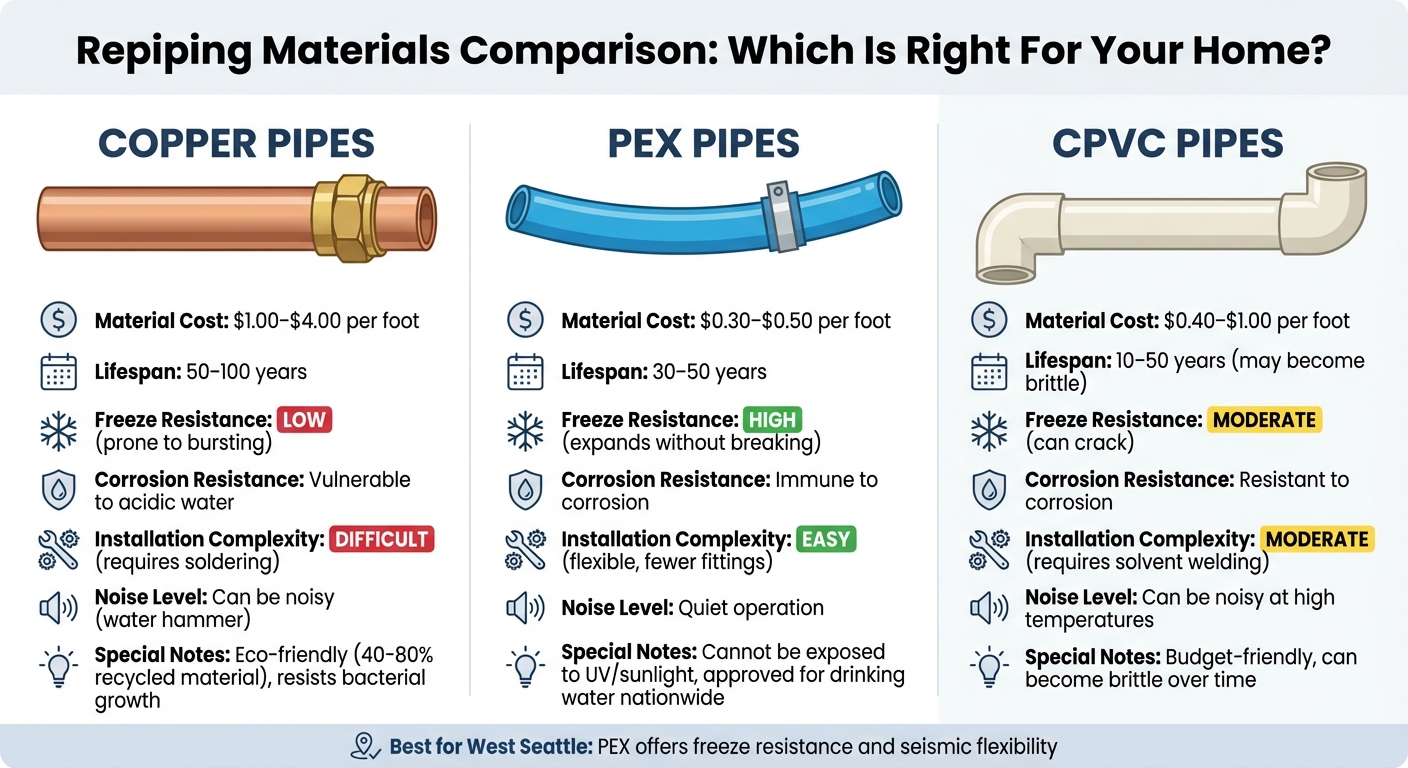
Copper vs PEX vs CPVC Pipe Comparison Chart for Home Repiping
Common Repiping Materials Explained
When it comes to repiping homes in West Seattle, three materials stand out: copper, PEX, and CPVC. Each has its own set of characteristics that make it suitable for different needs.
Copper has been a go-to choice for residential plumbing for decades. It's durable, resists bacterial growth, and can handle high heat and pressure with ease. Copper pipes are also eco-friendly, often made with 40–80% recycled material, and boast a global recycling rate of 40–50%. However, if your water is acidic (with a pH below 6.5), copper may corrode more quickly, potentially leading to pinhole leaks.
PEX (cross-linked polyethylene) is a flexible plastic tubing that’s gaining popularity for its ease of installation. Its flexibility reduces the need for multiple fittings, saving both time and labor. PEX doesn’t corrode or accumulate mineral scale and is approved for drinking water use nationwide. Its ability to expand up to three times its size without rupturing makes it a great option for areas prone to freezing, like West Seattle. The main drawback? PEX degrades when exposed to direct sunlight, so it must be installed away from UV rays.
CPVC (chlorinated polyvinyl chloride) is a cost-effective alternative that handles hot water better than standard PVC. It resists corrosion and is relatively easy to install, requiring solvent welding instead of soldering. However, CPVC can become brittle over time, especially in earthquake-prone areas like Seattle. Some manufacturers have even reduced their warranties to as short as 10 years due to this brittleness.
Here’s a quick comparison of these materials based on cost, lifespan, and other features:
Cost and Durability Comparison
| Feature | Copper | PEX | CPVC |
|---|---|---|---|
| Material Cost | $1.00–$4.00 per foot | $0.30–$0.50 per foot | $0.40–$1.00 per foot |
| Lifespan | 50–100 years | 30–50 years | 10–50 years (may become brittle) |
| Freeze Resistance | Low (prone to bursting) | High (expands without breaking) | Moderate (can crack) |
| Corrosion Resistance | Vulnerable to acidic water | Immune to corrosion | Resistant to corrosion |
| Installation Complexity | Difficult (requires soldering) | Easy (flexible, fewer fittings) | Moderate (requires solvent welding) |
| Noise Level | Can be noisy (water hammer) | Quiet operation | Can be noisy at high temperatures |
Copper is durable but requires skilled labor for installation, which drives up costs. PEX offers a balance of affordability and performance, making it a popular choice for many households. CPVC, while budget-friendly upfront, may not hold up as well over time due to its tendency to become brittle.
What Affects Your Material Choice
Choosing the right material isn’t just about the material itself - it’s also about your home’s specific needs and conditions.
Water Chemistry: If your water has a low pH, copper may corrode faster, so testing your water is essential before making a decision.
Climate Conditions: West Seattle’s occasional freezing temperatures make PEX a strong contender, as it can expand and contract without cracking. Copper and CPVC, being more rigid, are less forgiving in freeze conditions.
"The flexibility of PEX is perhaps its greatest asset... PEX can expand and contract without cracking, making it incredibly resilient when temperatures drop unexpectedly."
- McWilliams Heating, Cooling & Plumbing
Home Layout: For homes with tight spaces or complex plumbing routes, PEX’s flexibility can simplify installation by reducing the number of joints. On the other hand, for homes with straightforward layouts, copper or CPVC might work just as well.
Seismic Safety: In a region like Seattle, where earthquakes are a concern, PEX stands out for its flexibility, making it more resistant to seismic activity compared to CPVC’s brittleness or copper’s rigidity.
Noise Reduction: If you’re looking for a quieter plumbing system, PEX is a great option. It naturally dampens the sound of water flow and resists the water hammer effect, unlike copper or CPVC.
The Home Repiping Process
Repiping your home is a critical step to maintain its value and ensure your plumbing system runs smoothly for years to come. Here's how the process works from start to finish.
Inspection, Planning, and Permits
The first step is a thorough inspection by a professional plumber. They’ll evaluate your current plumbing system, test water pressure, check for leaks, and decide if a full or partial repipe is necessary. Depending on your needs, materials like PEX, copper, or CPVC may be recommended.
Licensed contractors handle all the permit paperwork and coordinate with the building department, so you don’t have to deal with the red tape. Inspections are done in two stages: one during the project, while walls are open, to ensure proper pipe placement and materials, and another after the system is fully installed and pressure-tested. Once everything passes, you’ll receive a Certificate of Compliance. Keep this document handy - it’s valuable for insurance claims or future home sales.
With permits approved and a clear plan in place, the next step is getting your home ready for the work.
Preparing Your Home for Repiping
Luckily, prepping your home for repiping isn’t too complicated. Clear out areas under sinks, in basements, or crawl spaces, and move any fragile items to give the crew easy access. To protect your floors, the plumbing team will lay down drop cloths in high-traffic areas.
Expect water service to be interrupted during working hours. For most average-sized homes, the job takes one to three days, though larger or more complex homes may take up to a week. The good news? Water is typically restored each evening so you can use your plumbing overnight. To prepare, fill a few containers with water for daytime use and plan meals that don’t rely heavily on water.
Installation, Testing, and Restoration
When installation begins, plumbers will carefully cut into drywall, ceilings, or floors to access the old pipes. New pipes are then routed through wall cavities. If you’ve opted for PEX piping, its flexibility allows it to bend around corners with fewer joints, making the process quicker and less invasive compared to rigid copper.
Once the new plumbing is in place, it undergoes rigorous pressure testing to ensure there are no leaks and that water flows properly to all fixtures. A building inspector will verify that everything complies with local codes. After approval, drywall is patched, textured, and repainted to match your home’s original look. This seamless restoration ensures minimal disruption while bringing your plumbing up to modern standards.
"Many customers have told us they wish they had known earlier how easy and affordable a whole-home repipe can be, after spending so much money on successive repairs and water damage." - McWilliams Heating, Cooling & Plumbing
Since the walls are already open, this is a great opportunity to think about additional upgrades. Consider installing a tankless water heater, smart water shut-off valves, or low-flow fixtures to maximize efficiency. At Sasquatch Plumbing Services Seattle, repiping services range from $4,500 to $15,000, depending on your home’s size and the materials used. These services include permits, inspections, and a 5-year labor warranty, ensuring a smooth process that not only meets code requirements but also enhances your home’s performance and value.
Benefits of Whole-Home Repiping
Once your home gets a plumbing overhaul, you'll notice immediate improvements in how your system performs every day.
Daily Performance Improvements
Fresh pipes bring back strong, steady water flow. Over time, older galvanized steel pipes collect rust and mineral deposits that narrow their diameter, choking water flow. With new pipes, every fixture in your home - whether it’s your shower or dishwasher - gets the water pressure it needs. Say goodbye to weak sprays and slow fills.
Temperature stability is another major upgrade. No more sudden icy shocks or scalding bursts in the shower, as clean pipes prevent debris from disrupting anti-scald devices. Plus, your plumbing will be quieter, with properly installed pipes eliminating the annoying "water hammer" effect.
Modern appliances, like dishwashers and washing machines, thrive on consistent water pressure and clean water. By repiping, you’re not just improving daily convenience - you’re also helping these appliances work efficiently and potentially last longer.
And the perks don’t stop there. These upgrades also enhance safety, reliability, and even the value of your home.
Safety, Reliability, and Home Value
Repiping eliminates the risk of leaks that can lead to expensive water damage. Old pipes are prone to failure, which can result in soaked drywall, ruined flooring, or even foundation issues. With new pipes, those worries disappear. As an added bonus, many insurance companies may lower your premiums for having a modern plumbing system.
For homeowners looking to sell, a recently repiped home is a huge advantage. Buyers see it as a major plus, knowing they won’t face plumbing emergencies or costly repairs anytime soon. This often translates to a higher selling price and a faster sale.
"Repiping enhances your home's market appeal and resale value. Buyers are drawn to homes with modern plumbing systems, knowing they won't face unexpected repair headaches".
Maintaining Your New Pipes
Keeping your new pipes in great shape is simple. Insulate any exposed pipes to prevent freezing and reduce heat loss. Periodically check your water pressure to ensure everything is running smoothly.
While the walls are still open during installation, consider adding a smart water monitor. These devices can alert you to unusual flow or pressure changes, giving you peace of mind. Pairing your new system with low-flow fixtures is another smart move - it can cut water bills while boosting efficiency.
Conclusion
Replacing the plumbing system throughout your home is a smart move that eliminates repeated repairs and helps avoid costly water damage. If your West Seattle home was built before 1970, has rusty water, low water pressure, or frequent leaks, it might be time to think about a full repipe. Not only does this address existing plumbing problems, but it also adds to your home's long-term value. Most repiping jobs are completed in 1–3 days, with water service restored each evening.
Modern materials like PEX and copper provide reliable performance for decades. Depending on your home's size and the materials used, the cost typically ranges from $4,500 to $15,000. Beyond solving immediate issues like poor water pressure and inefficient appliances, a repipe can also reduce your insurance premiums and increase your home's resale value.
"Many customers have told us they wish they had known earlier how easy and affordable a whole-home repipe can be, after spending so much money on successive repairs and water damage." - McWilliams Heating, Cooling & Plumbing
When it comes to the process, Sasquatch Plumbing Services Seattle handles everything from start to finish. Their team takes care of inspections, permits, installation, testing, and even drywall restoration. They take extra steps to protect your home during the job, use precise methods to limit wall cuts, and back their work with a 5-year labor warranty. Whether you're dealing with corroded pipes or planning a remodel, they'll help you choose the right materials and ensure your plumbing meets all local codes.
If you're ready for a plumbing upgrade, reach out to Sasquatch Plumbing Services Seattle for a detailed assessment and upfront pricing on your whole-home repiping project.
FAQs
What are the signs that it’s time to repipe your home?
If your home is showing signs of plumbing trouble, it might be time to consider repiping. Keep an eye out for low or inconsistent water pressure, frequent leaks, or water that appears discolored, rusty, or has an unpleasant smell when it flows from your faucets. Other red flags include noisy pipes - like banging or whistling sounds - or visible signs of corrosion on exposed pipes.
Homes with older piping materials, such as galvanized steel, lead, or polybutylene, are at greater risk of plumbing issues, especially if the property is over 50 years old. Persistent problems like repeated clogs, multiple small leaks, or difficulty getting hot water could also signal that your plumbing system is wearing out. In these cases, it’s wise to call a licensed plumber to inspect your pipes and determine if a whole-home repipe is the best solution.
What’s the best pipe material for repiping: copper, PEX, or CPVC?
Choosing the best pipe material comes down to three main factors: cost, durability, and intended use. Let’s break down the options:
Copper is known for its durability, resistance to corrosion, and ability to handle high temperatures. It’s a solid choice for long-term use, often lasting over 50 years. The downside? It’s pricey. Repiping with copper can run anywhere from $2,500 to $15,000, making it the most expensive option on the list.
PEX offers a more budget-friendly and flexible alternative. Its ease of installation reduces labor costs, and it works well for both hot and cold water. Plus, it’s resistant to freeze damage - a big win in colder climates. Whole-home repiping with PEX typically costs between $1,500 and $8,000. However, it’s not suitable for outdoor use because UV exposure can degrade the material over time.
CPVC is another plastic option that comes with a lower price tag. It handles hot water but is more brittle compared to PEX, which makes it prone to cracking as it ages. For this reason, many homeowners eventually replace CPVC with either copper or PEX for better durability and performance.
When choosing, think about your budget, the expected lifespan of the material, and how it fits your home’s requirements. Copper is the go-to for outdoor use and longevity, PEX is perfect for affordability and quick installation, and CPVC might work for specific cases if it meets local building codes.
How much does it cost and how long does it take to repipe a home?
The cost of repiping a home in the U.S. generally falls between $5,000 and $15,000, with the average homeowner spending about $7,500. Several factors impact this price, including the size of your home, the materials you choose, and labor expenses. For example, PEX piping is a more budget-friendly option, while copper piping tends to be pricier. If your home is particularly large or has a complex layout, the cost could climb as high as $35,000, though such cases are less common.
Repiping projects typically take 2 to 7 days to complete. Smaller homes might be finished within just 2 days, while larger or more intricate setups could stretch the timeline to a full week. The good news? In most situations, your water service will be restored each evening, so you can remain in your home throughout the process. That said, if the project involves tricky areas - like pipes beneath concrete slabs - it may take more time and increase the overall cost.