When your sewer or septic system shows signs of trouble, acting quickly can save you from expensive repairs and health risks. Common warning signs include slow drains, gurgling noises, sewage odors, and soggy ground in your yard. Ignoring these issues can lead to sewage backups, contaminated water, or even structural damage to your home.
Here’s the key takeaway:
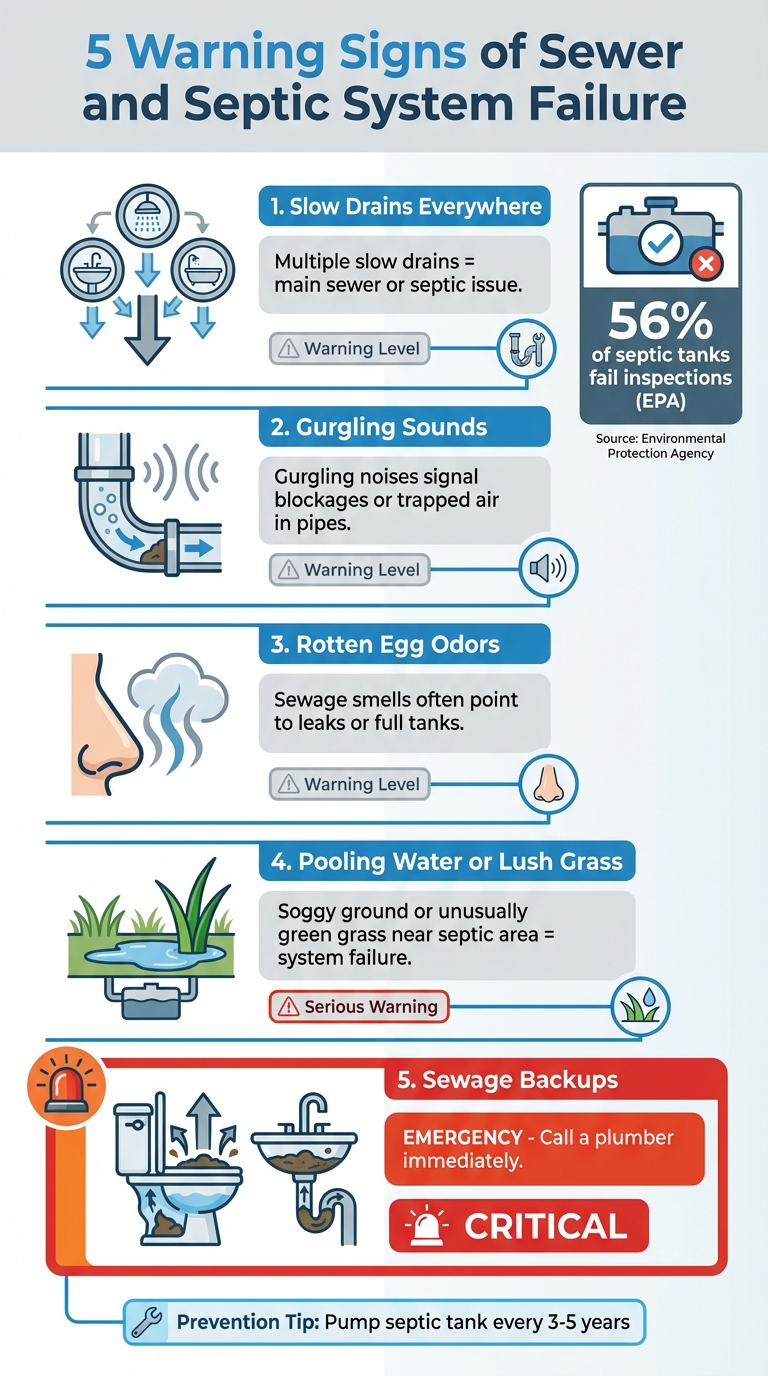
- Slow drains everywhere likely mean a main sewer or septic issue.
- Gurgling sounds signal blockages or trapped air in pipes.
- Rotten egg odors often point to leaks or full tanks.
- Pooling water or lush grass near your septic area suggests a system failure.
- Sewage backups are emergencies - call a plumber immediately.
Regular maintenance, like pumping your septic tank every 3-5 years, and avoiding non-degradable items in your drains, can prevent most issues. If you notice these warning signs, reduce water usage and contact a licensed plumber for a professional inspection. Don’t wait - quick action protects your home, health, and wallet.
5 Warning Signs of Sewer and Septic System Failure
Signs Your Septic System is Failing
Early Warning Signs of Sewer and Septic Problems
Spotting issues early can save you a fortune. The Environmental Protection Agency (EPA) reports that 56% of septic tanks fail inspections. Fortunately, your plumbing system often gives off warning signals before things spiral out of control. Let’s break down some of these early signs.
Slow Draining Sinks and Showers
If just one sink or shower drains slowly, you might be dealing with a simple clog. But when multiple drains are sluggish at the same time, it’s likely a sign of a blockage in the main sewer line or a struggling septic system.
"Slow drains throughout the house often point to a more serious issue with the septic system." – Drainfield Solutions
In septic systems, slow drainage can happen if the tank is full or the drain field is oversaturated, making it hard to absorb wastewater efficiently. Over time, solids, soap scum, and grease can build up and restrict water flow, creating a bottleneck. If you notice this, try to limit water use and remember that septic tanks should generally be pumped every 3 to 5 years to keep things running smoothly.
Gurgling Noises from Drains or Toilets
Gurgling sounds are a classic sign of trouble. These noises occur when trapped air escapes due to a blockage. As water struggles to move past the obstruction in your sewer line, it pushes air back up through your drains, creating that telltale gurgling sound.
"These eerie sounds are often a sign of a blockage or partial blockage in your sewer line. It's like your plumbing system is trying to gasp for air." – NW Sewer & Drain
If you notice one fixture gurgling while using another - like a toilet bubbling when the shower drains - it’s a red flag for a main sewer line issue rather than a localized problem. Sometimes, obstructions in roof vents, such as bird nests or leaves, can also prevent proper airflow and contribute to these noises. If multiple fixtures start gurgling, reduce water use immediately to avoid a potential backup.
Sewage Odors
Bad smells, especially those resembling rotten eggs or sewage, often signal wastewater flow problems. These odors can result from blockages in the main sewer line, a full septic tank, a failing drain field, or even cracked pipes. Stagnant water in pipes can release foul gases, or leaks might allow these smells to escape into your home.
Sometimes, external factors like blocked roof vents or wind downdrafts can push vent gases back inside. To confirm if you’re dealing with a bigger issue, look for other signs: Are your drains slow? Do you hear gurgling noises? Is there an unusually green patch of grass in your yard?
Heavy rain can make these problems worse by overwhelming old sewer lines or saturating drain fields, which amplifies odor issues. If the smells persist after clearing vents, a sewer camera inspection can help uncover hidden problems like corrosion, tree root invasions, or cracked pipes.
Serious Warning Signs That Need Immediate Attention
Some issues can’t wait - they demand immediate action to avoid serious health risks and property damage. While early warning signs might give you some breathing room, these situations require swift professional intervention.
Sewage Backups Inside the Home
If sewage starts coming up through your drains, toilets, or tubs, it’s a full-blown plumbing emergency. This often happens due to a mainline blockage, an overfilled septic tank, or a failed drainfield that stops wastewater from flowing out of your home.
"Sewer backups need to be stopped and cleaned quickly to eliminate exposure to potentially harmful bacteria and viruses."
Here’s what to do: stop using water immediately and turn off the power in affected areas to avoid the risk of electrocution. Keep children and pets away from the contaminated areas.
Call a licensed plumber immediately. Sewage and standing water must be cleaned up within 24 to 48 hours to prevent mold growth and permanent damage to your property. Document the damage for insurance purposes. If you suspect the blockage is in the municipal mainline, contact your local utility provider.
Don’t forget to check outside your home for signs of system failure.
Pooling Water or Soggy Ground in the Yard
If you notice standing water or overly damp areas near your septic tank or drainfield, it could mean a leak or system failure. A patch of grass that’s noticeably greener, taller, or lusher than the rest of your lawn - especially during dry weather - might be benefiting from untreated wastewater acting as fertilizer.
Walk across the area. If the ground feels squishy or unusually soft, take it as a warning. Foul sewage odors often accompany these issues, and you might even notice puddles forming during dry spells, pointing to a system failure rather than poor drainage.
To avoid worsening the issue, reduce water usage in your home immediately. Contact a septic professional or plumber to conduct a camera inspection or pump the tank to identify the problem. On average, septic tank repairs cost about $1,830, though prices can vary depending on the extent of the damage.
Contaminated Well Water
If you rely on a private well, a failing septic system can contaminate your drinking water - even without any obvious surface signs. This is not just a plumbing issue; it’s a serious health risk. Wastewater can carry harmful bacteria, viruses, and high levels of nitrogen, phosphorus, nitrates, and coliform bacteria, which can lead to illnesses like hepatitis and dysentery.
"A failed or malfunctioning septic system is a risk to human and animal health and can pollute the environment."
Make it a habit to test your well water annually for contaminants. Elevated levels of nitrate, chloride, and coliform bacteria are red flags for a septic leak. Additionally, keep an eye on your surroundings - bright green algae blooms in nearby water bodies could indicate nitrogen-rich wastewater seeping into the groundwater. These blooms can release toxins that irritate the skin, eyes, and throat.
If tests reveal high levels of coliform bacteria or nitrates in your well water, contact a septic professional or your local health department immediately. Until the water is tested and deemed safe, avoid drinking it. To prevent issues like this, make sure your septic tank is pumped every 3 to 5 years. Regular maintenance can go a long way in protecting your health and home.
Common Causes of Sewer and Septic Failures
Understanding the reasons behind septic system failures can help you avoid costly repairs and potential health risks. Most of these issues stem from preventable mistakes made over time. By recognizing these common problems, you can take proactive steps to keep your system running smoothly.
Skipping Regular Pumping and Maintenance
A septic tank's job is to separate waste, but when pumping is neglected, solids can build up and clog the drainfield.
"Failure to perform routine maintenance can cause solids in the tank to migrate into the drainfield and clog the system."
- U.S. Environmental Protection Agency
To prevent this, regular pumping is essential. Experts recommend pumping the tank when solids reach about two-thirds of its capacity. Routine inspections and maintenance cost only a few hundred dollars - a small price compared to the expense of replacing an entire system.
Flushing Non-Degradable Items
Septic systems rely on bacteria to break down waste. Flushing items like wet wipes, paper towels, or feminine hygiene products can lead to blockages in pipes, baffles, and filters. Additionally, pouring toxins down the drain can kill the bacteria your system needs to function.
"Your septic system contains a collection of living organisms that digest and treat household waste. Pouring toxins down your drain can kill these organisms and harm your septic system."
- Washington State Department of Health
Dispose of grease in the trash instead of pouring it down the drain to avoid clogs. Also, limit the use of garbage disposals, as they add fats and solids to the tank, increasing the risk of problems. These simple habits can go a long way in preventing major failures.
Using Too Much Water
Excessive water use can overwhelm your septic system, leaving it unable to properly treat waste. For example, doing all your laundry in one day can flood the drainfield and force solids out of the tank.
The average person uses around 70 gallons of water daily, and a single leaky toilet can waste an additional 200 gallons per day. To reduce strain on your system, spread out laundry loads over several days, fix leaks promptly, and consider upgrading to high-efficiency toilets. Modern toilets use just 1.6 gallons per flush, compared to older models that use 3.5 to 5 gallons. By managing water usage, you’ll help maintain your system’s health and avoid backups. Pairing these practices with regular maintenance ensures your septic system stays in good working condition.
sbb-itb-6ceaf48
When to Call a Professional Plumber
Problems That Require Professional Help
Some plumbing problems go beyond DIY fixes and demand immediate attention from a professional. For instance, sewage backups - when wastewater starts coming up through sinks, toilets, or floor drains - are not only messy but also pose serious health risks. If this happens, stop using water, turn off the power to affected areas, and call a plumber right away.
Persistent slow drains or gurgling noises, even after basic troubleshooting, are another red flag. These could point to a blockage in the main sewer line, which requires specialized tools and expertise to address.
Changes in your yard can also signal plumbing issues. If you notice unusually lush green patches, soggy areas, or sudden ground depressions, it could indicate a leaking sewer line or a failing septic drainfield. Before starting any repairs, it’s crucial to contact your local gas utility - such as Puget Sound Energy (1-888-225-5773) in the Seattle area - to ensure no gas lines are affected during the process.
These signs call for a professional plumbing inspection, which is discussed in the next section.
What Happens During a Plumbing Inspection
A professional plumbing inspection provides a detailed look at your system to identify hidden or emerging problems. The process starts with reviewing your system’s permit, design records, and maintenance history. From there, the plumber will examine tanks for damage, corrosion, and sludge levels to determine if pumping is immediately necessary.
CCTV camera inspections are often used to uncover issues like tree root intrusion, cracked pipes, or collapsed sections - all without digging up your yard. The plumber will also test electrical components, pumps, and controls, and inspect effluent filters and inlet/outlet baffles. For the drainfield, they’ll check for signs of trouble such as standing water, overly spongy grass, or uneven drainage. If blockages are detected, tools like sewer augers or hydro jetting equipment are used to clear the lines effectively.
Make sure to keep all invoices and inspection reports; they can be valuable if you need to file a claim later.
Once problems are identified, professional repairs ensure your plumbing system is restored to proper working order.
How Sasquatch Plumbing Services Seattle Can Help

Sasquatch Plumbing Services Seattle is ready to tackle both sewer and septic emergencies with same-day service and advanced diagnostic tools. Using CCTV inspections and hydro jetting, they quickly address issues like sewage backups and drainfield failures. Their upfront pricing and satisfaction guarantee mean you’ll know exactly what to expect before any work begins. Whether it’s a blocked main line or a full system evaluation, their licensed and insured plumbers have the skills to restore your system efficiently and safely. This approach helps protect your home from worsening sewer and septic problems, giving you peace of mind.
Preventive Maintenance Tips for Homeowners
Preventive maintenance is the key to stopping small problems from turning into expensive disasters.
Regular Pumping and Inspections
Scheduling regular pumping - typically every three to five years - helps keep solids from clogging your drainfield. Professionals also take sludge measurements during inspections to determine the best time for maintenance. Standard gravity systems should be inspected every three years, while pump-driven systems need annual checkups. These routine visits usually cost between $250 and $500, which is far cheaper than replacing an entire system.
During an inspection, technicians measure sludge levels and check for signs of damage. A good rule to follow: pump your tank when the bottom of the scum layer is within six inches of the outlet, or when the top of the sludge layer is within 12 inches. Keep detailed records of all maintenance work - not only will this help with troubleshooting, but it’s also often required when selling your home. Additionally, managing what goes into your system is just as important, which brings us to proper waste disposal practices.
Proper Waste Disposal Practices
Your septic system is designed to handle only human waste and toilet paper - nothing else. Despite what the packaging claims, "flushable" wipes don’t actually break down and can cause serious blockages. Grease, oils, medications, and household chemicals are also off-limits. These substances kill the bacteria that treat waste and can even contaminate groundwater. Food scraps are another problem. Starchy foods like rice and oatmeal swell in pipes, while coffee grounds and eggshells create stubborn clogs. If you have a garbage disposal, be aware that it increases the amount of solids in your tank, meaning you’ll need more frequent pumping. And don’t flush cat litter - it hardens when wet and can block pipes. Beyond waste disposal, conserving water is another important step in protecting your septic system.
Water Conservation to Prevent Overloading
Managing water use is just as crucial as regular pumping and proper waste disposal. On average, a person uses about 70 gallons of water daily, and something as simple as a running toilet can add an extra 200 gallons each day. Septic systems need time to properly treat wastewater, so overloading them can lead to problems. Spread out laundry loads throughout the week to avoid overwhelming the system and ensure solids have time to settle.
Upgrading to high-efficiency toilets is another way to save water. These models use just 1.6 gallons per flush, compared to older toilets that use 3.5 to 5 gallons. Since toilets account for 25% to 30% of household water use, this small change can make a big difference. Also, protect your drainfield by keeping vehicles off it and redirecting roof drains and sump pump discharge away from the area. Adding risers to your septic tank lids can also save time and money during future maintenance, as technicians won’t need to dig up your yard every time.
Conclusion
Your sewer and septic system won’t fix itself - ignoring problems only makes them worse and more expensive to deal with later. Catching issues early can save you a lot of money. Spending a few hundred dollars on regular maintenance every few years is a small price compared to the thousands it could cost for emergency repairs or a full system replacement.
Keep an eye on your system for warning signs, and don’t wait to act if something seems off. Backed-up sewage, standing water in your yard, or contaminated well water can lead to serious health concerns and even damage your home’s foundation. The Washington State Department of Health emphasizes:
"A quick response may save the owner money in repairs and may prevent illness and negative impact on the environment"
Taking prompt action can make all the difference.
Preventative care is key. Pump your septic tank every three to five years, flush only human waste and toilet paper, and spread out your water usage throughout the week. These simple habits can help your system last longer and reduce the risk of costly emergencies.
If you’re dealing with persistent issues, don’t hesitate to reach out to Sasquatch Plumbing Services Seattle. They provide same-day emergency services in West Seattle, offering upfront pricing and a satisfaction guarantee. Their licensed plumbers use advanced tools like camera inspections to quickly pinpoint and resolve problems. Taking care of issues early helps protect your home, your health, and your wallet.
FAQs
What are the early signs of a failing septic system?
If your septic system is acting up, there are a few early warning signs to watch for. Common red flags include sinks or toilets draining slowly, gurgling noises coming from your pipes, and foul smells near the tank or drainfield. Another clue? Soggy spots or patches of vibrantly green grass over the drainfield, even when the weather is dry.
Should you notice any of these problems, it’s smart to contact a professional plumber as soon as possible to avoid bigger issues or expensive repairs. In West Seattle, Sasquatch Plumbing is a trusted choice for septic and sewer solutions, offering same-day emergency services and transparent, upfront pricing.
How often should I maintain my septic tank?
Regular inspections are a must for your septic tank - aim for at least once every three years. As for pumping, most tanks need it every three to five years. However, this can vary based on factors like how many people live in your home, how much water you use, and the size of the tank itself.
Staying on top of maintenance not only keeps your system running smoothly but also helps you avoid expensive repairs down the line. If you're uncertain about the condition of your tank, reaching out to a professional plumber is a smart move. They'll provide the guidance you need to keep things in check.
What should I do right away if I have a sewage backup in my home?
If you’re dealing with a sewage backup, the first step is to keep everyone, including pets, away from the affected area to minimize health risks. If it’s safe, turn off the electricity in the flooded area to prevent accidents. Avoid touching or coming into contact with the sewage.
Next, call a licensed plumber to inspect and fix the issue. If you think the main sewer line is blocked, you might also need to reach out to Seattle Public Utilities for assistance. Lastly, make sure to take photos of the damage for your insurance claim and notify your insurance provider as soon as possible.