
When your water heater fails, it’s often without warning. Knowing how long different types last can help you plan ahead. Here’s a quick breakdown:
- Storage Tank Water Heaters: Gas models last 8–12 years, while electric ones can reach 10–15 years. Regular maintenance, like flushing sediment and replacing the anode rod, is key to longevity.
- Tankless Water Heaters: These can last 15–20+ years. They avoid tank corrosion but require annual descaling, especially in hard water areas.
- Heat Pump/Hybrid Water Heaters: Expect 10–15 years. They’re energy-efficient but need regular filter cleaning and proper ventilation.
Factors like water quality, maintenance, and installation affect lifespan. Hard water can reduce it by years, while annual upkeep can extend it by 5–10 years. If your system is over a decade old or showing signs like leaks, rust, or inconsistent heating, it’s time to think about a replacement.
Quick Tip: Check your water heater’s age using its serial number. If repairs cost more than 10% of a new unit, replacement might save you money long-term.
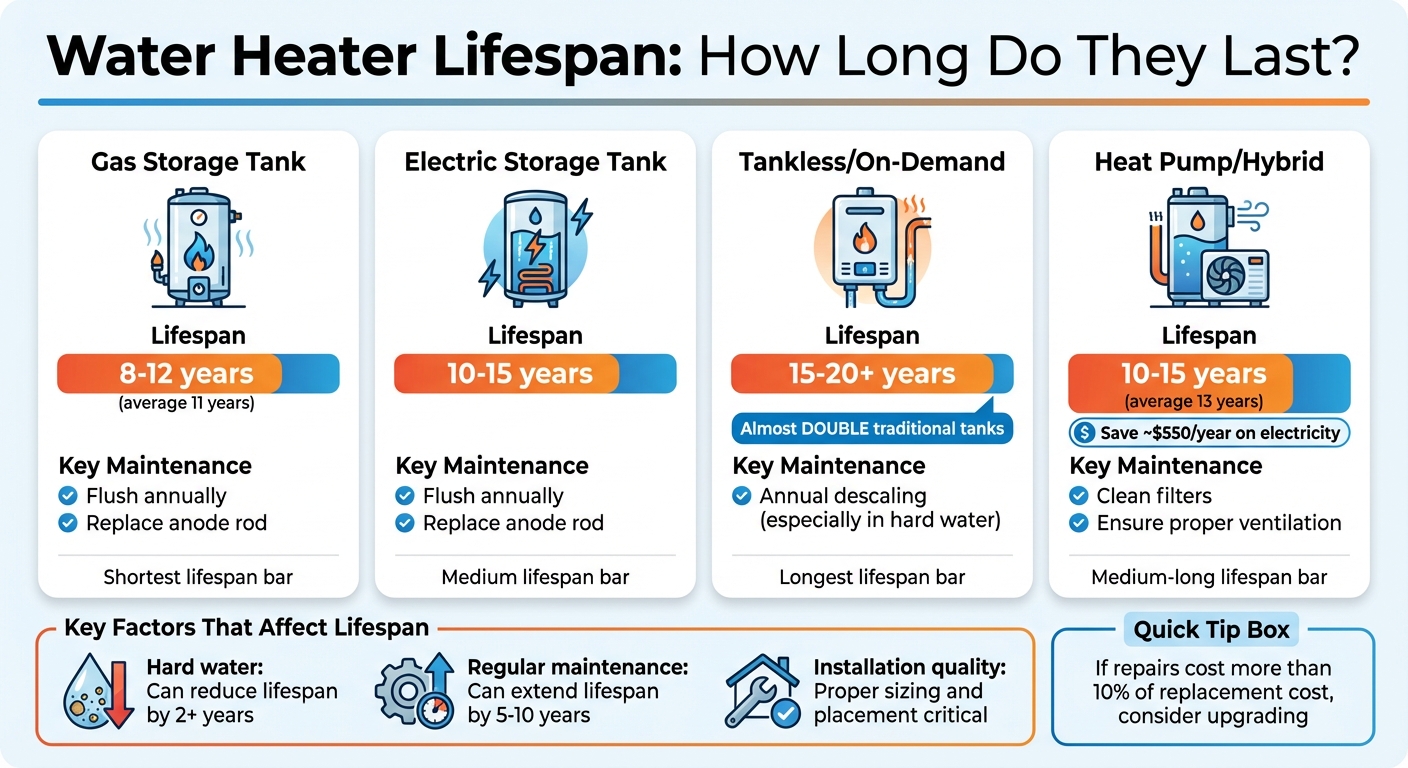
Water Heater Lifespan Comparison by Type: Expected Years and Maintenance Requirements
How Long Do Water Heaters Last?
sbb-itb-6ceaf48
How Long Different Water Heater Types Last
Water heaters come in various types, each with its own lifespan and maintenance requirements. Here's a closer look at how long you can expect different models to last and what it takes to keep them running efficiently.
Storage Tank Water Heaters (Gas & Electric)
Electric storage tank water heaters typically last between 10 and 15 years, while gas models tend to run for about 8 to 12 years, averaging around 11 years overall. The difference lies in how they operate - gas water heaters expose the tank's base to higher temperatures, which speeds up wear and corrosion compared to electric units.
A key component in these heaters is the sacrificial anode rod, which protects the tank from rust. Over time, this rod deteriorates, leaving the tank walls vulnerable to corrosion and eventual leaks. As Wagner Mechanical aptly states, "The combination of water and metal means corrosion is a matter of when, not if". Regular maintenance, like flushing the tank and replacing the anode rod, can help extend the unit's lifespan.
Tankless Water Heaters
Tankless water heaters, also known as on-demand systems, have a longer lifespan, lasting between 15 and 20 years or more - almost double that of traditional storage tank models. Since they heat water only as needed, they avoid issues like sediment buildup and tank corrosion.
However, hard water can pose a challenge. Mineral deposits can damage the heat exchanger, making annual descaling a must. In areas with hard water, installing a whole-home water softener can protect the system and even extend its life by up to 300%.
Heat Pump and Hybrid Water Heaters
These energy-efficient systems have a lifespan of 10 to 15 years, with Energy Star estimating their longevity at about 13 years. By harnessing heat from the air or ground to warm water, they consume far less energy than standard electric tanks.
Heat pump and hybrid water heaters require more upkeep, including routine cleaning of air filters and ensuring proper ventilation. Despite the maintenance, the savings can be substantial. A household of four might save approximately US$550 annually on electricity, with lifetime savings reaching around US$5,610 compared to a standard electric tank. Additionally, federal tax credits of up to US$2,000 are available until December 31, 2032, which can help offset the higher initial investment.
| Water Heater Type | Lifespan | Maintenance |
|---|---|---|
| Gas Storage Tank | 8–12 years | Flush annually and replace anode rod |
| Electric Storage Tank | 10–15 years | Flush annually and replace anode rod |
| Tankless | 15–20+ years | Annual descaling (especially in hard water) |
| Heat Pump/Hybrid | 10–15 years | Clean filters, ensure proper ventilation |
Knowing these lifespans and maintenance needs provides a solid foundation for understanding what affects your water heater’s durability.
What Affects How Long Your Water Heater Lasts
When it comes to how long your water heater will last, there are several factors at play. Both environmental conditions and how you use the unit play a big role. By understanding these elements, you can take steps to extend the life of your water heater and protect your investment.
Water Quality and Hardness
Hard water can significantly shorten the lifespan of a water heater. Minerals like calcium and magnesium in hard water form scale, which coats heating elements and forces them to work harder, leading to overheating. In tankless systems, these minerals can clog the heat exchanger, reducing water flow and efficiency.
Sediment buildup also wears down the anode rod, which is designed to protect the tank from corrosion. Once the anode rod is compromised, corrosive minerals start attacking the tank through a process called electrolysis. Hard water can reduce a water heater's lifespan by two or more years. High water pressure adds to the problem, putting stress on joints, seals, and the tank itself, which can result in leaks. Installing a whole-home water softener and a pressure-reducing valve can help mitigate these issues.
These challenges highlight the importance of routine maintenance.
Maintenance Practices
Regular maintenance can make a big difference in how long your water heater lasts. In fact, it can help extend its life by five to 10 years beyond its expected lifespan. Annual flushing of the tank removes sediment buildup, while testing the Temperature and Pressure Relief (TPR) valve ensures the system doesn’t experience dangerous pressure spikes. Checking the anode rod every one to three years is another key step. Replacing a worn anode rod - an inexpensive fix costing $20 to $50 - can prevent tank corrosion and potentially double the unit’s lifespan.
Setting your water heater’s thermostat to 120°F offers two benefits: it reduces mineral buildup and can save up to 10% on energy costs. For tankless models, especially in areas with hard water, professional descaling is essential to keep the heat exchanger clear of mineral deposits and running efficiently.
But maintenance isn’t the only factor. How the unit is installed and used also plays a critical role in its longevity.
Installation and Usage Factors
Improper sizing and placement can lead to overuse, which shortens the lifespan of your water heater. Units installed in colder locations like garages or crawl spaces often have to work harder to heat water, leading to faster wear and tear. As InterNACHI notes:
"Using large quantities of water means that the water heater will have to work harder to heat the water. In addition, the greater the volume of water, the greater the corrosive effect of the water will be".
For gas water heaters, proper ventilation is crucial. Poor airflow not only creates safety risks but also accelerates wear and tear. Excessive pressure and frequent short water draws can cause gas units to overheat. To maximize the lifespan of your water heater, professional sizing and installation in a temperature-controlled space are key. These steps help ensure your unit can meet - or even exceed - its expected lifespan.
Warning Signs Your Water Heater Needs Replacement
Age Benchmarks
Water heaters don’t last forever, and their lifespan depends on the type. Storage tank models typically last 8 to 12 years, tankless units can serve you for 15 to 20 years, and hybrids fall somewhere between 10 to 15 years. Even if your water heater seems fine, issues often begin to crop up after about six years. If your storage tank model is over a decade old and you’re noticing performance issues, it’s likely time to start considering a replacement. To check your unit’s age, look for the serial number, which includes the production date. These age markers often align with noticeable changes in performance, so pay attention to any shifts.
Performance and Visual Indicators
If your water heater struggles to maintain consistent water temperatures or runs out of hot water too quickly, it could be nearing the end of its life. Angie Hicks, Co-founder of Angi, notes:
"High utility bills, water color changes, and running out of hot water quickly are all signs that your water heater has reached the end of its life and you need to replace it".
Other red flags include leaks, rust, or discoloration in your water, which could point to internal corrosion. Strange noises - like popping, banging, or rumbling - are often caused by sediment buildup in the tank, which forces it to overheat. Additionally, a spike in your energy bills, even though your usage hasn’t changed, could signal that your water heater’s components are wearing out and making the unit work harder than it should.
Professional Assessment
When these warning signs show up, it’s a good idea to call in a licensed plumber for a professional evaluation. They can determine whether the problem lies with the water heater itself or another part of your plumbing system. For example, they’ll check components like the anode rod, which prevents internal rusting - if it’s degraded, your tank could be at risk. In areas like West Seattle, acting quickly can help you avoid further problems. Sasquatch Plumbing Services Seattle specializes in water heater assessments and can guide you on whether a repair or replacement makes the most sense. Their experts also check for safety concerns, such as malfunctioning pressure relief valves or ventilation issues in gas units, which could lead to dangerous carbon monoxide buildup. And if you spot white plastic particles in your water, don’t ignore it - this could mean a failing dip tube that needs immediate attention.
How to Make Your Water Heater Last Longer
Routine Maintenance Tips
Want your water heater to go the distance? A little routine maintenance can make a big difference. Start by flushing the tank every year to clear out sediment like calcium and magnesium. These minerals can settle at the bottom, forcing your unit to work harder and speeding up internal corrosion. If you live in a hard water area, consider flushing it twice a year instead. To do this, turn off the power or gas, close the cold water supply, connect a garden hose to the drain valve, and let the water flow until it runs clear.
Another key step is inspecting the anode rod every 1 to 3 years. This rod attracts corrosive elements, protecting the tank itself. If more than 50% of the rod is corroded or the core wire is visible, it’s time to replace it. A new rod costs between $20 and $50 and can significantly extend your water heater’s lifespan. You’ll need a 1 1/16-inch socket wrench to remove it from the top of the tank.
Don’t forget to test the temperature and pressure relief valve annually. Lift the lever to ensure it discharges fully and resets properly. This valve plays a critical role in preventing dangerous pressure build-up. Lowering your thermostat to 120°F is another smart move - it reduces mineral buildup, prevents scalding, and can cut energy bills by up to 10%. Finally, adding insulation to the tank and the first few feet of hot water pipes helps minimize heat loss and improve efficiency.
Upgrading to Longer-Lasting Systems
If your current water heater is approaching the end of its life, it might be worth considering a tankless system. Tankless water heaters can last 15 to 20 years - almost double the lifespan of traditional tank models, which usually last 8 to 12 years. While the upfront cost is higher (around $2,500 compared to $1,300 for tank models), the long-term savings and efficiency can make it worthwhile. Plus, many modern tankless units come with built-in scale prevention technology, reducing maintenance needs like descaling.
For those in hard water areas, adding upgrades like water softeners or sediment filters can help protect your system. These tools minimize mineral buildup, keeping your water heater running efficiently for longer. Another useful addition is an expansion tank, which absorbs pressure caused by thermal expansion and prevents stress on your main unit. Together, these upgrades and regular maintenance can help safeguard your investment.
Professional Services in West Seattle
Proper installation and professional servicing are crucial for extending your water heater’s lifespan. Licensed plumbers can catch early signs of trouble - like corrosion, gas or electric issues, or improper venting - while ensuring everything complies with local codes and operates at peak performance. For gas-powered units, professionals also inspect gas lines for cracks or leaks to avoid hazardous conditions. With consistent care, your water heater could last 5 to 10 years longer than its expected lifespan.
If you’re in West Seattle, Sasquatch Plumbing Services Seattle offers a full range of water heater maintenance and installation services. Their licensed plumbers handle everything from annual tank flushing to anode rod replacements and tankless system descaling. They also ensure your new unit is properly sized, a critical factor since undersized heaters wear out faster under high demand. Scheduling annual tune-ups or comprehensive inspections every 4 to 5 years can help you get the most out of your water heater and keep it running efficiently for years to come.
Planning for Water Heater Maintenance and Replacement
Budgeting and Replacement Planning
If your tank-style water heater is nearing its 10th birthday, it’s time to start thinking about a replacement. Waiting until it breaks down can lead to costly emergencies and potential water damage. On average, traditional tank water heaters last 8 to 12 years, so planning ahead can save you from unnecessary stress and expenses.
A good rule of thumb: if yearly repair costs exceed 10% of the replacement cost, it’s time to upgrade. For example, if a new tank water heater (including installation) costs about $1,300 and you’re looking at a $200 repair bill for a 9-year-old unit, replacing it makes more financial sense. Minor repairs typically fall between $150 and $300, but major fixes - like issues with the heat exchanger - can range from $500 to $1,500.
Don’t forget to factor in maintenance costs. Annual tank flushing averages around $160, while tankless systems usually require professional descaling, which starts at about $200 per visit. Thinking about upgrading to a heat pump water heater? Federal tax credits of up to $2,000 and local utility rebates can significantly reduce the upfront cost. Plus, with energy savings, these systems could pay for themselves in as little as 2.7 years.
Considering the costs and timing, getting professional advice is key to making the right choice.
Working with Professional Plumbers
Once you’ve planned your budget, working with a licensed plumber ensures your investment is protected. Proper installation is critical for safety, efficiency, and keeping your warranty intact. A poorly installed unit not only risks voiding warranties but can also compromise safety. Licensed plumbers will calculate your home’s peak hour demand to size the unit correctly, preventing unnecessary strain on the system.
In West Seattle, professional installation is especially important to meet local building codes. Sasquatch Plumbing Services Seattle offers services ranging from routine maintenance to full replacements. Their licensed plumbers can help you choose the right system - whether it’s a traditional tank, tankless, or hybrid - and ensure it’s installed to code. With same-day emergency services and upfront pricing, they can help you avoid unexpected breakdowns and provide expert advice to extend the lifespan of your water heater.
FAQs
What are the warning signs that my water heater needs to be replaced?
If your water heater is between 8 and 12 years old, it’s probably nearing the end of its lifespan. Keep an eye out for rusty or discolored water, which could signal a corroding tank or a failing anode rod. Hearing popping or rumbling noises? That’s often caused by sediment buildup inside the tank. Leaks around the tank or fittings are another red flag, as they usually indicate internal damage. You might also experience less hot water or low water pressure, both of which can result from corrosion or a heating element that’s on its way out.
Other warning signs include white plastic particles in your water, which suggest a deteriorating dip tube, or a leaking pressure-relief valve. In most cases, these issues mean it’s time to replace the water heater. If you notice any of these problems, it’s best to call a professional right away.
Sasquatch Plumbing Services Seattle provides same-day inspections, upfront pricing, and expert water heater repair or replacement services throughout West Seattle. Acting fast can help you prevent water damage, improve energy efficiency, and make sure you always have hot water when you need it.
What can I do to make my water heater last longer?
To keep your water heater running smoothly for years, regular maintenance is key. Start by setting the thermostat to 120°F - this helps reduce wear on the system and minimizes mineral buildup. Once a year, flush the tank to clear out sediment, and every 2–3 years, inspect the sacrificial anode rod to ensure it’s still protecting the tank from rust.
You can also improve efficiency by insulating the tank and nearby pipes to cut down on heat loss. Don’t forget to test the temperature-pressure relief valve regularly to prevent potential over-pressure problems. Keeping the area around the heater clean and dry is another simple step to avoid corrosion and overheating. And for peace of mind, schedule an annual professional inspection to catch any hidden issues before they become costly repairs.
If you're in West Seattle, Sasquatch Plumbing Services Seattle provides expert water heater maintenance with same-day service, transparent pricing, and a satisfaction guarantee - helping you keep your system in top condition.
What maintenance does my water heater need?
Proper care is crucial to keep your water heater working efficiently and extending its lifespan. For tank-style water heaters, an annual tank flush is a must to clear out sediment that can lead to corrosion and lower efficiency. Keep an eye on the anode rod - if it’s heavily corroded, replace it to protect the tank from rust. Also, test the temperature-and-pressure (T&P) relief valve to confirm it’s functioning correctly, check the thermostat (typically set at 120°F), and inspect the tank for leaks or rust.
When it comes to tankless water heaters, a descaling flush every 6–12 months is necessary to prevent mineral deposits from clogging the heat exchanger. Don’t forget to clean or replace the inlet filter and ensure all connections are tight and secure.
For solar-thermal or hybrid water heaters, maintenance includes flushing the tank, checking the anode rod, and cleaning solar collectors or heat-pump components. Additionally, verify that the circulation pump and refrigerant levels are in good condition to ensure optimal performance.
If you’d rather leave it to the pros, Sasquatch Plumbing Services Seattle provides same-day maintenance services. From flushing and anode rod replacement to descaling, they’ve got you covered to keep your water heater running safely and efficiently.