
When choosing between tank and tankless water heaters, it comes down to your household's hot water needs, budget, and energy efficiency preferences. Here's a quick rundown:
- Tank Water Heaters: Store hot water in a 30–80-gallon tank, ready for use. They cost less upfront ($600–$2,500 installed) but are less energy-efficient due to standby heat loss. Lifespan: 10–15 years.
- Tankless Water Heaters: Heat water on demand without a storage tank. Higher upfront costs ($1,400–$4,500 installed) but save energy (up to $100/year). Lifespan: 20–30 years.
Quick Comparison
| Feature | Tank Water Heater | Tankless Water Heater |
|---|---|---|
| Upfront Cost | $600–$2,500 | $1,400–$4,500 |
| Lifespan | 10–15 years | 20–30 years |
| Energy Efficiency | Lower (standby heat loss) | Higher (on-demand heating) |
| Annual Savings | Baseline | ~$100 |
| Space Needed | Larger (floor space) | Compact (wall-mounted) |
| Hot Water Supply | Limited by tank size | Endless but flow-limited |
Key Takeaway: If you prioritize lower upfront costs and simplicity, go with a tank system. If energy savings, longer lifespan, and space efficiency matter more, consider tankless. Plan ahead to avoid costly emergency installations.
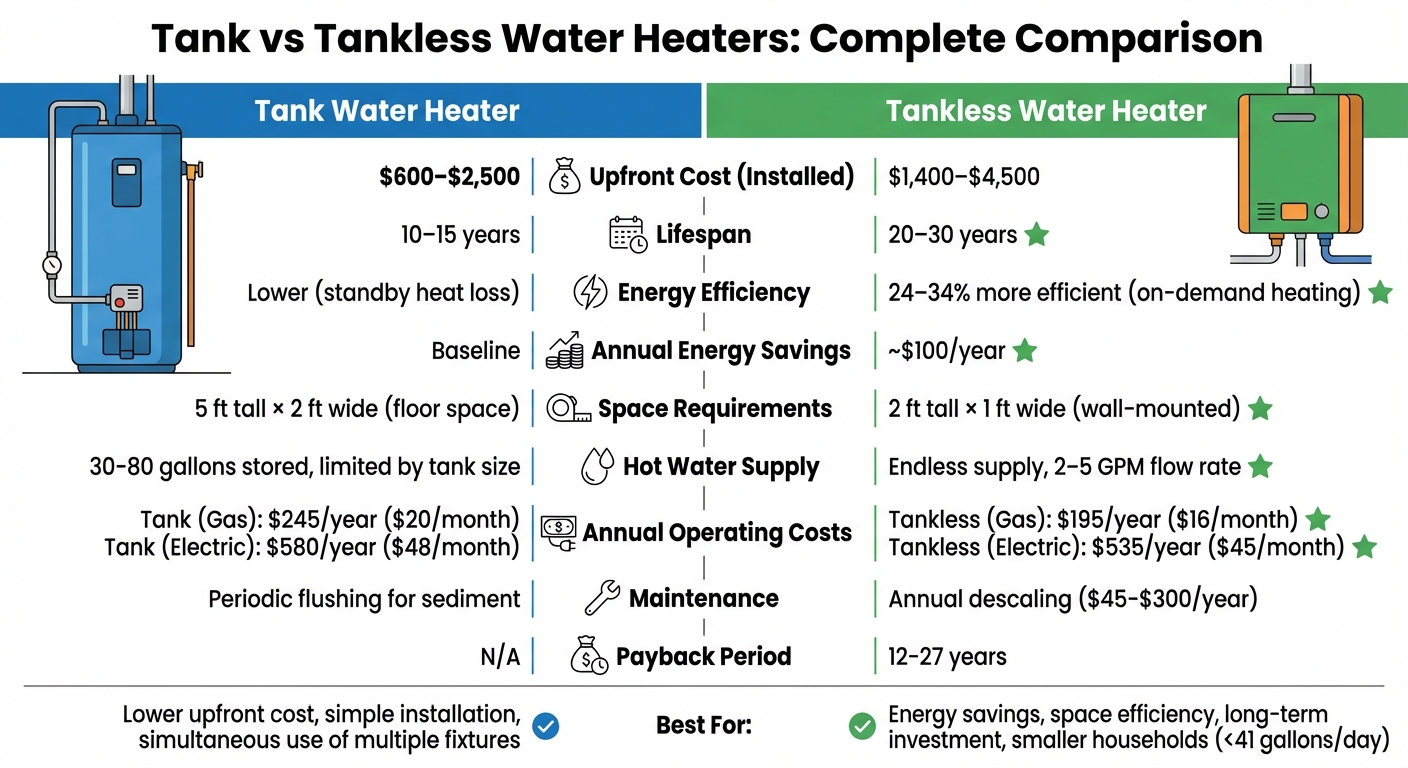
Tank vs Tankless Water Heater Comparison: Costs, Efficiency & Lifespan
How Tank and Tankless Water Heaters Work
Tank Water Heater Operation
A traditional tank water heater is designed to store between 30 and 80 gallons of water, with 50 gallons being the most common size. The water inside the tank is kept at a preset temperature, ready for use. When you turn on a hot water tap, hot water is pulled from the top of the tank. At the same time, cold water enters at the bottom to be heated for future use.
Electric models heat the water using one or two heating elements, typically located at the top and bottom of the tank. Gas-powered models, on the other hand, use a burner at the base, fueled by either natural gas or propane, to heat the water from the bottom up. A thermostat continuously monitors the water temperature, turning the heating system on when the temperature drops below the desired level.
One downside of tank water heaters is standby heat loss - heat escaping through the tank walls as the water sits unused. This constant reheating contributes to water heating making up about 18% of a household's energy consumption. Gas-powered tanks are generally more cost-efficient to operate compared to electric models, although their upfront cost is often higher. Unlike tank systems, tankless water heaters eliminate this standby energy loss.
Tankless Water Heater Operation
Tankless water heaters work on demand, heating water only as needed. When you turn on a hot water tap, cold water flows into the unit, activating a flow sensor. This triggers either an electric heating element or a gas burner, which quickly heats the water as it passes through a heat exchanger. The result? Hot water delivered directly to your faucet without the need for a storage tank [Energy.gov].
Since there’s no tank holding heated water, tankless systems completely avoid standby heat loss. However, they do have some limitations. Most tankless models can only provide 2–5 gallons of hot water per minute, which might not be enough if multiple fixtures - like a shower and dishwasher - are running at the same time. To improve efficiency, some gas-powered tankless systems include a condensing design. These models use a secondary heat exchanger to capture and reuse heat from the exhaust, making them even more energy-efficient.
sbb-itb-6ceaf48
Energy Efficiency and Operating Costs
Energy Efficiency Comparison
Water heating makes up about 14% to 19% of a typical household's energy bill, ranking as one of the largest utility expenses. The key difference in efficiency between tank and tankless water heaters lies in something called standby heat loss. Traditional tank water heaters constantly reheat stored water, even when it's not being used, leading to energy waste. In contrast, tankless systems heat water only when you need it.
How much energy you save with a tankless system depends on your household's daily hot water usage. For homes using 41 gallons or less per day, tankless water heaters can be 24% to 34% more efficient than conventional tanks. However, in households that use around 86 gallons daily, the efficiency advantage drops to about 8% to 14%. On average, tankless systems use 30% to 50% less energy compared to traditional tanks.
Electric tankless models are particularly efficient, often achieving ratings of 98% or higher. Gas tankless systems, by comparison, typically range between 80% and 85% efficiency. However, higher electricity rates can make electric models more expensive to run. As John Banta, an engineer at Consumer Reports, puts it:
"Electric models actually run more efficiently, but the higher cost of electricity makes them more costly to operate".
These efficiency differences directly influence your monthly energy expenses.
Monthly and Annual Operating Costs
The operating costs further highlight the differences between these systems. Gas tankless water heaters typically cost about $195 annually to operate, compared to $245 for gas tank systems - a yearly savings of around $50. For electric systems, tankless units average $535 per year, while traditional electric tanks cost approximately $580, saving about $45 annually.
Breaking it down monthly, gas tankless systems cost about $16, compared to $20 for gas tanks. Electric tankless models run around $45 per month, slightly less than the $48 for electric tanks. By switching to a tankless water heater, you could save roughly $100 annually.
If you're considering electric options, a hybrid heat pump water heater is worth a look. These systems have annual operating costs of about $240, offering a more budget-friendly alternative for electricity users. Understanding these cost differences can help you decide which system fits your usage and financial goals.
Installation, Space, and Maintenance Requirements
Installation Costs and Space Needs
Traditional tank water heaters are relatively simple to install, with labor costs typically ranging from $600 to $800. These units are about 5 feet tall and 2 feet wide, requiring floor space in areas like a basement, garage, or utility closet.
Tankless water heaters, on the other hand, are much more compact. Measuring about 2 feet tall and just over 1 foot wide, they mount directly on walls, freeing up valuable floor space. However, their installation is far more complex and expensive. Labor costs alone can range between $800 and $1,500, not including additional technical upgrades. For instance, electric tankless models demand between 120 and 160 amps of power, which often necessitates upgrading your home’s electrical service to 200 amps or more. Gas models may require larger gas lines and specialized stainless-steel venting systems.
Since about 90% of water heater installations are done during emergencies, the extensive retrofitting required for tankless systems can pose challenges. Geno Caccia, owner of Caccia Plumbing, explains:
"When you make a change like that, the house operates a little differently".
While installation for tankless systems may be more involved, the potential benefits - like saving space and improving energy efficiency - might align with your long-term needs.
Maintenance and Repair Costs
After installation, regular maintenance is crucial to keep your water heater running efficiently. Both tank and tankless systems require upkeep, but their needs vary. Tank water heaters need periodic flushing to remove sediment buildup, which can accumulate and reduce efficiency over time. Tankless units, however, require annual descaling of the heat exchanger to prevent mineral buildup, particularly in areas with hard water. Professional descaling for a tankless system can cost $300 or more, with annual maintenance expenses typically ranging from $45 to $200.
The upside to tankless systems is their durability. They generally last 20–30 years, compared to the 10–15 years you can expect from a traditional tank water heater. Additionally, many parts in a tankless unit are replaceable, extending its service life. In contrast, a leaking tank in a traditional system usually means replacing the entire unit. If you live in an area with poor water quality, it’s especially important to schedule annual professional maintenance to protect your system.
Performance for Different Household Needs
Hot Water Supply and Delivery
Tank water heaters are great at handling multiple fixtures running at the same time. For instance, you can have two people showering while the dishwasher is running, and the water temperature will stay steady. However, once the tank's hot water is used up, you'll need to wait for it to heat more water before it's available again.
Tankless systems, on the other hand, provide an endless supply of hot water but are limited by their flow rate. If you're running a shower, dishwasher, and washing machine all at once, a standard tankless unit might struggle to keep the water at the desired temperature. While tankless heaters won't "run out" of hot water, they can only supply so much at a time, which can be a concern during peak usage.
Knowing the limits of each system helps you choose the right water heater for your home's needs.
Matching System to Household Size
The size of your household plays a big role in deciding which system works best. For homes using less than 41 gallons of hot water a day, tankless water heaters are a smart choice, offering up to 34% better energy efficiency. Smaller households benefit from the efficiency of tankless systems, especially when hot water is used one task at a time. Larger households, however, often need the higher capacity that tank systems provide, as they frequently use multiple fixtures simultaneously.
For a family of four, a 60-gallon tank or a tankless unit with a flow rate of 4 to 6 GPM is usually sufficient to handle two bathrooms and a kitchen. But when daily water use exceeds 86 gallons, the efficiency of a single tankless unit starts to decline. In such cases, installing multiple tankless units can meet the demand, though this increases initial costs and ongoing maintenance expenses.
Climate is another factor to consider. In colder regions, where groundwater temperatures are lower, tankless systems have to work harder to heat water to the desired temperature. This can reduce the unit's flow rate and may require a higher-capacity system than you'd need in a warmer area.
Upfront Costs vs. Long-Term Savings
Purchase and Installation Costs
If you're looking for a budget-friendly upfront option, tank water heaters are the way to go. The total installed cost for these systems ranges from $600 to $2,500. The unit itself typically costs between $430 and $3,100, with labor costs adding another $150 to $450. For a simple replacement, the installation process is quick and relatively inexpensive.
On the other hand, tankless systems come with a heftier price tag. Installed costs range from $1,400 to $4,500, largely due to the additional labor and retrofit work they require. If you're switching from a tank system to a tankless one, expect to spend even more. Retrofitting costs - such as upgrading plumbing, increasing gas line capacity, or boosting electrical service - can add $800 to $1,500 to your total. Labor alone often accounts for more than half of the installation cost. While the upfront investment is steep, it sets the stage for evaluating whether the long-term savings make it worthwhile.
Payback Period and Lifetime Savings
Although tankless systems are more expensive initially, they do offer energy savings over time - about $100 annually. However, the payback period can be lengthy. For gas tankless models, it typically takes between 22.5 and 27.5 years to break even, while electric models have a shorter payback period of 12 to 20 years.
"If you have a warranty of 12 to 15 years, which is typical, it doesn't make financial sense to replace a tank water heater with a tankless."
– John Banta, Engineer, Consumer Reports
Tankless water heaters boast a longer lifespan - 20 to 30 years compared to a tank water heater's 10 to 15 years. This extended lifespan could help you avoid the cost of replacing a second tank system, potentially saving thousands. However, the financial benefits are often capped by warranties, which typically last 12 to 15 years, limiting the return on investment for many homeowners.
Maintenance costs are another factor to consider. Tankless systems require regular descaling in areas with hard water, and professional maintenance can cost $300 or more annually. These ongoing expenses can significantly stretch the payback period.
| Feature | Tank Water Heater | Tankless Water Heater |
|---|---|---|
| Initial Cost (Installed) | $600 – $2,500 | $1,400 – $4,500 |
| Lifespan | 10 – 15 years | 20 – 30 years |
| Annual Energy Savings | Baseline | ~$100 per year |
| Payback Period | N/A | 12 – 27 years |
If you're building a new home or tackling a major renovation, the financial equation shifts. Without retrofitting costs, tankless systems can become a more appealing option. Plus, federal tax credits of up to $2,000 for qualifying energy-efficient installations can help offset the initial investment.
🔥 Don’t Buy a New Water Heater Until You Watch This! Tank vs Tankless – The TRUTH
Choosing the Right Water Heater for Your Home
Picking the best water heater for your home depends on several factors: how much hot water your household uses, the space you have available, your budget, the climate you live in, and how much maintenance you're ready to handle. Tank water heaters store a supply of hot water that's ready to use, while tankless models heat water on demand, providing a steady flow of 2–5 gallons per minute. These differences mean it's important to think about your household's specific needs before making a choice.
Don't wait until your old water heater fails to make a decision - it can lead to rushed and costly emergency installations. If you're replacing an older tank heater, take accurate measurements of your space. Newer models are often larger because of updated federal insulation standards.
Switching from a tank to a tankless system might require adjustments to your home's infrastructure. As plumber Geno Caccia explains:
"The colder the water coming in, the longer it takes to heat. With a tank, you're cooking the water all the time, so it's already hot".
To help offset the upfront costs, look into Energy Star rebates and federal tax credits, which typically cover up to 30% of the project cost, averaging around $600.
If you're feeling overwhelmed by the options, Sasquatch Plumbing Services Seattle is ready to guide you. Whether you're dealing with an emergency replacement or planning a remodel, their licensed plumbers provide upfront pricing and handle all types of water heaters - tank, tankless, gas, electric, and hybrid. They can help with expert sizing recommendations, installation services, and ensuring your home's infrastructure is prepared for your chosen system. Reach out to them for professional advice tailored to your needs.
FAQs
What are the long-term cost advantages of tankless water heaters compared to traditional tank models?
Tankless water heaters can be a game-changer when it comes to cutting energy costs. Unlike traditional tank models that keep water heated around the clock, tankless systems heat water on demand. This eliminates the "standby" energy waste that comes with storage tanks, potentially lowering water heating expenses by 30% to 50%. For many households, this translates to hundreds of dollars in annual savings. While the upfront cost of a tankless system is higher, the energy savings over time often make up for the initial investment.
Another advantage? Tankless water heaters are built to last. With a lifespan of 20 years or more, they far outlive the 10–15 years typical of traditional tanks. Plus, they generally require less maintenance and fewer repairs, which means even more savings in the long run. For households looking to save money and use energy more efficiently, making the switch to a tankless system can be a smart move.
How do climate and household size influence the choice between tank and tankless water heaters?
When deciding between a tank and tankless water heater, two key factors to consider are climate and household size.
In colder climates, where groundwater temperatures can plunge to 40°F or below, tankless water heaters might struggle to heat water quickly enough. To compensate, you’d need a larger unit or additional heating elements, which could increase costs. Traditional tank water heaters, however, store pre-heated water, making them a more dependable option for regions with chilly temperatures.
Household size also plays a big part in your choice. If your family often uses multiple fixtures at the same time - like running showers while the dishwasher or washing machine is on - a tank water heater is usually the better choice. These systems can hold 30–80 gallons of hot water, ensuring there’s plenty to go around. On the flip side, smaller households or those with fewer simultaneous water needs might prefer a tankless model. These units save energy and take up less space, though larger homes with high water demand tend to benefit more from the steady supply provided by a traditional tank.
How does maintenance differ between tankless and traditional water heaters?
Both tank and tankless water heaters need upkeep, but the tasks involved are different. For traditional tank water heaters, you’ll want to flush the tank yearly to clear out sediment, inspect and replace the anode rod every 2–3 years to ward off corrosion, and test the temperature-pressure relief valve to ensure it’s working properly. These steps not only improve efficiency but also help the system last longer.
Tankless water heaters require a slightly different approach. You should descale and flush the heat exchanger annually, especially if you have hard water, to prevent mineral buildup. Additionally, many models suggest regularly checking the inlet filter and possibly using a water softener to protect the system. While maintaining a tankless water heater is generally more straightforward, staying on top of these tasks is key to keeping it running efficiently and extending its lifespan.