
West Seattle’s water comes from pristine sources, but aging pipes and municipal treatment can introduce issues like chlorine taste, sediment, and even lead in older homes. Choosing the right filtration system can improve water taste, protect appliances, and ensure your family’s safety. Here are the top options:
- Whole-House Carbon Filters: Great for removing chlorine, odors, and sediment. Covers all faucets and appliances.
- Reverse Osmosis (RO): Ideal for drinking water, removing up to 99% of contaminants like lead, PFAS, and nitrates.
- Sediment Filters: Prevent rust, dirt, and sand from reaching your plumbing and appliances.
- Water Softener Combos: Address hard water minerals while filtering harmful contaminants.
- Multi-Stage Systems: Combine methods (sediment, carbon, RO) for thorough filtration tailored to Seattle’s water challenges.
For West Seattle’s specific needs, combining a whole-house system with an under-sink RO unit offers the best balance of protection and affordability. Professional installation ensures proper setup and long-term performance.
How to Choose a Water Filter | Ask This Old House
sbb-itb-6ceaf48
1. Whole-House Carbon Filtration Systems
Whole-house carbon filtration systems connect directly to your main water line, usually near the water heater or shut-off valve. This setup ensures that every faucet, shower, and appliance in your home gets filtered water.
"Whole-home water filtration is about more than taste. It is about what touches your skin in the shower, what runs through your appliances, and what quietly builds up inside your pipes." – Gene Johnson Plumbing
Contaminants Targeted
These systems are especially effective at removing chlorine and chloramines, which Seattle Public Utilities uses for water disinfection. They also reduce other contaminants like THMs, pesticides, herbicides, VOCs, and PFAS. Carbon filtration is widely recognized for eliminating chemical tastes and odors from tap water. For homes in West Seattle with older plumbing, combining a carbon filter with a sediment pre-filter can help trap rust and silt before they reach your fixtures. Knowing what these systems target highlights the importance of keeping them properly maintained.
Annual Maintenance Cost Range
Plan on spending $100–$300 per year for replacement filters. Sediment pre-filters typically need replacement every 2 to 6 months, while carbon cartridges generally last 6 to 12 months. If you opt for professional service contracts, which cover inspections and filter changes, costs usually range from $100–$400 per year. Initial equipment costs vary widely: basic cartridge systems are priced between $300–$1,000, while tank-based systems with packed carbon vessels range from $1,200–$3,500. These costs ensure the system operates effectively, especially given the unique water conditions in West Seattle.
Suitability for West Seattle Water
For West Seattle homeowners, whole-house carbon filtration systems are a great match for the area's specific water needs. While the region benefits from clean, mountain-sourced water, these systems address the chlorine taste from municipal treatment and any sediment or metallic flavors that might come from older pipes. They also help protect your plumbing and extend the life of water-using appliances. To maintain adequate water pressure for a family of four, the system should be capable of handling 10–16 gallons per minute.
2. Reverse Osmosis Systems
Under-sink reverse osmosis (RO) systems are a practical solution for providing purified water for drinking and cooking needs. These systems connect directly to the cold water line and dispense filtered water through a dedicated faucet. Whole-house RO systems, on the other hand, are rarely used in typical Seattle homes due to their high cost and water waste.
Contaminants Targeted
RO systems are highly effective at removing 90–99% of total dissolved solids (TDS) and contaminants that standard carbon filters might miss. They are particularly good at reducing substances like lead, arsenic, nitrates, fluoride, PFAS, and heavy metals. Additionally, RO membranes can eliminate up to 99% of disinfection byproducts and microplastics. This precision in targeting contaminants sets RO systems apart from broader filtration options.
Installation Location
Under-sink RO units are designed to minimize both waste and costs, making them a practical choice for many homes. Pairing an under-sink RO system with a whole-house carbon or sediment filter further enhances water quality. Whole-house RO systems, which can cost anywhere from $1,000 to over $20,000, are typically reserved for homes dealing with extreme water quality issues - something that's uncommon in Seattle. For West Seattle's specific needs, under-sink RO systems work well as part of a broader filtration setup.
Annual Maintenance Cost Range
Maintaining an RO system is relatively simple and costs between $100 and $300 annually for replacement filters and membranes. Pre-filters, such as sediment and carbon filters, need to be replaced every 6–12 months, while the RO membrane itself lasts 2–5 years. If your home has hard water, adding a water softener before the RO system can help prevent scale buildup, which could damage the membrane. A TDS meter is a handy tool for monitoring water quality and determining when the membrane needs replacing.
Suitability for West Seattle Water
RO systems are an excellent choice for West Seattle residents, particularly those worried about lead contamination from older plumbing in aging neighborhoods. While Seattle's source water is generally high-quality, older pipes can introduce contaminants like lead and impact water taste. An under-sink RO system not only ensures safe drinking water but also reduces residual chlorine, offering peace of mind for families.
3. Sediment and Pre-Filtration Systems
Sediment filters are designed to catch physical particles before water flows into your plumbing system. These filters remove dirt, sand, clay, and rust particles that can enter the water supply, often due to aging municipal pipes. As Gene Johnson Plumbing puts it:
"A sediment filter to catch dirt, rust, and sand... It is a behind-the-scenes solution that works every time you turn on the tap".
Contaminants Targeted
These filters focus on removing physical impurities rather than chemical ones. They trap larger particles that can clog faucet aerators, damage appliances like water heaters, and reduce the effectiveness of downstream filters such as carbon or reverse osmosis (RO) membranes. While Seattle’s water supply is generally clean, older distribution systems can introduce particulates. Sediment filters play an important role in keeping appliances safe. Einstein Pros Seattle explains:
"If your house has aging pipes, it may introduce lead or rust particles into the water after it leaves the city's supply system".
Installation Location
To provide the best protection, sediment filters should be installed at the main water line where water enters your home. This whole-house setup prevents sediment from reaching appliances like dishwashers, washing machines, and water heaters. It not only ensures cleaner water but also helps extend the lifespan of these appliances. For professional installation in West Seattle, Sasquatch Plumbing Services Seattle is a trusted option. This foundational filtration step prepares your system for more advanced options discussed later.
Annual Maintenance Cost Range
Sediment filter cartridges typically need to be replaced every 2 to 12 months, depending on your household’s water usage and local water conditions. A noticeable drop in water pressure is often a sign that the filter is clogged. Despite requiring relatively frequent replacements, the annual maintenance costs for these filters remain affordable.
Suitability for West Seattle Water
Sediment filtration is especially useful for homes in West Seattle, where some neighborhoods have older plumbing systems. Even when the municipal water supply meets safety standards, particulates like rust can still enter through aging pipes. Homes with visible discoloration in their water or those near construction areas can benefit significantly from a whole-house sediment filter. For expert guidance and service in the area, Sasquatch Plumbing Services Seattle is a reliable resource.
4. Water Softener and Filtration Combinations
Combination systems take water treatment a step further by offering an integrated approach that addresses both hard water issues and contaminant removal in one package.
These systems combine a water softener and a filtration unit to tackle multiple water quality concerns. The softener removes minerals like calcium, magnesium, iron, and manganese, which are responsible for scale buildup. Meanwhile, the filtration component targets chlorine, chloramines, sediment, VOCs, pesticides, herbicides, and PFAS. Most setups include a sediment pre-filter, an ion-exchange water softener, and an activated carbon filter for thorough treatment.
Installation Location
Combination systems are installed at the main water line, ensuring that all water entering your home is treated. As South West Plumbing, Heating, Air & Electric explains:
"A whole-house water softener for Seattle homes operates between the main water line and the rest of the home's plumbing... allowing it to remove most of the minerals that make your water hard before the water reaches your pipes, fixtures, and appliances".
Unlike point-of-use systems that work at a single tap, whole-house systems ensure that every faucet, appliance, and pipe in your home benefits from softened and filtered water. This setup not only improves water quality throughout your home but also helps protect your plumbing infrastructure and appliances from wear and tear caused by hard water.
Annual Maintenance Cost Range
The yearly upkeep for a combination system generally falls between $100 and $500. This includes replacing pre-filter cartridges every two months and post-filters every six months. Additionally, professional inspections are recommended annually to ensure the resin bed regenerates as it should and to keep the system in compliance with warranty requirements. Most tank-based systems are designed to last 10–15 years with proper care.
Suitability for West Seattle Water
While Seattle’s municipal water - sourced from the Cedar and Tolt River watersheds - is naturally soft, combination systems are especially useful for West Seattle homes relying on private wells or dealing with older plumbing. Homes with aging pipes may experience issues like sediment, rust, or metallic tastes as water travels through their system. These systems are particularly beneficial in such cases, as they provide a multi-layered solution to remove both chemical and particulate impurities.
For residents in West Seattle, Sasquatch Plumbing Services Seattle offers professional installation and maintenance services, ensuring your system operates efficiently across all neighborhoods.
5. Multi-Stage Filtration Systems
For West Seattle homes dealing with municipal water treatment byproducts and aging infrastructure, multi-stage filtration systems provide a well-rounded solution. These systems combine sediment pre-filters, activated carbon, and a final stage - like UV disinfection or reverse osmosis (RO) - to tackle a wide range of water quality concerns. By building on earlier filtration methods, multi-stage systems offer an integrated approach to address the complex water challenges in the area.
Contaminants Targeted
Multi-stage systems are designed to filter out chlorine, chloramines, sediment, and volatile organic compounds (VOCs). More advanced configurations with specialized cartridges or RO membranes go a step further, targeting contaminants like PFAS, lead, arsenic, nitrates, and heavy metals. The RO stage, in particular, can remove up to 99% of impurities, including arsenic, fluoride, and nitrates.
Installation Location
These systems can be installed as whole-house units at the main water line or as point-of-use systems under the kitchen sink. Many West Seattle homeowners opt for a dual approach: a whole-house multi-stage system to protect plumbing and appliances from sediment and chlorine, paired with an under-sink reverse osmosis unit for drinking and cooking water. As Pure Water Northwest explains:
"While they [whole-house systems] address broad issues like sediment or chlorine, pairing them with a reverse osmosis system at the sink offers added protection for drinking and cooking water".
Annual Maintenance Cost Range
Maintenance involves replacing pre-filters every 2–12 months, carbon filters every 6–12 months, and post-filters every 6 months. For systems with UV disinfection, the lamp should be replaced annually. RO membranes typically last 2–5 years, and system tanks can function effectively for 10–15 years.
Suitability for West Seattle Water
Multi-stage systems are particularly well-suited for West Seattle, where they address both the chlorine used in municipal water treatment and the sediment or lead that may leach from older plumbing. Seattle's water, though sourced from protected mountain watersheds, travels through extensive infrastructure before reaching homes, potentially picking up contaminants along the way. Sasquatch Plumbing Services Seattle offers professional installation and maintenance to ensure these systems run efficiently, making them a reliable choice for tackling the region's unique water challenges.
Comparison Table
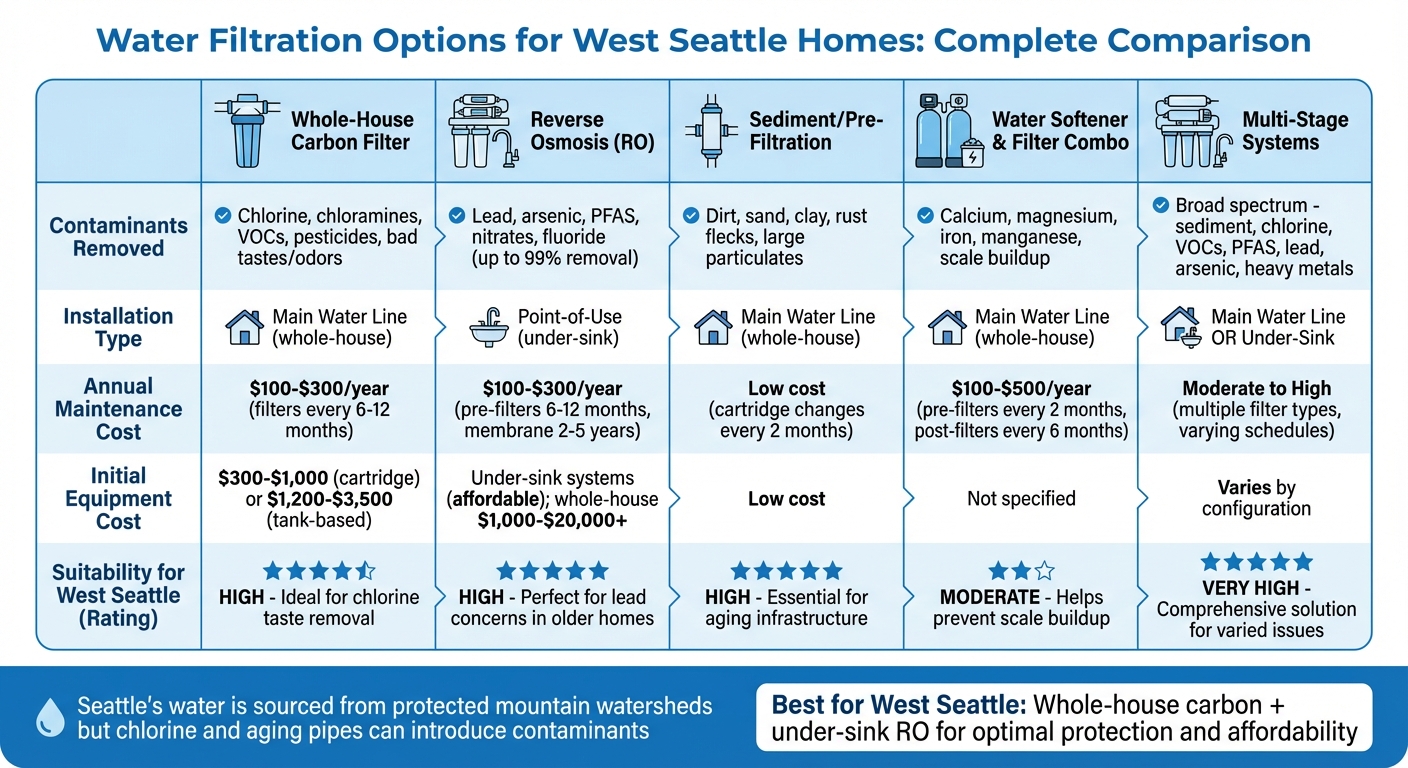
West Seattle Water Filtration Systems Comparison Guide
Choose the right filtration system based on your specific water issues, budget, and whether you need filtration for your entire home or just a specific faucet.
| Filtration Option | Contaminants Removed | Installation Type | Annual Maintenance Cost | Suitability for West Seattle Water |
|---|---|---|---|---|
| Whole-House Carbon | Chlorine, chloramines, VOCs, pesticides, bad tastes/odors | Main Water Line | Moderate (Filter changes every 6–12 months) | High – Ideal for removing chlorine taste in city water and household-wide protection |
| Reverse Osmosis (RO) | Lead, arsenic, PFAS, nitrates, fluoride (up to 99% removal) | Point-of-Use (Under-sink) | High ($75–$145/year for filters; membrane every 2–5 years) | High – Perfect for those concerned about lead from older pipes |
| Sediment / Pre-Filtration | Dirt, sand, clay, rust flecks, large particulates | Main Water Line | Low (Cartridge changes every 2 months) | High – Necessary for West Seattle’s aging infrastructure to avoid clogged aerators |
| Water Softener & Filter Combo | Calcium, magnesium, iron, manganese, scale buildup | Main Water Line | Moderate (Monthly salt refills and periodic servicing) | Moderate – Helps prevent scale buildup and protects appliances |
| Multi-Stage Systems | Broad spectrum: Sediment, chlorine, VOCs, and more (varies by configuration) | Main Water Line or Under-Sink | Moderate to High (Multiple filter types to maintain) | Very High – Comprehensive solution for addressing varied water issues |
Seattle’s water is sourced from protected mountain watersheds, offering naturally high quality. However, chlorine is added for disinfection, and aging pipes can introduce lead, rust, and sediment before the water reaches your home. In older West Seattle neighborhoods like Alki, Admiral, or Fauntleroy, it’s especially important to focus on systems that handle sediment and lead effectively. For families with specific health concerns or immune-compromised members, a reverse osmosis system provides top-tier purification, removing up to 99% of contaminants.
Keep in mind: whole-house systems ensure that every faucet, shower, and appliance in your home benefits from filtered water. On the other hand, point-of-use systems, such as under-sink RO units, focus on drinking and cooking water. Many West Seattle homeowners find that combining a whole-house sediment and carbon filter with an under-sink RO system offers the best balance of protection and affordability when it comes to maintenance.
This guide helps you make an informed choice as you prepare for expert installation and ongoing maintenance with Sasquatch Plumbing Services Seattle.
Conclusion
Picking the right water filtration system for your West Seattle home is an important step in protecting your drinking water, appliances, and plumbing. Although Seattle’s water supply from the Cedar and Tolt River Watersheds is known for its excellent quality, older pipes in neighborhoods like Alki, Admiral, and Fauntleroy can introduce issues like lead, rust, and sediment. The right filtration system not only tackles these concerns but also improves the taste of your water, prevents scale buildup in appliances, and helps cut down on single-use plastic water bottles.
Whole-home filtration systems go beyond improving water taste - they safeguard your entire plumbing system.
Given these water quality challenges, professional installation is crucial. Proper installation minimizes the risk of leaks that could damage your floors or cabinetry, ensures your equipment operates efficiently, and keeps warranties intact by integrating bypass valves and calibrating systems correctly. Licensed professionals also evaluate your home’s plumbing, a critical step for older West Seattle properties.
Before selecting a system, scheduling a water test is key to identifying the specific contaminants in your area. This step ensures you choose a filtration system that matches the unique needs of West Seattle’s aging infrastructure. Additionally, during Seattle’s rainy season, runoff can increase sediment levels, so inspecting your filters every three to six months is a smart preventive measure.
For long-term performance and peace of mind, trust experienced professionals. Sasquatch Plumbing Services Seattle provides expert filtration installation in West Seattle, offering same-day emergency service and clear, upfront pricing to help maintain your home’s water quality for years to come.
FAQs
Do I need a whole-house filter or just an under-sink RO system?
Deciding between a whole-house water filter and an under-sink reverse osmosis (RO) system comes down to your specific water concerns and how you plan to use the filtered water.
- Whole-House Filters: These systems treat all the water entering your home. They’re great for tackling issues like chlorine, sediment, and minerals, ensuring cleaner water for bathing, laundry, and general household use.
- Under-Sink RO Systems: These are designed for targeted filtration, providing highly purified water specifically for drinking and cooking. They remove a broader range of contaminants but only affect water at a single tap.
If your goal is to improve water quality throughout your entire home, a whole-house filter is the way to go. But if you’re primarily focused on clean, safe drinking water, an under-sink RO system might be all you need.
How can I tell if my West Seattle home has lead or pipe-related issues?
If your home in West Seattle was built before the 1980s, there's a chance it could have lead pipes or fixtures. Older plumbing materials, including solder and fixtures, can sometimes leach lead into the water. To be sure, consider getting your water tested by a certified lab. This can help identify any potential lead contamination.
What maintenance schedule should I expect for my filtration system?
A regular maintenance routine is key to keeping your system running smoothly. For instance, activated carbon filters usually need replacement every 6–12 months. Meanwhile, reverse osmosis membranes and pre-filters typically require changing every 2–3 years. It's also a good idea to schedule annual inspections to look for leaks, pressure problems, or signs of wear. Always refer to your manufacturer's guidelines for the exact timing to ensure optimal performance.