
Clean, filtered water isn’t just about taste - it can save you money in the long run. Unfiltered water can damage plumbing, shorten appliance lifespans, and increase energy bills. A whole-home water filtration system addresses these issues by removing contaminants like chlorine, sediment, and minerals directly at the source. Here's why it's worth considering:
- Lower Plumbing Costs: Prevents scale buildup and clogs, reducing repair expenses that can range from $180 to $15,000.
- Extended Appliance Lifespan: Protects water heaters, dishwashers, and washing machines from sediment and mineral damage.
- Energy Savings: Improves water heater efficiency, cutting utility bills.
- Reduced Bottled Water Expenses: Saves up to $400 annually by eliminating the need for bottled water.
- Less Cleaning Product Use: Filtered water boosts soap efficiency, cutting detergent costs by up to 75%.
With installation costs averaging $2,078 and maintenance as low as $50 annually, these systems can pay for themselves in just a few years. Plus, they offer convenience, better water quality, and potential home value increases. Sasquatch Plumbing in West Seattle provides expert installation, upfront pricing, and a 5-year warranty to ensure your system delivers lasting benefits.
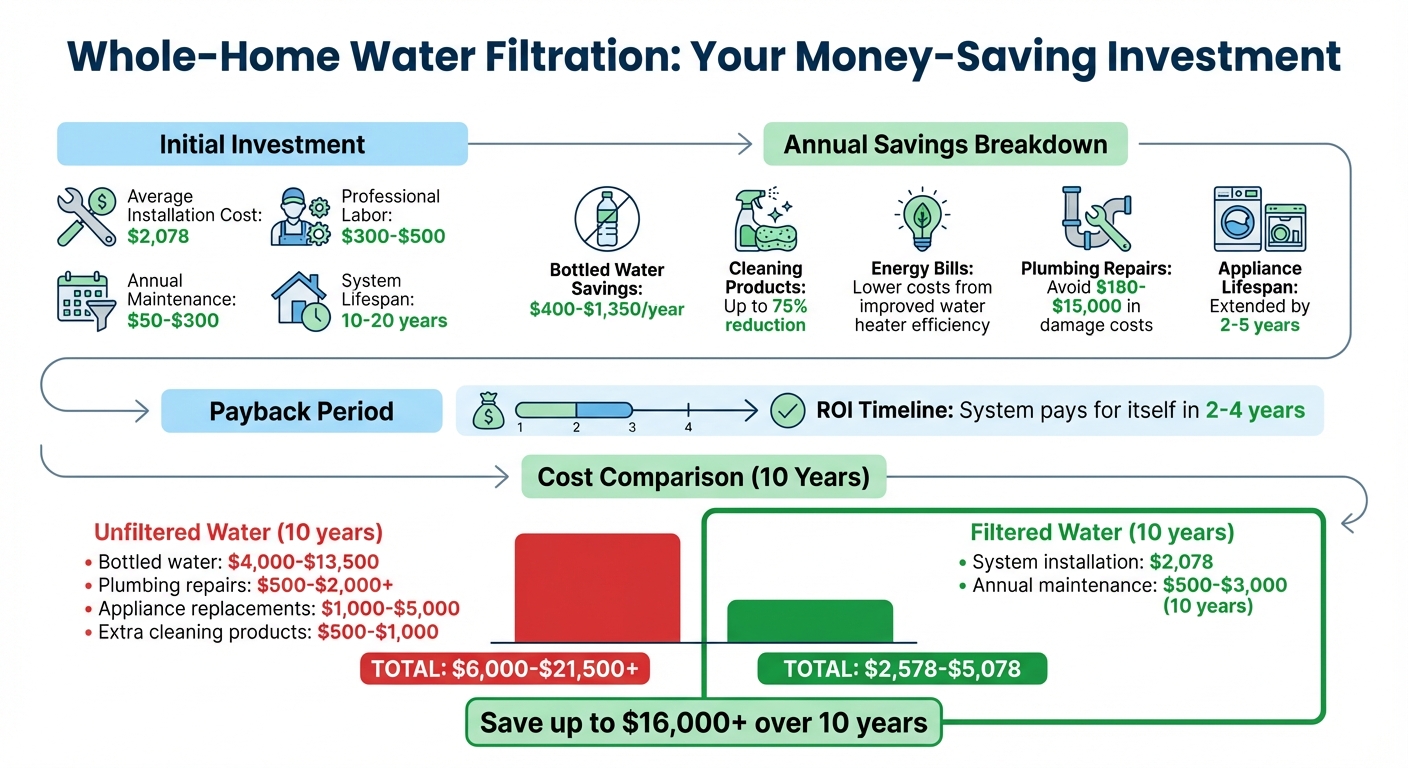
Whole-Home Water Filtration Cost Savings Breakdown
Reality of Whole House Water Filtration in 2025 | Plumbing Tips
The True Cost of Unfiltered Water
Many homeowners don’t realize the hidden expenses of using unfiltered water until they’re faced with expensive plumbing repairs or appliance replacements. Minerals, sediment, and chemicals in unfiltered water can quietly rack up significant costs over time. Let’s break down these expenses.
Plumbing Repairs and Maintenance
Unfiltered water is a recipe for plumbing problems. Calcium and magnesium in hard water create limescale, which builds up in pipes, narrowing them, reducing water flow, and speeding up corrosion.
On top of that, rust, sand, and dirt particles can settle in your pipes, causing clogs and dropping water pressure. Municipal water treatments often include chlorine and chloramines, which may dry out rubber seals and gaskets in plumbing fixtures, leading to leaks.
"Scale, sediment, and acidic water can damage pipes, water heaters, dishwashers, and washing machines. Filtering water at the source prevents buildup and reduces maintenance costs." - John Woodard, Fresh Water Systems
These plumbing issues don’t just stop at repairs - they also put extra strain on your appliances and increase energy consumption.
Appliance Damage and Rising Energy Bills
When limescale coats the heating elements in your water heater, it acts like a blanket, forcing the unit to use more energy to heat water. This inefficiency can lead to noticeably higher utility bills.
Sediment and mineral deposits also clog dishwashers, washing machines, and coffee makers, reducing their efficiency and cutting their lifespan short. Hard water compounds the issue by making soaps and detergents less effective, which means you’ll likely use more cleaning products than necessary.
"Sediment, minerals, and other particulates in the water can cause damage and reduce the life span of plumbing fixtures, water heaters, dishwashers, washing machines, and other appliances." - Multipure
Bottled Water Expenses and Environmental Impact
When tap water has an unpleasant taste or odor due to chlorine, many families turn to bottled water. A 24-pack of bottled water can cost up to $5.00. For a family of four, drinking two bottles per person daily, that adds up to roughly $600 annually. Compare that to the $73 to $182.50 it costs annually for a home filtration system.
There’s also an environmental cost. Each plastic water bottle can take about 450 years to decompose in a landfill.
When you add it all up - plumbing repairs, appliance damage, higher energy bills, and bottled water costs - it’s clear that unfiltered water can be a significant drain on your wallet and the environment. Whole-home water filtration offers a way to reduce these expenses and protect your home in the long run.
How Whole-Home Water Filtration Cuts Costs
Installing a whole-home water filtration system isn't just about cleaner water - it’s also a smart way to save money. By protecting your plumbing, extending the life of your appliances, and cutting out bottled water expenses, these systems can pay for themselves over time.
Fewer Plumbing Repairs with Filtered Water
Whole-home filtration systems act as a shield for your plumbing. Pre-filters catch rust, dirt, sand, and other debris before they can clog pipes or damage fixtures. Systems with salt-free conditioners or water softeners also prevent calcium and magnesium buildup, which can cause scale deposits that restrict water flow and corrode pipes.
The potential savings here are huge. Plumbing repairs typically cost anywhere from $180 to $500 per incident, and replacing a water main line can range from $650 to $2,900. A full home repiping project? That could set you back between $1,500 and $15,000. Compare that to the average installation cost of $2,078 for a whole-home filtration system, which can last 10 to 20 years. It’s clear that investing in filtration can save you thousands in the long run, while also keeping your appliances in better shape.
Longer Appliance Life and Lower Energy Costs
Filtered water doesn’t just protect your pipes - it keeps your appliances running smoothly too. Minerals that build up in water heaters, dishwashers, and washing machines can lead to inefficiency and wear over time. By reducing scale, filtered water helps these appliances work as they should for longer.
Take water heaters, for example. Reducing scale buildup improves their efficiency, lowering your energy costs. Electronic water descalers, for instance, add only about $0.36 per month to your electricity bill. High-capacity systems, like the Aquasana EQ-1000, can filter up to 1,000,000 gallons over a decade, providing long-term protection for your appliances.
"A whole house water filter is a reliable first line of defense that can protect terminal equipment and appliances, including downstream pipelines, water purifiers, water heaters, wall-hung boilers, washing machines, and showerheads." - iSpring Water Systems
And that’s not all - filtered water also eliminates the need to buy bottled water, bringing even more savings.
Eliminating Bottled Water Expenses
This is where the savings become immediately noticeable. The average American saves around $1,350 a year by cutting out bottled water purchases. Considering that U.S. families often spend up to $1,000 annually on water filtration and bottled water supplies, a whole-home system can help shrink those costs significantly.
With standard whole-home systems priced between $400 and $2,000, and replacement filters costing about $100 to $200 annually, most systems have a payback period of just a few years. Even when you factor in annual maintenance costs, which range from $50 to $500, the long-term savings are undeniable. Plus, you’ll enjoy clean, filtered water from every tap in your home - no plastic bottles required.
sbb-itb-6ceaf48
Other Ways Water Filtration Saves Money
Installing a whole-home water filtration system does more than just protect your plumbing and appliances - it can also lead to noticeable savings on everyday household expenses. From cutting down on repair costs to reducing daily expenditures like cleaning products, these systems help extend the lifespan of major appliances while keeping more money in your pocket.
Lower Cleaning Product Costs
Did you know filtered water can cut your soap and detergent use by up to 75%? Hard water minerals, like calcium and magnesium, interfere with soap's ability to create a rich lather, often leaving behind soap scum instead. By removing these minerals, a filtration system allows soaps and detergents to work more effectively, meaning you’ll need far less to get the job done. This applies to everything from laundry detergent and dish soap to shampoo and body wash, making cleaning tasks faster and more efficient.
"Cleaning is easier greatly reducing housework by eliminating the formation of soap curd this results in saving time and money." - Rayne Water
These savings on cleaning products add up quickly, contributing to a strong return on investment.
Calculating Your Return on Investment
When you factor in reduced cleaning and maintenance costs, the financial benefits of a whole-home water filtration system become even clearer. Let’s break it down: the initial cost of a system typically ranges from $1,129 to $3,538, with professional installation adding another $300 to $500. While this might seem like a significant upfront expense, the long-term savings make it worthwhile.
Here’s how: filtered water eliminates the need for bottled water, saving a family around $400 per year. It also reduces spending on cleaning products by up to 75%, lowers energy bills by improving water heater efficiency, and extends the lifespan of major appliances by 2–5 years.
Ongoing maintenance, such as filter replacements and system inspections, usually costs between $50 and $300 annually. With all these savings combined, most systems pay for themselves within just a few years. Plus, they can increase your home's resale value by 1–3%, adding another layer of financial benefit.
Why Choose Sasquatch Plumbing for Water Filtration Installation
Adding a whole-home water filtration system is a big step toward improving your water quality, and getting it installed right is key. A professional installation ensures your system works seamlessly and lasts for years. That’s where Sasquatch Plumbing Services Seattle steps in, offering expertise to homeowners in West Seattle. They make sure your system is perfectly sized, calibrated, and integrated into your plumbing. Plus, with their upfront pricing, you’ll know exactly what you’re investing in.
Professional Installation and Transparent Pricing
When it comes to installing a water filtration system, professional plumbers handle every detail. From assembling the system to connecting it securely to your main water line, they ensure everything is leak-free. They also test the system, prime the filters, and set up regeneration cycles to make sure it’s operating at its best.
Sasquatch Plumbing stands out with their clear pricing approach. Before any work begins, you’ll receive an upfront estimate covering both labor and parts. For standard installations, professional labor typically costs between $300 and $500. This transparency means no surprises, so you can feel confident about your investment. Most installations are completed in just one day, keeping disruptions to your home minimal. And the perks don’t end there - they also offer ongoing support and warranty coverage for added peace of mind.
5-Year Warranty and Reliable Customer Support
Sasquatch Plumbing goes beyond just installation. Their 5-year labor warranty protects your system during those critical early years when maintenance is most likely to be needed. This is a big deal, as repairs for whole-house systems can range from $50 to $800. Many manufacturers even require professional installation to uphold the 5-to-10-year lifespan of their components, making expert setup a must for safeguarding your investment.
But it doesn’t stop at installation. Sasquatch Plumbing provides ongoing customer support to keep your system running smoothly. Routine inspections and timely component replacements help your filtration system reach its full potential, lasting anywhere from 10 to 20 years. With their comprehensive service and satisfaction guarantee, you can enjoy clean, filtered water while saving money in the long run.
Conclusion
From reducing repair costs to prolonging the life of your appliances, whole-home filtration offers a range of benefits that make it a worthwhile investment. Over time, it helps cut expenses by protecting your plumbing and appliances from damaging scale buildup, reducing reliance on bottled water, and improving the efficiency of water heaters to lower energy bills. Consider this: the average American household spends over $400 annually on bottled water, while maintaining a filtration system costs as little as $40 to $100 per year. That’s a significant shift in your household budget.
Beyond financial savings, filtered water from every tap simplifies daily life. It’s not just about convenience - it’s also about health. Filtered water minimizes chlorine exposure, which can help protect your skin and hair. With regular upkeep, these systems can last 20 years or more, making them a smart, long-term investment that may even increase your home's resale value.
Experts in the field emphasize the importance of clean water:
"Access to clean, safe water isn't a luxury - it's essential." - Maggie Pace, Aquasana
By choosing a filtration system, you’re not only saving money but also preserving the value of your home. Ready to improve your water quality and start saving? Sasquatch Plumbing Services Seattle is here to assist. Their team offers professional installation with clear pricing, a 5-year warranty, and ongoing support to ensure your system runs flawlessly. Serving all West Seattle neighborhoods, they’ll ensure your filtration system is tailored to meet your needs and deliver long-lasting benefits.
Contact Sasquatch Plumbing today at https://sasquatchplumbingseattle.com to schedule your consultation. Take the first step toward better water and lasting savings with expert installation you can trust.
FAQs
How does a whole-home water filtration system help appliances work more efficiently?
A whole-home water filtration system works to eliminate sediments, chlorine, iron, and scale-forming minerals from your water supply before it even reaches your appliances. This proactive approach reduces buildup inside essential household devices like washers, dishwashers, and water heaters. The result? These appliances operate more efficiently and use less energy.
Beyond boosting efficiency, cleaner water helps extend the life of your appliances. With fewer repairs and replacements needed over the years, you’ll save money while enjoying smoother performance. It’s a smart choice that benefits both your home and your wallet.
How can a whole-home water filtration system save you money in the long run?
Investing in a whole-home water filtration system isn't just about cleaner water - it's about saving money in the long run. By removing impurities, these systems help prevent common plumbing problems like clogs and corrosion, which means fewer expensive repairs. Plus, they can extend the life of major appliances like water heaters, dishwashers, and washing machines, reducing the need for frequent replacements or costly maintenance.
On top of that, having access to clean, filtered water at home can significantly cut down on the need to buy bottled water, which can quickly become a major expense. Over time, these savings, along with the potential to boost your home's resale value, make a whole-home filtration system a smart financial choice.
How does using filtered water help reduce cleaning product usage?
Filtered water eliminates minerals and impurities responsible for water hardness. This makes it easier for soaps and detergents to lather, boosting their cleaning power. As a result, you’ll need less product to get the job done, which can lead to noticeable savings over time. Plus, filtered water helps cut down on soap scum and residue buildup, meaning less reliance on strong cleaners and less time spent scrubbing.