
When water pipes freeze, they can crack or burst, leading to costly water damage. Here's what you need to do immediately:
- Shut off the main water supply to prevent flooding in case of a burst.
- Inspect pipes for frost, bulges, or cracks. Look for leaks or damp spots on walls and ceilings.
- Open faucets to relieve pressure and allow melted water to flow.
- Thaw pipes safely using a hair dryer, heat lamp, or heating pad. Avoid open flames or high heat sources.
If you can't locate the frozen section, notice damage, or fail to restore water flow, call a licensed plumber immediately. Prevent future freezing by insulating pipes, maintaining indoor temperatures of at least 55°F, and draining outdoor water systems before winter.
Act fast to minimize damage and avoid repair costs that can average $10,000.
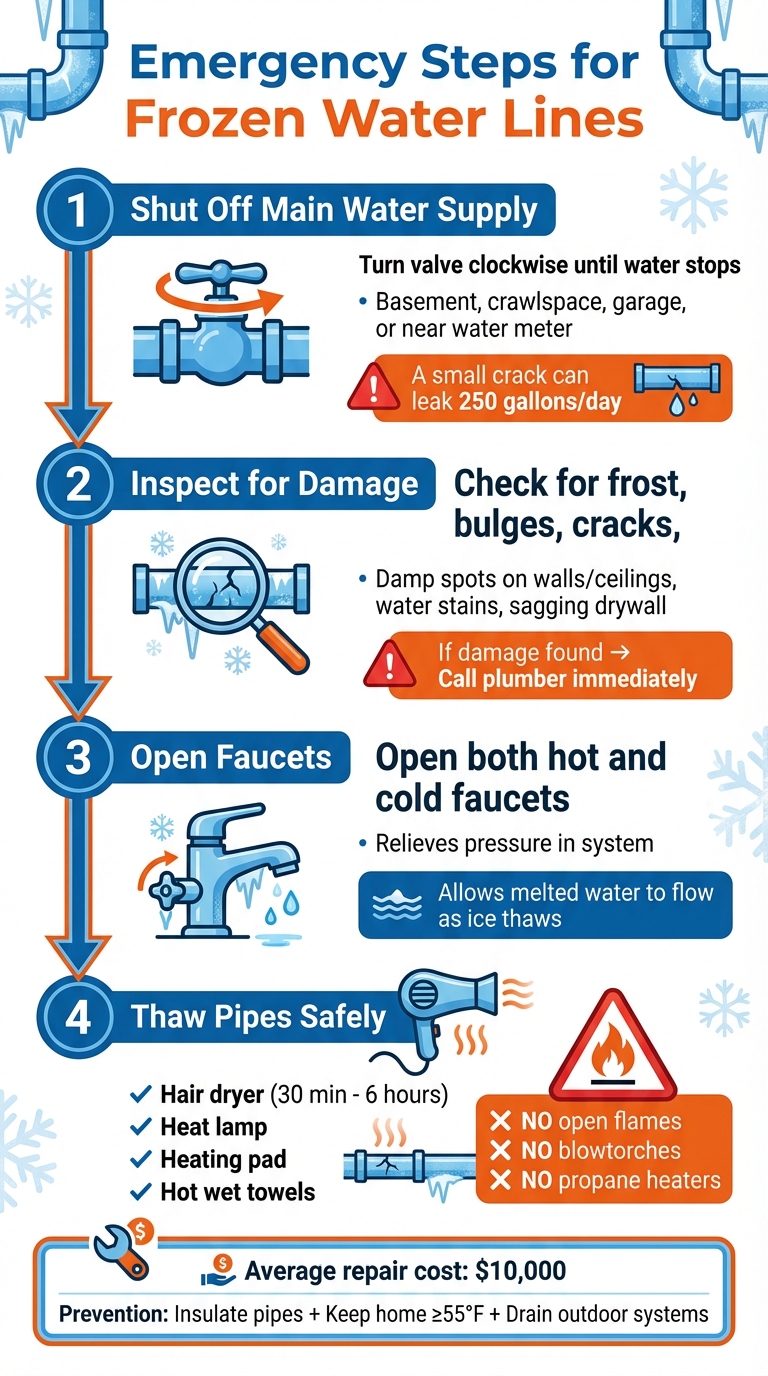
4 Emergency Steps to Handle Frozen Water Pipes
How to deal with frozen pipes: A master plumber shares his tips
First Steps When You Find Frozen Pipes
If you suspect a frozen pipe, it's crucial to act fast to prevent extensive damage. Start by shutting off the main water supply immediately. This step is essential to avoid flooding if a pipe has already cracked - remember, even a small crack can leak up to 250 gallons of water in a single day. Here's how to safely assess the situation and begin addressing the issue.
"If a water pipe breaks, immediately close the main shut-off valve to stop flooding." - Seattle Public Utilities
Turn Off the Main Water Supply
Knowing where your main shut-off valve is located before an emergency can save you a lot of trouble. Typically, it's found where the water line enters your home - this might be in the basement, crawlspace, garage, or near the water meter. To shut off the water, turn the valve clockwise until the flow stops completely. If you're unsure which valve to use, look for the largest pipe entering your home or check near your water meter.
Check for Leaks or Damage
Before you start thawing, grab a flashlight and carefully inspect the exposed pipes. Look for frost, bulges, cracks, or any moisture on the pipes. Don't forget to check nearby walls and ceilings for signs of hidden leaks, like damp spots, water stains, or sagging drywall. If you find any cracks, bulges, or active leaks, keep the water off and call a licensed plumber right away. Once you're sure it's safe, open your faucets to relieve system pressure.
Leave Faucets Open
While thawing the pipes, keep both hot and cold faucets open. This helps release pressure in the system, as most pipes tend to burst between the ice blockage and a closed faucet. As the ice begins to melt, even a small trickle of water can speed up the process. If one faucet isn’t working, check others in your home - multiple failures could mean freezing near the main service line.
Safe Methods to Thaw Frozen Pipes
Once you’ve confirmed the pipe is still intact and the water supply is turned off, the next step is to thaw it carefully using controlled heat. A hair dryer set to high heat is a reliable option. Move it steadily along the frozen section, starting at the end nearest to the open faucet. This allows melting ice and steam to escape safely. Depending on how severe the freeze is, thawing can take anywhere from 30 minutes to 6 hours.
Here are some effective methods to safely thaw frozen pipes:
Using a Hair Dryer or Heat Lamp
A hair dryer is a practical tool for thawing exposed pipes, as it provides steady, manageable heat. Keep it moving along the frozen section to ensure even heating and avoid overheating any one spot. Heat lamps and space heaters can also help by raising the temperature in unheated spaces like crawl areas or basements. If you use these, make sure they’re positioned away from flammable materials and never leave them unattended.
For pipes frozen behind a wall, try directing a hair dryer at the wall’s surface near the affected area. Alternatively, you can turn up your thermostat to warm the entire space.
Applying Heat Tape or Heating Pads
Heat tape or heating pads that are UL-listed can be wrapped around the pipe for a safe thawing process. Be sure to follow the manufacturer’s instructions closely. While this method may take longer, it’s a safe option when used correctly.
Another technique is wrapping the pipe with hot, wet towels. Replace the towels as they cool to maintain heat. This approach works particularly well for plastic pipes, such as PEX or PVC, which can be damaged by high, direct heat.
Never Use Open Flames
Avoid using blowtorches, propane heaters, kerosene heaters, or charcoal stoves to thaw pipes. These tools pose serious fire risks and can ignite nearby materials like wood, insulation, or drywall. Additionally, extreme heat can damage pipes - melting soldered joints in copper pipes or warping plastic ones. Even worse, using a blowtorch can cause the water inside a frozen pipe to boil, potentially leading to an explosion.
"A blowtorch can make water in a frozen pipe boil and cause the pipe to explode." - Seattle Public Utilities
Finally, avoid using any electrical devices in wet conditions to prevent accidents.
sbb-itb-6ceaf48
When to Call a Professional Plumber
Signs You Need Professional Help
Sometimes, frozen pipes can be tricky to locate and even harder to fix on your own. If you’ve inspected accessible pipes in your basement or crawl space and don’t see any frozen sections, it’s time to call in the pros. Plumbers have specialized tools to pinpoint blockages, even in hard-to-reach spots. Visible damage, like cracks, bulging, or warped sections of pipe, is a clear sign that the pipe may already be compromised and needs immediate attention.
If you’ve been trying to thaw a pipe for an hour without success, it’s best to stop. Continuing could put extra stress on the pipe and worsen the situation. Be alert for other warning signs, too - like water stains, bubbling paint, or damp areas, which could mean hidden cracks. Strange noises like gurgling, whistling, or banging when you turn on faucets can also signal trouble. Foul odors from drains may indicate ice blocking proper ventilation. And if multiple fixtures in your home suddenly have no water or very low pressure, you’re likely facing a major blockage that requires expert help.
"Frozen pipes in hidden areas can burst and cause serious damage behind drywall or under floors. A plumber has the tools to locate the frozen area without ripping apart your home."
– CW Suter
How Sasquatch Plumbing Services Can Help

When the signs point to frozen pipes and DIY methods fail, calling a professional is the safest move. For West Seattle residents, Sasquatch Plumbing Services is ready to step in with same-day emergency service to tackle frozen water lines. Their licensed plumbers use advanced tools like pipe-thawing machines, infrared lamps, and electronic leak detection to safely thaw pipes - even those hidden behind walls or under floors. They also keep an eye on water pressure during the process to catch any hidden issues as the ice melts.
Once water flow is restored, they go the extra mile by inspecting your entire plumbing system for weak spots or small cracks that could cause future problems. With upfront pricing and a satisfaction guarantee, you’ll know exactly what to expect before they get to work. Don’t wait - if you need immediate help, visit https://sasquatchplumbingseattle.com.
How to Prevent Frozen Pipes
Insulate Exposed Pipes
Before the cold hits, take steps to insulate pipes that are vulnerable to freezing. Foam insulation sleeves are an affordable and effective option for pipes in unheated spaces like basements, crawl spaces, or attics. Pay extra attention to joints and bends - these areas are especially prone to freezing. For pipes in extremely cold conditions, electrical heat tape can add an extra layer of protection by actively warming the pipes. Be sure to use UL-listed heat tape and follow the manufacturer's guidelines to minimize fire risks.
Outdoor faucets shouldn’t be overlooked. Foam faucet covers are an inexpensive way to shield them from freezing winds and cold temperatures. Before installing these covers, disconnect all hoses and drain the faucets completely. Seal any gaps around pipe openings with expanding foam or caulk to block drafts. Combined with insulation, keeping your home at a steady temperature is essential for preventing frozen pipes.
Keep Your Home Warm Enough
Insulation can only do so much - maintaining a consistent indoor temperature is just as important. Set your thermostat to at least 55°F, even if you’re leaving the house for an extended period. During cold spells, avoid lowering the temperature at night to save on heating costs.
"Maintaining a higher nighttime temperature may increase heating costs but prevents costly pipe repairs." - American Red Cross
To help warm air circulate, open cabinet doors under kitchen and bathroom sinks, especially if those pipes are along exterior walls. If your water lines are located in the garage, keeping the garage door closed can also help retain heat. These small adjustments work hand-in-hand with outdoor winterizing efforts to keep your pipes safe.
Drain Outdoor Water Systems
Winterizing outdoor plumbing can prevent expensive repairs down the line. Start by disconnecting all garden hoses, draining them completely, and storing them indoors. Leaving hoses attached can cause water to freeze back into your home’s pipes, potentially leading to bursts.
Next, locate and shut off the interior valve for outdoor faucets. Once that’s done, turn on the outdoor faucet to drain any remaining water and leave it open throughout the winter. This ensures that any leftover water has space to expand without causing damage. If you have in-ground sprinkler systems or pool lines, follow the manufacturer’s draining instructions carefully. Avoid using antifreeze unless specifically recommended.
"When water freezes, it expands, and that expansion can crack pipes, split hose bibs, and even cause damage inside your walls that you won't discover until spring, when everything thaws and you've got water pouring into your basement." - Danny Reddick, President, Reddick & Sons
Conclusion
Frozen water lines need immediate attention to prevent pressure buildup and the risk of pipe bursts. Even a small crack can allow up to 250 gallons of water to escape in just one day. Acting quickly can help you avoid costly repairs.
Start by shutting off the main water supply, opening all affected faucets to relieve pressure, and carefully thawing pipes with a hair dryer or heating pad - never use open flames. If the frozen section is hidden, shows signs of bulging or cracking, or impacts multiple pipes, call a licensed plumber right away.
Once the immediate issue is resolved, take steps to prevent future freezing. Insulate exposed pipes, keep your thermostat set to at least 55°F, and drain outdoor water systems before winter arrives. These precautions can help protect your plumbing from freezing conditions.
If you're in West Seattle, Sasquatch Plumbing Services Seattle offers same-day emergency assistance to safely restore your water lines. Don’t let a minor freeze turn into a major flood - acting fast and relying on expert help can make all the difference.
FAQs
How do I find the main water shut-off fast?
To find your main water shut-off valve, start by checking typical spots like near the water heater, under sinks, along exterior walls, or close to the water meter. It’s commonly located in the basement, utility room, or outside near the foundation where the main water line enters your home. If you have a water meter, the shut-off valve might be inside the meter box. You can turn it off by rotating it clockwise using a wrench or a meter key.
How can I tell which pipe is frozen?
If you notice reduced or no water flow, frost or condensation on pipes, or strange noises like banging or whistling, these could be signs of frozen pipes. Frost buildup on exposed pipes or feeling cold spots on walls or floors near pipes are also clues. If just one faucet isn’t working, the frozen pipe is probably linked to that specific fixture. Be sure to inspect other unheated or exposed areas for potential trouble spots.
What should I do if the frozen pipe is inside a wall?
To thaw a frozen pipe hidden inside a wall, apply heat gently and gradually. Use tools like an infrared light, heat lamp, or even a hairdryer directed at the wall's surface. Steer clear of open flames or overly intense heat sources, as these can cause damage. Take your time - this process should span about 30 minutes to an hour. If you're unsure how to proceed or feel it's unsafe, it's best to call a professional plumber for help.