
When you're heading out for vacation, your plumbing system is one thing you can't afford to ignore. A small leak or clogged drain could turn into a costly disaster while you're away. Here's a quick summary of what you need to do to protect your home:
- Shut off the main water valve to prevent leaks and flooding.
- Set your water heater to vacation mode to save energy and avoid damage.
- Inspect and secure all plumbing fixtures for leaks or wear, including appliance hoses.
- Prepare drains and toilets to prevent odors, bacteria, and sewer gases.
- Test your sump pump and backup system to ensure they're working properly.
- Install smart leak detectors for real-time alerts on potential issues.
Taking these steps can save you from expensive repairs, water damage, and energy waste. For extra peace of mind, consider getting a professional plumbing inspection before you leave.
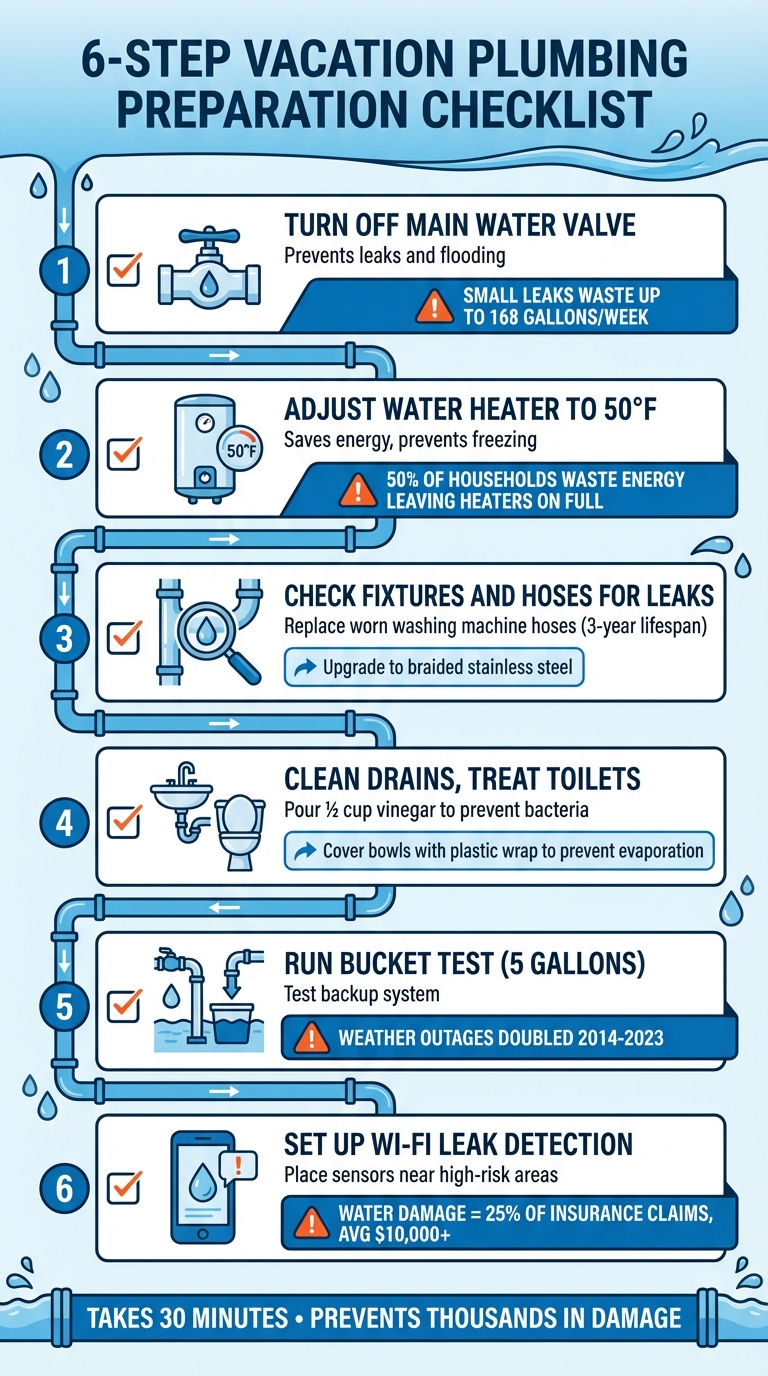
6-Step Vacation Plumbing Preparation Checklist
Should I Turn Off My Water Before I Go on Vacation? See What This Plumber Does
sbb-itb-6ceaf48
Turn Off Your Main Water Valve
Turning off your main water valve is one of the best ways to protect your home from leaks and flooding. Since this valve controls the water flow into your house, shutting it off can help prevent burst pipes, water damage, and unexpected leaks.
You'll typically find the main valve where the water line enters your home - this might be in the basement, garage, or near your water heater. The type of valve you have will determine how to shut it off: ball valves require a simple 90-degree turn, while gate valves need to be turned clockwise to close. If your valve is in a meter box, you might need a key or screwdriver to operate it.
To test if you've successfully turned off the water, open the highest faucet in your home to confirm no water flow and the lowest faucet to drain any remaining water. Even a small leak can waste up to 168 gallons of water in just a week.
"It's important to locate and test your main shutoff valve, ideally during a routine maintenance check, not an emergency." - Elizabeth Shavers, General Manager of HVAC and Plumbing, Oncourse Home Solutions
A word of caution: If your valve is stuck, don’t force it. Older valves are prone to breaking under pressure, which could turn a simple task into an emergency. Instead, apply a lubricant like WD-40 or call a professional to inspect and service the valve. Make it a habit to test your valve annually to ensure it’s functional when you need it most.
These steps can help keep your plumbing secure, even if you’re unable to completely shut off the water supply.
When You Can't Shut Off the Water Completely
Some systems, like automatic sprinklers, pools, or fire sprinklers, may require a continuous water supply. In these cases, consult a professional to avoid disrupting these systems. If available, use secondary shut-off valves to isolate your home’s plumbing.
"If you have a fire sprinkler system, consult a professional before shutting off the main water supply." - Adam O'Brien, Marketing Strategist, Courtesy Plumbing & Heating
Another option is to locate a secondary "home-only" shut-off valve. This can isolate your house while keeping irrigation or other systems functional. If your home only has a single main valve at the street, you might need to shut off individual isolation valves at fixtures like sinks, toilets, or washing machines.
If someone will be monitoring your home while you’re away, you can leave the main valve on but take extra precautions. Install smart leak detectors and upgrade hoses to reduce the risk of damage in your absence. These measures can provide peace of mind while keeping essential systems running.
Set Your Water Heater to Vacation Mode
Adjusting your water heater, along with shutting off your main water valve, is key to avoiding energy waste and plumbing issues while you're away. Switching your water heater to vacation mode is a simple way to cut down on energy use. This setting reduces the temperature to about 50°F, which conserves energy while preventing pipes from freezing. Surprisingly, about half of households leave their water heaters running at full temperature during vacations, leading to billions of dollars in wasted energy annually.
How to Adjust Your Water Heater
- Gas water heaters: Look for the temperature dial near the base of the tank and turn it to "VAC" or "VACATION." If your unit lacks this setting, use the "Pilot" mode or the lowest temperature available.
- Electric water heaters: If your electric heater doesn’t have a vacation mode, shut off the power at the breaker. Newer models may allow you to adjust the temperature directly.
- Tankless water heaters: These systems heat water only when needed, so they don’t have standby energy losses. However, if your tankless unit has a "recirculation" or "preheat" feature, disable it to save energy. Many modern models also come with a "Vacation" or "Eco" setting that maintains a safe temperature of about 50°F to protect the system.
For trips longer than three days, use vacation mode. If you’ll be away for more than two weeks, consider shutting the system down entirely - unless freezing temperatures are a concern. Additionally, turn off the cold-water supply to your heater to minimize the risk of leaks, especially if your system is older.
"Vacation mode is not turning your hot water heater off, which can lead to its own set of issues."
– Tankless Experts Inc.
How to Restart Your Water Heater After Vacation
When you return, reset your water heater to 120°F. This temperature prevents harmful bacteria like Legionella from growing, as they thrive between 77°F and 113°F. To ensure safety, temporarily increase the temperature to 140°F for at least 30 minutes to kill any bacteria that may have developed while the heater was set to a lower temperature.
"At 120°F, Legionella bacteria doesn't die, it simply doesn't grow further. Even if you normally keep your water heater set to 120°F, when you return from vacation, and the tank has been at a lower temperature, you should temporarily increase it."
– Jason Fitzpatrick, Editor-in-Chief, How-To Geek
After the sanitization period, flush all taps - both hot and cold - for several minutes to clear out stagnant water and any potential bacterial buildup. If you have an electric water heater and turned off the breaker, ensure the tank is completely refilled before restoring power. Run a hot water tap until water flows steadily to avoid dry-firing, which could damage the heating elements.
For tankless water heaters, hot water becomes available almost instantly after powering the unit back on. However, it’s still wise to flush your taps to clear out any stagnant water. If you had lowered the temperature significantly, temporarily set it to 140°F for at least 30 minutes to sanitize the system.
If you’re unsure about any step, consider contacting Sasquatch Plumbing Services Seattle for professional assistance.
Check and Secure All Plumbing Fixtures
Once you've secured your main water valve and adjusted your water heater, it's time to inspect every plumbing fixture for leaks before heading out. Take a close look at all the plumbing connections inside and outside your home. Pay special attention to areas like the kitchen, bathrooms, laundry room, and utility spaces. Check under sinks, behind toilets, and around the water heater for any signs of trouble. Watch for visible moisture, stains, or corrosion on pipes and connectors - these are often telltale signs of leaks that could worsen while you're away.
Make sure toilet flappers and fill valves are working correctly to avoid unintended flushes that waste water. If anything seems off, replace these inexpensive parts before you go. Don’t forget outdoor fixtures, too - a slow drip from a hose bib might seem minor but can waste water and even cause foundation issues over time.
For hidden leaks, turn off all water-using appliances and check your water meter. If the meter's dial keeps moving, it’s a sign of a leak that needs to be fixed before you leave.
"Most water damage that homeowners experience is the result of leaks in pipes and connections frequently due to maintenance issues."
– Travelers Insurance
After addressing water supply precautions, shift your focus to inspecting appliance connections both inside and outside the home.
Inspect Appliance Hoses and Water Lines
Take a close look at the supply lines for your washing machine, dishwasher, and refrigerator. Watch for any signs of wear, such as cracks, bulges, or fraying. Washing machine hose failures are one of the leading causes of home flooding, and standard rubber hoses usually last around three years. Upgrade to braided stainless steel hoses if needed - they’re far more durable and can help prevent disastrous bursts. Also, check for corrosion or calcium buildup on valves and hose connections, as these can signal slow leaks.
For appliances or fixtures that you can’t fully shut off, make sure their valves are securely closed. Flush toilets to remove standing water and reduce the risk of leaks while you’re away. Leave the doors of your dishwasher and washing machine slightly open to prevent mold or musty odors from developing.
Don’t forget to check outdoor plumbing connections to avoid freezing-related damage.
Disconnect Garden Hoses and Close Outdoor Faucets
If you leave a garden hose connected to an outdoor faucet, water can become trapped inside. When temperatures drop, even briefly, that trapped water can freeze, expand, and potentially cause the faucet or connected interior pipes to burst.
"Not removing hoses can trap water and make it much more likely a faucet will freeze."
– Aaron Stickley, Licensed Plumber
Before you leave, disconnect all hoses, splitters, and timers from outdoor spigots. Shut off the interior valve that supplies each outdoor faucet, then open the exterior spigot to drain any leftover water. Even frost-free spigots require the hoses to be removed so their internal valves can drain properly.
For added protection, install insulated faucet covers over your outdoor spigots. These covers, which typically cost between $10 and $20, help retain heat from your home that radiates through the pipes. Make sure they’re pressed snugly against your siding without gaps to prevent heat loss. Keep in mind, however, that these covers are only effective if your home’s heating system stays on - they won’t provide protection if the heat is turned off entirely.
Prepare Your Drains and Toilets
Once you've secured all your plumbing fixtures, it's time to turn your attention to drains and toilets. Standing water in these areas can become a breeding ground for bacteria, mold, and unpleasant odors. Plus, drain traps can dry out over time, allowing sewer gases to seep into your home. A little preparation now can save you from returning to a house filled with unwelcome smells.
Start by tackling drain odors, then move on to maintaining your toilets.
Prevent Drain Odors and Dry Traps
Drain traps - the U-shaped pipes under sinks and floor drains - are designed to hold water, which acts as a barrier to block sewer gases. However, if the water evaporates while you're away, this protective seal disappears. To keep your drains fresh, pour ½ cup of baking soda down each drain, followed by ½ cup of vinegar. Let the mixture foam for about 5–10 minutes, then flush it with hot water for a thorough clean.
"Every drain in your house builds up bacteria over time. When they are used regularly, running water gives them a rinse. If you're away on vacation, however, the bacteria in your drains is just going to sit there."
– Ranck Plumbing, Heating, AC & Excavation
For garbage disposals, grinding a handful of ice cubes and citrus peels can help clean the blades and eliminate odors. If you're preparing for winter, consider pouring non-toxic RV antifreeze into sink and tub drains to prevent freezing damage.
With your drains taken care of, it's time to apply a similar approach to your toilets.
Treat Toilets to Prevent Mold
Did you know a small toilet leak can waste up to 180 gallons of water per week? To avoid this and keep your toilet fresh, start by thoroughly cleaning the bowl. Then, pour ½ cup of white vinegar into the bowl to prevent bacterial growth. White vinegar is a better option than bleach for extended periods, as bleach can degrade rubber seals and gaskets over time.
"Covering your toilet bowls prevents water evaporation from the trap, which could allow sewer gases to enter your home. Use plastic wrap pressed tightly around the bowl rim... to create an airtight seal."
– Solid Plumbing & Drains Inc.
To prevent water from evaporating from the trap, cover the toilet bowl with plastic wrap, pressing it tightly around the rim to form an airtight seal. For winterizing, add non-toxic marine antifreeze to both the bowl and tank. This step can protect the porcelain from cracking in freezing temperatures.
Test Your Sump Pump and Backup System
If your home relies on a sump pump, checking it before leaving for vacation is a must - especially if you live in an area prone to flooding. A malfunctioning pump during a storm can lead to serious water damage, and being away makes it harder to respond quickly. The good news? Testing your sump pump takes just a few minutes and doesn’t require any special skills.
Start with the "Bucket Test": Pour about 5 gallons of water into the sump pit to mimic heavy rain. As the water rises, the pump should kick in, empty the pit, and shut off once it’s done. Step outside to confirm water is flowing out of the discharge pipe, and listen for the pump to stop - this ensures the check valve is working properly. If you hear water gurgling back into the pit, the check valve might need replacing.
"A simple preseason routine is often the difference between staying dry and dealing with structural repairs, mold, and ruined belongings."
– Full Force Plumbing
Once the main pump is tested, turn your attention to the backup system. Unplug the primary pump and repeat the bucket test to see if the battery backup activates. Check that any alarms sound as they should and that the battery indicator shows a green light. With weather-related power outages nearly doubling between 2014 and 2023 compared to the previous decade, a functional backup system is more essential than ever.
Lastly, clean out any debris from the sump pit and inlet screen. If your pump is between 7 and 10 years old, it’s smart to arrange professional maintenance before you leave. Spending around $300 on an inspection is a small price compared to the cost of water damage. For homeowners in West Seattle, Sasquatch Plumbing Services Seattle offers reliable sump pump inspections and repairs to keep your home protected.
Install Smart Leak Detection Devices
Once you've confirmed your sump pump and backups are working properly, it's time to take your home's water safety up a notch with smart leak detection devices. These gadgets connect to your Wi-Fi and send alerts directly to your phone the moment they detect an issue. Options range from simple moisture sensors placed near vulnerable appliances to advanced whole-home systems that use ultrasonic technology to monitor water flow through your pipes. Some models even feature automatic shut-off valves that can immediately cut off your main water supply when a leak is detected.
Here's why it matters: water damage and freezing made up nearly 25% of all homeowners insurance losses in 2018, with the average claim exceeding $10,000. To avoid these costly disasters, place sensors in high-risk spots like under toilets, near your refrigerator’s ice maker, or at the base of your water heater. If you live in a colder area, consider adding freeze sensors that alert you when indoor temperatures drop below 45°F to 55°F - a critical range where pipes are at risk of bursting.
Choosing and Installing Your System
The type of leak detection system you choose will determine how it's installed. For a simple, renter-friendly option, DIY clamp-on models like Guardian by Elexa (about $350) attach to your quarter-turn valve without requiring any pipe cutting. These are perfect for quick setups and don't require professional help. On the other hand, systems like Flo by Moen offer more advanced features, such as built-in flow sensors capable of detecting hidden leaks behind walls. These require professional installation because they splice directly into your main water line.
If you're going the DIY route, make sure your valve has enough clearance - most clamp-on units need at least 4.5 inches on each side and 3.5 inches above the handle to fit properly.
Why These Devices Matter for Extended Trips
Smart leak detectors are especially valuable when you're planning to be away from home for an extended period. Many homeowners insurance policies limit coverage for water damage if your house is vacant for over 30 days without proper safeguards. Installing a smart system can not only meet these requirements but might also earn you discounts or rebates on your premiums. Be sure to check with your insurance provider for details.
Before heading out, test your system through its app to ensure it can successfully close the valve. Set up notifications to alert a trusted friend or neighbor who can respond quickly if something goes wrong.
For those in West Seattle, Sasquatch Plumbing Services Seattle offers professional installation for in-line monitors and shut-off valves. They can help you pick the best system for your plumbing needs. Adding smart leak detectors to your home gives you peace of mind, especially when paired with other pre-vacation precautions.
Pre-Vacation Plumbing Checklist
Before heading out on your trip, take a little time to ensure your plumbing system is in good shape. According to Dovis Plumbing, "Most of these problems are preventable with a simple, methodical checklist". Spending just 30 minutes now could save you thousands in water damage or emergency repairs later. Here’s a consolidated list of key steps to follow:
- Shut off the main water valve: Turn it clockwise until fully closed. Then, open the highest and lowest faucets in your home to drain out any remaining water and relieve pressure.
- Adjust your water heater: Set it to Vacation Mode or lower the temperature to 50°F–55°F. If you’ve turned off the main water supply, make sure to shut the water heater off at the breaker (for electric models) or set it to "pilot" (for gas). Important: Never restart the heater without refilling the tank first.
- Check supply valves and hoses: Turn off the supply valves for your washing machine, dishwasher, and refrigerator ice maker. While you’re at it, inspect the hoses for any signs of wear or damage.
- Clean and prep drains: Run your garbage disposal with a mix of ice cubes and vinegar to clean it out. For drains that don’t get much use, pour in a small amount of mineral oil to help block sewer gases.
- Prepare your toilets: Turn off the supply valve located behind each toilet and flush once to empty the tank.
- Test your sump pump: Pour a bucket of water into the sump pit to make sure the pump is functioning properly.
- Winterize if necessary: If you’re traveling during colder months, disconnect all outdoor garden hoses, set your thermostat to at least 55°F, and open cabinet doors under sinks to allow warm air to circulate around the pipes.
- Check smart leak detectors: Make sure their batteries are fresh and that they’re connected to Wi-Fi. Also, leave your plumber’s contact information with a trusted neighbor in case of emergencies.
If you’d like professional help before you leave, reach out to Sasquatch Plumbing Services Seattle. They provide pre-vacation plumbing inspections and can handle any last-minute repairs or system checks for homeowners in West Seattle.
Conclusion
Taking just 30 minutes to prepare your plumbing before a trip can save you from costly repairs down the line. As Dovis Plumbing wisely states, "Preparation is always cheaper than repair". By following key plumbing prep steps, you can safeguard your home from leaks, flooding, and mold.
Ignoring leaks or plumbing issues can lead to sky-high water bills and serious damage. Many insurance companies also restrict payouts for water damage if a home is left unattended for long periods, which can result in toxic mold, ruined flooring, or even structural problems.
A quick pre-vacation check can help you spot potential problems. For example, if you notice corrosion or water stains around your shut-off valve, it's a good idea to call a professional. A thorough inspection before you leave can uncover hidden risks and prevent emergencies while you're away.
If you're in West Seattle, consider reaching out to Sasquatch Plumbing Services Seattle for a pre-vacation plumbing inspection. Their licensed plumbers offer upfront pricing and same-day emergency services, giving you peace of mind before you head out on your trip.
FAQs
Should I shut off the main water if I have sprinklers or a fire sprinkler system?
It's a good idea to turn off your main water supply before heading out for an extended trip. This simple step can help prevent potential leaks or water damage while you're away. However, if your home is equipped with a fire sprinkler system, it's crucial to consult a professional first. Disabling the water supply might also disable the sprinklers, which could leave your home unprotected in case of a fire.
For most standard sprinklers, shutting off the main water supply is usually fine unless they depend on it directly. If you're not sure how your system operates, it's always best to double-check with an expert to avoid any mistakes.
Will vacation mode on my water heater prevent Legionella and other bacteria?
When you activate vacation mode on your water heater, it lowers the temperature to save energy. However, this can create an environment where bacteria, including Legionella, thrive. To minimize this risk, it’s best to keep your water heater set above 120°F, even during extended periods away from home. Dropping the temperature too much allows bacteria to multiply, making vacation mode less effective for preventing Legionella growth.
Where should I place smart leak sensors for the best coverage?
For optimal protection, position smart leak sensors in areas where leaks are most likely to occur. Key spots include the base of the water heater, beneath the refrigerator, and near washing machines. These are frequent sources of water damage, and catching leaks early in these locations can save you from expensive repairs.