
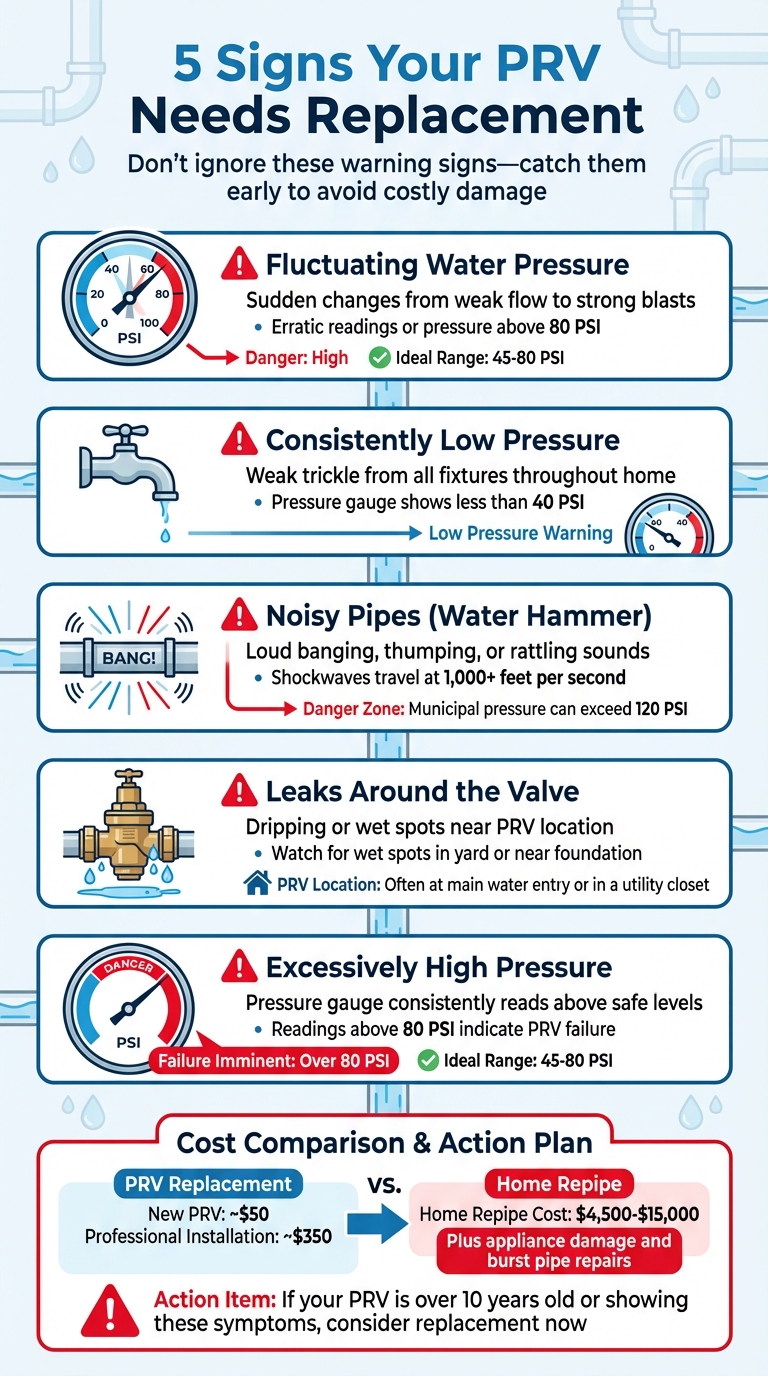
Your pressure-reducing valve (PRV) is critical for maintaining safe water pressure in your home. A failing PRV can lead to costly damage like burst pipes, appliance wear, and leaks. Here are five common warning signs your PRV might need replacement:
- Fluctuating Water Pressure: Sudden changes in pressure, like weak flow followed by a strong blast, may indicate a worn-out valve.
- Consistently Low Pressure: Weak water flow across all fixtures could mean the valve is stuck or clogged with mineral deposits.
- Noisy Pipes: Loud banging or rattling sounds, known as water hammer, often occur when a PRV fails to regulate high pressure.
- Leaks Around the Valve: Dripping or wet spots near the PRV suggest internal seals or components are deteriorating.
- Excessively High Pressure: Readings above 80 PSI on a pressure gauge signal the valve isn’t controlling incoming water pressure.
Ignoring these signs can lead to severe plumbing issues, including foundation damage or expensive appliance repairs. If your PRV is over 10 years old or showing these symptoms, consider a replacement. A new PRV costs about $50, and professional installation averages $350 - far less than repairing the damage from a failing valve.
5 Warning Signs Your Pressure-Reducing Valve Needs Replacement
Higher Than Usual Water Pressure - Changing a Pressure Reducing Valve
sbb-itb-6ceaf48
1. Water Pressure Changes Frequently
Does your shower feel normal one moment, then suddenly hit you with a blast of high pressure or barely a trickle? This kind of inconsistency throughout your home often points to a failing pressure-reducing valve (PRV). Fluctuating water pressure is one of the most common and noticeable signs that your PRV might be on its way out. Inside the valve, a spring-loaded diaphragm works to regulate pressure, but over time, it can wear out or get clogged with sediment, making it harder to maintain steady water flow.
You’ll notice this issue even more when multiple fixtures are in use. For example, you might turn on a faucet and it runs fine - until someone flushes a toilet or starts another tap, causing the water pressure to drop significantly or even stop altogether. A properly functioning PRV should prevent these wild swings and ensure consistent pressure, no matter how many fixtures are in use.
To check for problems, you can attach a simple water pressure gauge to an outdoor hose bib. If the gauge shows erratic readings or pressures above 80 psi, it’s a clear sign that your PRV isn’t doing its job. These pressure spikes don’t just inconvenience you - they can also strain your plumbing system, potentially causing leaks at pipe joints and fittings.
Inconsistent water pressure doesn’t just affect your pipes; it also takes a toll on appliances like washing machines, dishwashers, and water heaters. These devices are designed to work with steady water pressure, and constant fluctuations can wear them out faster, leading to costly repairs or replacements down the line.
2. Water Pressure Stays Too Low
If every faucet in your home produces only a weak trickle, the issue might lie with your pressure-reducing valve (PRV) being stuck in a partially closed position. Unlike problems where pressure fluctuates, consistently low water pressure impacts the entire house. Showers barely spray, washing machines take forever to fill, and dishwashers may struggle to clean properly. This often happens when mineral deposits or wear and tear on the valve's diaphragm and springs restrict water flow, leaving the valve partially closed.
"They are made with rubber parts and springs that will eventually wear out or get gummed up with particles in the water."
To confirm that the PRV is the culprit, try a multi-fixture test. Start by turning on one faucet and noting the water pressure. Then, open a second or third fixture, like a toilet or another tap. If the pressure drops significantly, it’s a strong sign that your PRV is malfunctioning. Another option is to attach a pressure gauge to an outdoor hose spigot. If the reading consistently shows less than 40 PSI, the valve likely needs attention.
If your PRV is older, resist the urge to adjust the pressure bolt yourself. Tampering with an aging valve could make the problem worse, potentially causing it to fail completely or start leaking. In some cases, a fully collapsed valve can even cut off water to your entire home.
Low water pressure isn't just an annoyance - it can indicate more serious plumbing issues. If mineral buildup is clogging your PRV, it’s possible your home’s pipes are also affected. This could mean a full home repipe is necessary, not just a valve replacement. Costs for repiping can range between $4,500 and $15,000, depending on the extent of the work required.
3. Pipes Make Banging Noises
Hearing loud banging, thumping, or rattling noises when you turn off a faucet or after a washing machine finishes its cycle? This could be a sign that your pressure-reducing valve (PRV) is on the fritz. The issue, known as water hammer, happens when high-speed water flow is forced to stop suddenly. This sudden halt creates a shockwave that can travel through your pipes at over 1,000 feet per second, causing noise and stress on your entire plumbing system.
"Water hammer is a hydraulic phenomenon that is caused by a sudden change in the velocity of the water. This velocity change results in a large pressure fluctuation that is often accompanied by a loud and explosive noise." – Dr. Boman
A PRV in good condition keeps your water pressure stable, typically between 50 and 75 PSI. But when it fails, your home's plumbing could be exposed to municipal water pressure levels exceeding 120 PSI, which is far too high. This can push water velocity past the safe threshold of 7 feet per second. When this high-pressure water hits closed valves, the resulting shockwaves can cause pipes to rattle against walls or other parts of your home.
If you notice a humming or buzzing sound near your PRV, it could mean the internal springs or diaphragms are worn out and vibrating as water flows through. To confirm, have someone run a faucet while you listen closely near the valve. If the noise is loudest at the PRV, it’s likely time for a replacement. These unusual sounds are more than just a nuisance - they’re a warning sign that your PRV needs attention before the excessive pressure leads to more serious plumbing issues.
Ignoring water hammer and its warning signs can lead to major problems. The repeated pressure surges can crack pipe fittings, damage appliance valves in dishwashers and water heaters, and even cause pipes to burst. Most plumbing fixtures are designed to handle a maximum of 80 PSI, so operating above that limit can wear them out faster and increase the risk of costly leaks or flooding.
4. Water Leaks Near the Valve
Leaks around the valve are another warning sign of potential failure. If you notice water dripping from your pressure reducing valve (PRV), it’s a strong indicator that the valve is deteriorating. These leaks often occur when internal components like seals, gaskets, or diaphragms wear out or crack. In areas with hard water, mineral deposits can accumulate inside the valve, further damaging these parts and potentially causing the mechanism to seize or leak.
"If you notice water leaking from your water pressure regulator, it may be time for a replacement. It's essential to address this problem as soon as possible because faulty water pressure regulator symptoms can lead to costly water damage." – Guardian Plumbers
For outdoor or underground PRVs, keep an eye out for unusual wet spots in your yard or garden beds. A slow leak might lead to muddy areas, root rot in plants, or even standing water in the valve box. In newer homes, where the PRV might be hidden behind a garage wall panel, in a closet, or under a staircase, watch for unexplained dampness near the foundation.
"Digging a large hole... is a lot easier to do when it is dry VS. digging that same hole in wet, muddy clay. It takes far less time and you get a better overall finished product when the area is NOT a leaking mud bog." – Earl's Plumbing
Addressing a leaking PRV quickly is crucial. Once a leak starts, the risk of further damage escalates. Replacing the valve promptly can save you from costly repairs and prevent additional issues. Like pressure fluctuations or noisy pipes, leaks are a clear reminder of the importance of regular inspections and timely replacements.
5. Water Pressure Is Too High
If your water pressure is unusually high, it could be a sign that your pressure-reducing valve (PRV) is no longer working properly. When a PRV fails, it can’t control the water pressure entering your home, allowing excessive pressure from the municipal water supply to flow unchecked into your plumbing system. Many cities pump water at pressures above 100 PSI to serve high-elevation areas or tall buildings. In some parts of North Texas, pressures over 120 PSI have even been recorded at the water meter. Without a functioning PRV, this kind of pressure can wreak havoc on pipes, fixtures, and appliances.
For residential systems, water pressure should ideally range between 45 and 80 PSI. Anything higher than 80 PSI puts your plumbing system in danger. If your pressure gauge consistently shows readings above this threshold, it’s a strong indicator that your PRV has failed.
"A pressure gauge reading above 80 psi is a clear indication of excessively high pressure." – 535 Plumbing
High water pressure doesn’t just signal PRV failure - it actively causes damage. Over time, it can erode pipes, create pinhole leaks, and weaken joints. It also puts strain on appliances like water heaters, dishwashers, and washing machines, often leading to ruptured seals and shorter lifespans. Signs of this damage include dripping faucets, toilets that won’t stop running, and leaking T&P valves. Outdoor systems can suffer too, with cracked sprinkler heads, blown-out drip lines, and flooded garden beds.
"High pressure is expensive. Not only do you have to worry about replacing fixtures and appliances more often, you run the risk of small leaks forming in hard-to-detect places. Those small leaks can lead to structural water damage and black mold." – Moen Solutions
Replacing a PRV is a relatively inexpensive fix compared to the damage high pressure can cause. A new valve costs about $50, with professional installation averaging $350. If your PRV is over 10 years old or your pressure gauge regularly reads above 80 PSI, replacing the valve now could save you from costly repairs later.
What to Do Next
If you spot any warning signs, take a closer look at your pressure-reducing valve (PRV) right away. You’ll usually find it near your main water meter, in a flower bed, or behind an access panel in your garage or basement. Start with a quick visual inspection - look for corrosion, cracks, or leaks. Acting quickly can help you avoid costly repairs down the line.
To check water pressure, attach a pressure gauge to an outdoor faucet. A steady reading between 40 and 80 psi means everything is functioning normally. If the pressure falls outside this range, it could signal an issue. Another quick test: turn on one faucet and note the pressure, then open more fixtures to see if there’s a significant drop.
"A normal, fully operational home should have zero to minimal noticeable pressure loss when a second or third fixture is turned on." – Earl's Plumbing
When it comes to adjustments, leave it to the pros - especially if your valve is over a decade old. Even if it seems to be working, PRVs often wear out gradually, so replacing an older valve proactively can save you from unexpected failures.
If you’re in the Seattle area, Sasquatch Plumbing Services Seattle can help. They offer professional inspections, emergency repairs, and same-day services for failing water lines and PRVs. They’ll also perform detailed pressure tests to determine whether your valve needs an adjustment or a full replacement. When in doubt, it’s always best to call a professional.
Conclusion
A failing pressure-reducing valve (PRV) can lead to serious issues like burst pipes, appliance damage, and expensive emergency repairs. High water pressure puts undue stress on every fixture and appliance in your home. Over time, this pressure can weaken pipe joints, force water through seals, and reduce the lifespan of key appliances like your water heater, dishwasher, and washing machine.
Replacing a PRV before a complete failure occurs is much simpler - and far cheaper - than dealing with the aftermath. Waiting too long could result in flooded basements, outdoor water damage, or even a full home repipe, which could range from $4,500 to $15,000.
Keep an eye on your water pressure and listen for unusual sounds or check for leaks - these are often the first signs of a PRV starting to fail. If you notice any of these warning signs, don’t delay. Contact a licensed plumber right away to assess the situation and replace the valve if needed.
For homeowners in West Seattle, Sasquatch Plumbing Services Seattle provides fast and reliable service to tackle these problems and keep your plumbing system running efficiently. As mentioned earlier, routine pressure checks and prompt repairs are key to avoiding major plumbing disasters. Staying proactive ensures your home’s plumbing remains safe and functional.
FAQs
How can I tell if my pressure-reducing valve is failing?
To determine if your pressure-reducing valve (PRV) is failing, start by checking your water pressure with a pressure gauge. Connect the gauge to an outdoor hose bib or faucet linked to your main water line, turn on the water, and take note of the reading. Ideally, the pressure should be between 40 and 80 psi. If it falls outside this range or fluctuates noticeably, your PRV might require attention.
Be on the lookout for other warning signs, such as inconsistent water pressure, strange noises like humming or banging, or sudden pressure spikes. If you observe any of these issues, it’s wise to consult a professional plumber. For those in Seattle, Sasquatch Plumbing Services offers expert help to keep your plumbing system running smoothly.
What happens if you ignore a failing pressure-reducing valve?
Ignoring a failing pressure-reducing valve can spell trouble for your plumbing system. When water pressure rises too high or fluctuates unpredictably, it can trigger leaks, burst pipes, or even damage fixtures like faucets and appliances. Over time, these seemingly small issues can snowball into hefty repair bills and unnecessary water waste.
On top of that, constant strain on your plumbing system can wear it down faster, shortening its lifespan and increasing the need for frequent maintenance. Taking care of a faulty valve right away not only safeguards your home but also helps you avoid costly headaches later on.
How long does a pressure-reducing valve typically last before needing replacement?
A pressure-reducing valve typically lasts 10 to 15 years, though its lifespan can depend on factors such as water quality, usage, and how well it’s maintained. With proper care, some valves can even last up to 20 years.
Signs that your valve might need replacing include inconsistent water pressure, leaks, or strange noises. Regular inspections can help spot these issues early, keeping your plumbing system in good shape. If you're in West Seattle and need expert help, Sasquatch Plumbing Services has got you covered!