
West Seattle homeowners face frequent sewer and drain problems due to aging infrastructure, heavy rainfall, and aggressive tree roots. Many homes built before the 1960s still rely on outdated clay or concrete pipes, which are prone to cracks, root intrusion, and blockages. These issues are worsened by shifting soil during rainstorms, leading to costly repairs that can range from $10,000 to over $70,000.
Here’s what you need to know:
- Common Problems: Tree root intrusion, cracked pipes, and grease clogs are major causes of blockages.
- Warning Signs: Slow drains, sewage backups, unpleasant odors, or unusually green patches in your yard may indicate sewer issues.
- Maintenance Tips: Schedule professional inspections every 3–5 years, avoid flushing non-degradable items, and keep grease out of drains.
- Repair Options: Modern solutions like trenchless pipe repairs (CIPP lining or pipe bursting) minimize property disruption and extend pipe lifespan.
Seattle homeowners are responsible for maintaining their side sewer lines, so regular upkeep is critical to prevent expensive emergencies. Taking action early can save time, money, and stress.
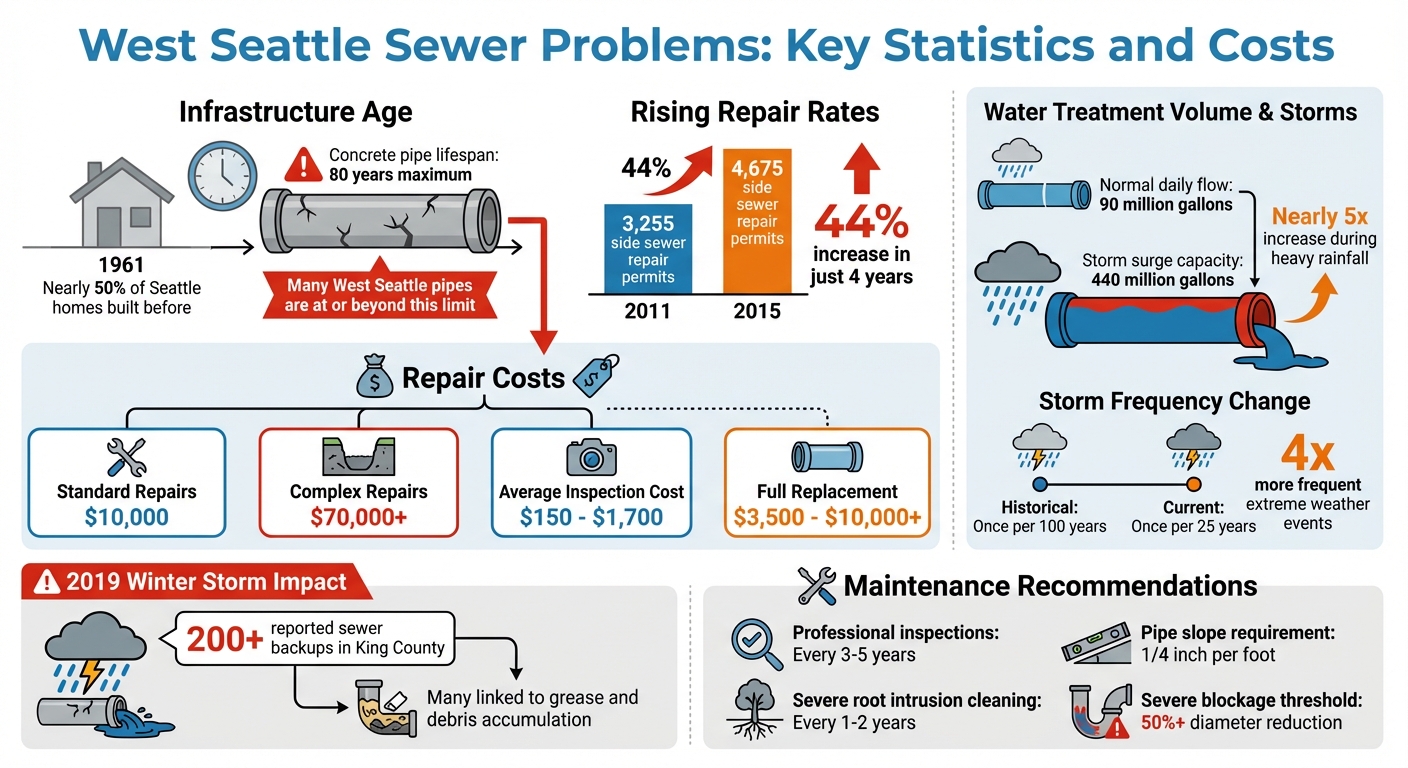
West Seattle Sewer Problems: Key Statistics and Cost Breakdown
Why West Seattle Has More Sewer Problems
Older Sewer Systems in Established Neighborhoods
West Seattle faces ongoing sewer challenges due to its aging infrastructure. Nearly half of Seattle's homes were built before 1961, and many still rely on their original plumbing systems. Concrete pipes, which were commonly used, have a lifespan of about 80 years - and many in West Seattle are hitting that limit. Parnell Downey, Owner of Metropolitan Sewer, puts it plainly:
"Concrete pipe has a life span of about 80 years on the top end. Seattle's at that magical age where most of the houses are getting up around that age, and the pipes are all original - they've never been replaced."
Unlike modern materials, older pipes made of concrete or clay lack watertight joints. Over time, the cement inside these pipes erodes, exposing rough surfaces where debris can easily get caught, leading to blockages and eventual failure. The numbers back this up: side sewer repair permits jumped from 3,255 in 2011 to 4,675 in 2015. These repairs are no small expense either, with costs ranging from $10,000 to over $70,000 for more complicated jobs.
The problem is compounded by West Seattle's tough weather conditions, which put even more strain on these already fragile systems.
Heavy Rain and Shifting Soil
West Seattle's rainy climate adds another layer of stress to its aging sewer pipes. What used to be rare, "once-in-a-century" storms now happen roughly every 25 years. During dry months, the West Point Treatment Plant handles about 90 million gallons of water daily, but that number can skyrocket to 440 million gallons during winter storms. This kind of volume overwhelms the system, increasing the likelihood of backups.
Beyond the water overload, heavy rainfall also destabilizes the ground. Shifting soil can cause pipes to sag, disrupting the critical slope of 1/4 inch per foot needed for proper drainage. If the sag becomes too severe - more than 50% of the pipe's diameter - blockages are almost inevitable. Kevin Flynn, Utility Manager at Raymark Plumbing & Sewer, recalls how severe rains in 2015 led to a major failure:
"We had such heavy rains, there's a possibility that maybe the top layer of earth moved and pulled the pipe away. That broke the pipe and it got worse very quickly."
Tragically, these conditions can also be dangerous. In January 2016, a trench collapse during a sewer repair claimed the life of a worker in West Seattle, marking the first fatal incident of its kind in the state since 2008.
Adding to these challenges, the area's vegetation also plays a significant role in damaging sewer lines.
Tree Roots and Local Vegetation
West Seattle's mature trees, while a beloved feature of the area, are another source of sewer problems. Tree roots are naturally drawn to the warmth and nutrients inside sewer pipes. Once they find even the smallest crack, roots can grow rapidly - up to one foot per day in some cases. Older pipes made from clay or Orangeburg are particularly vulnerable to this kind of intrusion. As roots spread through the pipes, they trap grease, toilet paper, and other debris, eventually leading to serious clogs.
Take the example of a Magnolia home built in 1942. In 2015, inspectors found a large crack in the sewer line. The resulting leak saturated the surrounding soil, causing the pipe to sink an additional six inches. The homeowner, Greg Avedesian, had to pay $13,700 to replace the line. West Seattle's high water table and frequent rain make matters worse, loosening the soil and giving roots even easier access to underground pipes.
The combination of aging pipes, heavy rains, shifting soil, and aggressive tree roots creates a perfect storm for the recurring sewer issues that plague West Seattle.
sbb-itb-6ceaf48
Most Common Sewer and Drain Problems
Tree Root Intrusion
Older pipes made of concrete or clay often have loose or non-watertight joints, leaving them open to root intrusion through cracks, holes, or misaligned sections. Tree roots can spread out to twice the height of the tree, making them a persistent threat to underground pipes. According to Seattle Public Utilities, root intrusion becomes "severe" when it blocks at least half of a pipe's diameter. For severe cases, professional cleaning every one to two years is advised, while less severe cases typically require inspections every three to five years. Removing a nearby tree won’t solve the problem, as the roots left underground can continue to grow and cause damage. Regular camera inspections and professional cleanings are the most effective ways to manage root-related issues. On top of root intrusion, aging pipes often suffer structural damage, which further disrupts water flow.
Cracked and Broken Pipes
Aging infrastructure, soil shifts, and root intrusion are key culprits behind cracked and broken pipes. Many older homes still rely on original concrete pipes, which, over time, experience erosion that wears away the inner cement. This erosion exposes the aggregate, signaling that the pipe is nearing structural failure. At this point, immediate replacement is necessary to avoid a complete collapse. Misaligned joints or sagging pipes that block more than 50% of the pipe’s diameter can also lead to debris buildup and backups. Modern solutions like pipe lining - where an epoxy-coated tube seals leaks - or pipe bursting, which replaces the pipe without major digging, are effective options for repairs. Regular inspections and timely fixes are critical to preventing these issues from escalating.
Grease and Debris Clogs
Clogs caused by everyday household materials are another major issue. Cooking grease, oils, and fats may go down the drain as liquids but solidify inside pipes, roughening the surfaces and trapping debris to form large blockages. Seattle Public Utilities defines a "severe" clog as one that reduces a pipe's capacity by over 50%. During the 2019 winter storms, King County reported over 200 sewer backups, many of which were linked to grease and debris accumulation. Items marketed as "flushable", like wipes, pads, and towels, don’t break down in the system and often get stuck in pipe bends. Hair, soap residue, and small objects like toys or hygiene products can also create stubborn blockages. Plumbers often use hydro jetting (high-pressure water) or mechanical cleaning tools, paired with camera inspections, to clear these clogs. The best way to prevent these problems? Avoid pouring grease down the drain and flush only human waste and toilet paper.
When to Call a Plumber for Sewer Issues
Warning Signs of Serious Problems
Certain red flags can indicate serious sewer line issues. For instance, if multiple fixtures in your home drain slowly at the same time or water starts backing up into bathtubs or showers, this could mean a main sewer line blockage is at play. Similarly, unpleasant odors near drains, in basements, or even outside in your yard might suggest wastewater is escaping somewhere it shouldn’t be.
Outdoors, keep an eye out for unexpected signs like unusually lush, green patches of grass, unexplained depressions, or even sinkholes in your yard. These could all point to a cracked sewer pipe leaking nutrient-rich wastewater underground. Inside your home, mold appearing on walls or floors or a sudden uptick in rodent or insect activity can also hint at a compromised sewer line.
Spotting these signs early is critical. If you notice any of them, it’s time to act fast.
Emergency Situations Requiring Immediate Help
If you suspect a sewer backup, stop using water immediately to avoid worsening the situation. This includes avoiding flushing toilets or running appliances like dishwashers and washing machines. Sewer backups aren’t just inconvenient - they can be dangerous. Raw sewage often contains harmful pathogens like E. coli and Salmonella, and it can release toxic gases such as hydrogen sulfide and methane, which pose serious health risks.
If you must deal with sewage, always wear protective gear. Signs like sewage emerging from your yard’s cleanout pipe or backing up through basement floor drains indicate a system-wide failure that needs professional attention immediately. Companies like Sasquatch Plumbing Services in Seattle offer same-day emergency services, complete with upfront pricing and licensed plumbers ready to tackle these urgent situations before they escalate further.
After taking immediate precautions, a professional assessment will be the next step.
How Plumbers Find and Fix Sewer Problems
Plumbers today use advanced tools to diagnose and repair sewer issues. One key tool is a waterproof video camera, which allows them to inspect the inside of sewer lines and locate the exact cause of the problem - whether it’s tree roots, cracks, or a collapsed section. Before conducting a camera inspection, technicians often clear out debris using methods like hydro jetting or mechanical snakes.
In areas like West Seattle, where aging infrastructure and unique soil conditions can complicate repairs, plumbers rely on modern approaches to minimize disruption. Techniques like trenchless repairs are especially useful. For example, Cured-in-Place Pipe (CIPP) lining involves inserting a resin-coated felt tube into the damaged pipe, inflating it, and curing it with steam or UV light to create a durable "pipe within a pipe". Another option is pipe bursting, which breaks apart the old pipe while pulling a new high-density polyethylene (HDPE) pipe into its place. Both methods are efficient, typically taking just 1–2 days, and the repairs can last over 50 years. However, for severely collapsed lines, traditional open-cut excavation is often the best solution.
Don’t forget to request a digital copy of the video inspection for your records and insurance purposes. In Seattle, permits are required for any side sewer repair work, though simple tasks like root removal or unclogging don’t typically need one.
How to Prevent Sewer and Drain Problems
Regular Maintenance Tips
Keeping your sewer system in good shape starts with simple habits. Avoid flushing items like wipes, feminine hygiene products, and paper towels, as they don't break down properly. Also, steer clear of pouring grease or fats down the drain - they can harden and trap debris, eventually causing clogs.
Outside your home, take steps to protect street drains. In the fall, rake up leaves to prevent blockages, and during winter, clear snow and ice to avoid water pooling and straining the system. If you have large trees, like maples or willows, near your property, their roots can be a problem. Consider planting new trees away from sewer lines and adding root barriers around existing ones. Installing a backwater valve is also a smart move, as it helps prevent sewage from backing up during heavy rainfall.
Regular upkeep, like annual mechanical cleaning, can remove residue and buildup before they turn into bigger problems. Stick to mechanical methods and avoid chemical cleaners, especially if you have older pipes that might get damaged. Ben Foster, Owner of Ben's Plumbing, highlights the risks of neglect:
A microscopic fissure in a backyard lateral may admit silt that builds up until full blockage occurs.
By combining these habits with professional inspections, you can keep your sewer system running smoothly.
Why Regular Professional Inspections Matter
Having your sewer system professionally inspected every three to five years can uncover issues like cracks or root intrusions before they escalate into major problems. These inspections typically cost anywhere from $150 to $1,700, depending on the complexity of your system. Jim Cunningham, Owner of Trusted Plumbing & Heating, emphasizes the importance of these checks:
Regular professional inspections prevent leaks and backups.
The consequences of skipping inspections can be severe. For example, during the 2019 winter storms, King County logged over 200 reported sewer backups. Seattle Public Utilities also stresses the value of regular maintenance:
Regular cleaning can prevent costly repairs, and broken side sewers must be fixed.
Proactive inspections can save you from expensive and disruptive repairs down the road.
Permanent Fixes for Recurring Issues
When routine maintenance and inspections aren't enough, it's time to consider more permanent solutions. Hydro jetting is an effective way to handle recurring clogs, as it thoroughly clears grease, roots, and sludge. For persistent root problems, combining hydro jetting with root barriers can provide longer-lasting results.
If pipes are severely damaged, replacement might be the only option. Full sewer line replacements can cost between $3,500 and $10,000 or more, depending on the extent of the work. Modern trenchless repair methods, such as CIPP lining or pipe bursting, can reduce the disruption to your property while addressing the issue.
For homeowners in West Seattle dealing with ongoing infrastructure challenges, Sasquatch Plumbing Services Seattle offers whole-home repiping. Their services include a 5-year labor warranty and handling all permits and inspections, making the process less stressful.
Repairing a collapsed sewer drain without digging
Conclusion
West Seattle’s aging sewer systems face unique challenges due to heavy rainfall, mature trees, and older infrastructure. Many of the neighborhood’s pipes weren’t built to handle modern usage, making regular upkeep a necessity.
Ignoring sewer maintenance can lead to serious problems, including health risks and structural damage to your home. Leaks that go unnoticed may erode the surrounding soil, potentially creating voids or even sinkholes on private or public property. As Seattle Public Utilities emphasizes:
Regular maintenance is required to reduce the risk of sewer backups.
Taking proactive steps like scheduling routine inspections and cleanings can stop small problems from turning into major repairs. Simple habits, such as avoiding flushing wipes or pouring grease down the drain, also go a long way in protecting your system. For homes sharing side sewers, these measures are especially important to prevent one person’s neglect from impacting an entire group of neighbors. And when issues persist despite your best efforts, having a dependable plumbing service on hand becomes essential.
Sasquatch Plumbing Services Seattle offers trusted solutions, from whole-home repiping with a 5-year labor warranty to handling all necessary permits. With same-day emergency service, upfront pricing, and a satisfaction guarantee, they’re ready to assist West Seattle homeowners with everything from routine maintenance to major sewer line replacements.
FAQs
How do I know if the clog is in my main sewer line or just one drain?
If you're trying to figure out whether a clog is in your main sewer line or just in a single drain, start by checking how many drains are affected. If multiple drains in your home are slow or backing up, the problem is likely with the main sewer line. On the other hand, if only one drain is causing trouble, the clog is probably confined to that specific drain.
Is trenchless sewer repair a good fit for older West Seattle pipes?
Trenchless sewer repair is a smart choice for older pipes in West Seattle. This method avoids the need for extensive digging, making it less disruptive to your property. Plus, it’s a more affordable option that helps maintain the existing infrastructure, making it ideal for aging sewer systems.
Does homeowners insurance cover side sewer repairs?
Homeowners insurance generally doesn't cover side sewer repairs since maintaining and repairing these lines is typically the homeowner's responsibility. This is especially relevant for older homes, where repairs can become more complex and costly. It's a good idea to carefully review your policy to understand any exclusions or coverage specifics.